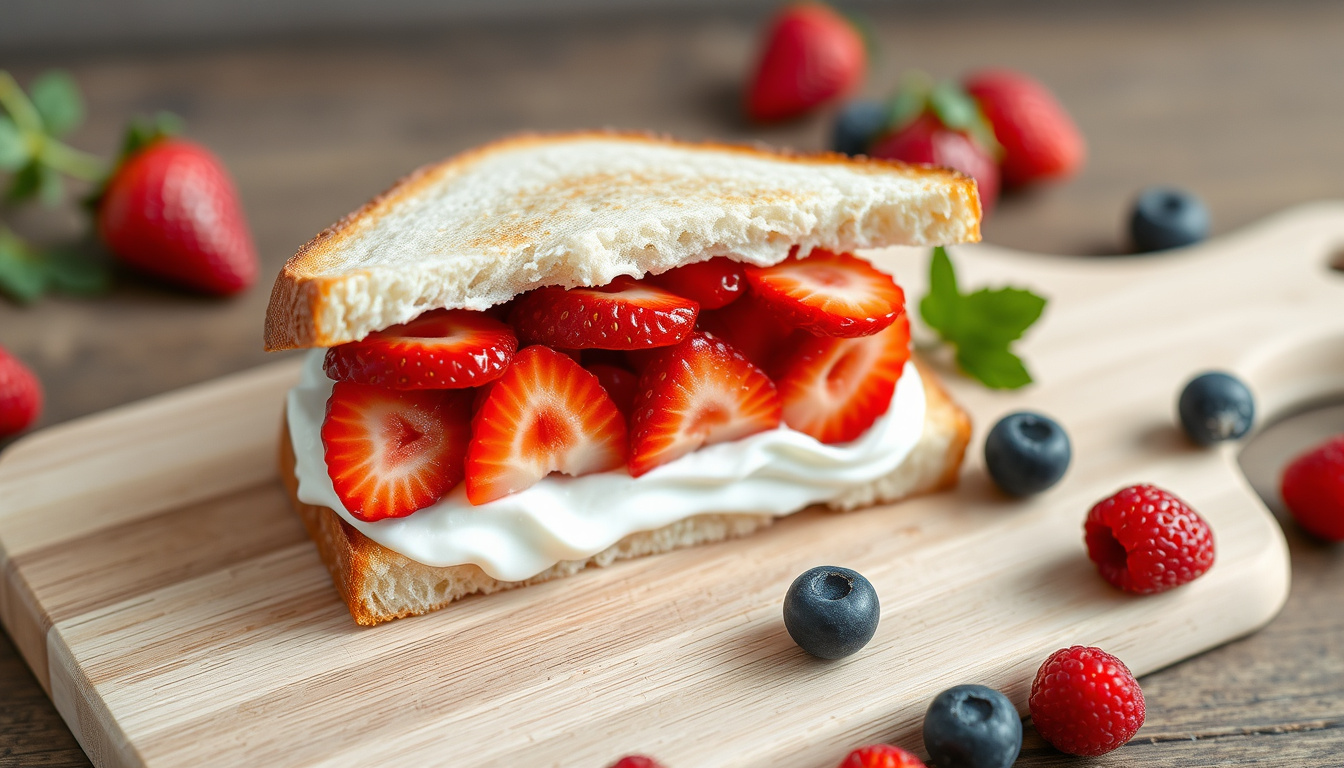
The strawberry and cream sandwich, known in Japan as ichigo sando, transforms a handful of simple ingredients into a dessert that has captured attention across social media platforms. Soft shokupan bread cradles freshly whipped cream and ripe strawberries, creating cross-section slices that have become recognizable symbols of café culture brought into home kitchens.
This treat draws inspiration from Japanese convenience store classics, where the balance between sweetness, texture, and visual presentation defines the experience. The sandwich requires no baking, minimal equipment, and comes together in roughly ten minutes once the ingredients are prepared. Its rise in popularity stems partly from how approachable it feels to make, even for those with limited kitchen experience.
Understanding the Strawberry and Cream Sandwich
Key Insights on Strawberry and Cream Sandwiches
- The trend originates from Japanese konbini culture and the iconic ichigo sando
- Shokupan bread provides the signature soft, pillowy texture that holds the filling without falling apart
- Fresh whipping cream whipped to stiff peaks creates structural stability for the sandwich layers
- Ripe, firm strawberries work best—excess moisture dilutes the cream and compromises the texture
- No-bake preparation makes this an ideal warm-weather dessert that requires no oven time
- Visual presentation matters; arranging berries deliberately produces the striking cross-section that photographs well
- The treat gained widespread attention through short-form video platforms where its aesthetic appeal drives engagement
Ingredient Snapshot
| Ingredient | Quantity | Notes |
|---|---|---|
| Fresh strawberries | 8–10 medium | Hulled, thoroughly dried |
| Heavy whipping cream | ½–1 cup | Cold, 45% butterfat preferred |
| Sweetener | 1–2 tbsp | Condensed milk, sugar, or vanilla |
| Shokupan or brioche | 4 thick slices | About 0.6–1 inch each |
| Strawberry jam | 2–4 tsp | Optional, for flavor and moisture barrier |
Assembling Your Ingredients
The quality of each component determines the final result. Shokupan, the Japanese milk bread, offers an exceptionally soft crumb with a subtle sweetness that elevates the sandwich beyond standard white bread. Those unable to find it at local stores can substitute brioche or a soft white sandwich loaf, though the texture will differ slightly.
Strawberries should be medium-sized, ripe but still firm to the touch. Before using them, wash gently under cool water, pat completely dry with paper towels, and trim away the green tops. Setting them cut-side down on a clean surface allows any remaining moisture to dissipate, which proves essential for preventing the cream from becoming watery.
Heavy whipping cream performs best when thoroughly chilled, ideally at forty-five percent butterfat content. The sweetener choices range from sweetened condensed milk for richness to a tablespoon of sugar or a few drops of vanilla extract for simpler applications.
Choosing strawberries with uniform shapes and sizes makes arranging them in the sandwich more predictable and produces more consistent cross-section slices when serving.
Step-by-Step Construction
Preparing the Cream and Strawberries
Begin by chilling your mixing bowl and whisk for several minutes in the freezer. Combine the cold heavy cream with your chosen sweetener, then whip on high speed until stiff peaks form. The cream should hold its shape when the bowl is inverted, typically requiring three to four minutes of whisking. Over-whipping risks turning the cream into butter, so stop once the desired consistency is achieved.
While the cream is whipping, ensure your strawberries are completely dry. Any residual moisture compromises the filling and makes the bread soggy more quickly. Understanding the science behind whipped cream stability helps explain why temperature control matters so much in this preparation.
Building the Sandwich Layers
Shape your bread slices into squares by trimming the crusts if desired. If using strawberry jam as an optional layer, spread a thin amount on one side of two bread slices—this helps prevent sogginess and adds an extra dimension of flavor.
Lay two bread slices jam-side up, then spread the whipped cream approximately half an inch thick across them. Mound the cream slightly toward the center and taper it toward the edges. This creates a base that will hold the strawberries securely.
Place your two largest strawberries cut-side down in the center of the cream mounds. Surround these with the remaining berries, positioning their tips toward the corners of the bread. This arrangement ensures an even, visually appealing cross-section when the sandwich is sliced.
Cover the strawberries entirely with additional whipped cream, filling any gaps so no voids remain. This step is crucial for structural integrity. Place the remaining bread slices cream-side down on top, then gently press the edges to shape the sandwich around its filling.
Chilling and Slicing
Wrap the assembled sandwich tightly in plastic wrap and refrigerate for at least twenty minutes, though leaving it overnight produces the cleanest slices. The cold firms the cream and allows the flavors to meld.
When ready to serve, unwrap the sandwich and cut it diagonally or into four to six equal pieces using a sharp knife. Straight ninety-degree corners yield cleaner edges than diagonal cuts for presentation purposes. Always serve with the cut side facing upward to display the layered interior.
Planning strawberry placement before assembly helps ensure the most photogenic slices. Reserve your most visually perfect berries for the center positions where they will be most visible.
Storing and Preparing Ahead
The strawberry and cream sandwich tastes best when served fresh, but practical considerations often require advance preparation. When storing assembled sandwiches, wrap them tightly in plastic wrap and keep refrigerated for up to one to two days. The cream may release small amounts of liquid over time, which affects texture even if the sandwich remains safe to eat.
For gatherings or events, consider assembling the sandwiches fully, wrapping them carefully, and refrigerating overnight. Slice them just before serving to maintain crispness in the bread and freshness in the cream. This approach balances convenience with quality.
Freezing is not recommended under any circumstances. The cream separates during thawing, and the bread becomes soggy and loses its soft texture entirely.
Once served, the sandwich should not sit at room temperature for more than two hours. Bacteria can proliferate in dairy-based fillings left unrefrigerated beyond this window.
Always handle dairy-based fillings with clean utensils and maintain proper refrigeration. The cream in these sandwiches has no preservatives, making prompt storage essential after preparation.
Exploring Variations
Several adaptations exist for those wishing to customize the classic recipe. Substituting softened cream cheese for whipped cream creates a tangier profile, often paired with butter and jam for additional richness. This variation appeals to those who prefer less sweetness in their dessert.
Jam-free versions strip away the optional layer entirely, letting the strawberries and cream speak for themselves without additional sweetness or moisture barriers. This suits those using particularly sweet berries or seeking a simpler preparation.
For vegan preparations, swapping heavy cream for chilled coconut cream whipped to stiff peaks provides similar structural properties. Sweeteners can be adjusted using vegan condensed milk alternatives or pure maple syrup. Vegan baking resources offer additional guidance for those committed to a fully plant-based version.
Fruit additions like kiwi slices or banana rounds introduce new flavor dimensions while maintaining the sandwich concept. These work best when added just before serving to prevent browning or textural changes from prolonged contact with the cream.
Miniature versions using smaller bread slices make elegant individual portions for parties or formal occasions, offering guests convenient single bites that display the characteristic layered appearance.
Facts Versus Common Misconceptions
| Established Fact | Common Myth |
|---|---|
| Uses fresh strawberries, not jam as the primary fruit component | The sandwich originated purely as a Western invention |
| Shokupan or brioche provides the authentic texture | Any bread type produces equivalent results |
| Chilling the cream before whipping improves stability | Room temperature cream whips faster and better |
| Properly dried strawberries prevent sogginess | Jam alone sufficiently protects the bread |
| Short-term refrigeration improves slicing | Immediate cutting does not affect presentation |
Background and Cultural Context
The strawberry and cream sandwich traces its roots to Japanese convenience stores, where it became a standardized product found in virtually every chain location across the country. These konbini treats established a template that home cooks later adapted and modified for their own purposes.
Short-form video platforms amplified interest in the dessert significantly. Creators discovered that the sandwich’s interior layers, when sliced diagonally, produced striking geometric patterns that performed exceptionally well in visual formats. The pink hue of the strawberries against white cream and pale bread created natural visual appeal without requiring sophisticated photography skills.
Café culture and home cooking intersect in this recipe more than in many others. What began as a prepared food item became a skill that home cooks actively sought to replicate, often preferring their homemade versions for fresher ingredients and greater control over sweetness levels. Japanese bakery traditions offer additional context for understanding the bread choices that define this dessert.
Expert Tips and Credible Sources
Culinary professionals consistently emphasize the importance of temperature control when working with whipped cream. Keeping all tools and ingredients cold ensures the fat in the cream remains stable during incorporation of air, resulting in a filling that holds its shape rather than collapsing.
The key to a successful ichigo sando lies in the structural integrity of the cream. When whipped properly, it acts as both adhesive and filling, binding the layers together while providing the characteristic richness that defines this treat.
Recipe developers who specialize in Japanese cuisine offer additional refinement, noting that buttering the bread lightly before adding cream improves moisture resistance in some preparations, though this step remains optional depending on the desired outcome.
Where to Find More Recipe Inspiration
For those interested in exploring similar preparations, numerous recipe databases and cooking channels provide step-by-step visual guides. Recipe collections from established food publications often include ichigo sando variations alongside related Japanese desserts, offering context and technique notes that supplement this foundational approach.
Broader recipe resources covering How to Cook Broccoli – Best Methods for Perfect Texture and British supermarket services like those detailed in Nearest Waitrose to Me – Store Finder, Hours & Services Guide demonstrate the range of culinary content available for different skill levels and interests.
Common Questions Answered
Can I use frozen strawberries instead of fresh?
Frozen strawberries release excess moisture when thawed, making them unsuitable for this recipe. Fresh berries are essential for proper structural results.
What happens if I skip the refrigeration step?
Without chilling, the cream remains soft and the sandwich becomes difficult to cut cleanly. Slices may compress and lose their defined layers.
How do I know when the cream is properly whipped?
Stiff peaks form when the cream holds its shape when the beaters are lifted. The bowl should be invertable without the cream falling.
Can I make this without strawberry jam?
Yes, jam is entirely optional. Some versions omit it entirely, relying solely on strawberries and cream for flavor and texture.
How many calories are in one sandwich?
Estimates range from three hundred to five hundred calories per full sandwich depending on the amount of cream used. Slicing into six pieces yields approximately fifty to eighty calories per piece.
Can the sandwich be made vegan?
Yes, coconut cream or aquafaba-based whipped alternatives can replace heavy cream. Vegan bread options and maple syrup or vegan condensed milk work for other substitutions.
How long can assembled sandwiches be stored?
Properly wrapped in plastic and refrigerated, assembled sandwiches keep for one to two days before the cream begins to weep and texture deteriorates.

Marcus Webb is Politics & Public Affairs Editor at PublicReport, covering Westminster, Whitehall, devolved governments, public policy and UK political affairs.