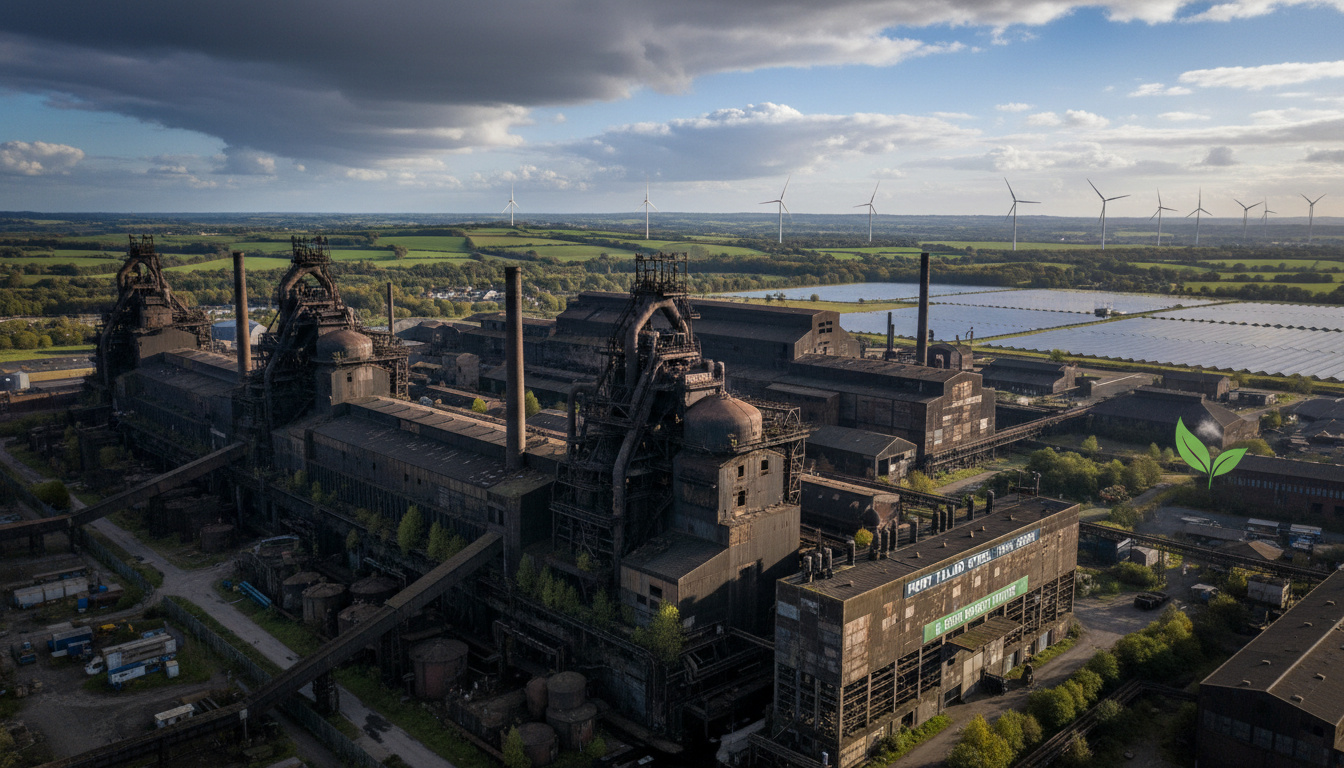
Tata Steel completed the closure of its Port Talbot steelworks’ traditional blast furnace operations in September 2024, ending more than a century of primary steelmaking at the UK’s largest steel plant. The company shut down Blast Furnace 5 around mid-2024 and Blast Furnace 4 by September 2024, alongside associated coke ovens and heavy-end assets, marking a definitive shift away from ironmaking at the South Wales site.
The transition represents one of the most significant industrial restructuring events in recent British history, involving approximately 2,800 job losses while simultaneously inaugurating a £1.25 billion green steel investment programme. This overhaul will see the facility transition from traditional blast furnace-basic oxygen furnace (BF-BOF) production to Electric Arc Furnace (EAF) technology by the end of 2027.
While the immediate employment impact has generated substantial controversy and union opposition, the project aims to reduce site carbon emissions by approximately 5 million tonnes annually and cut overall steelworks emissions by 90%, positioning Port Talbot at the centre of the UK’s net-zero industrial strategy.
What is happening at Tata Steel Port Talbot?
Blast furnaces ceased operations September 2024
Approximately 2,800 direct job losses confirmed
£500 million loan facility secured
Net-zero steel production transition
The closure sequence concluded in autumn 2024 with the decommissioning of Blast Furnace 4, following the earlier shutdown of Blast Furnace 5. These facilities had supported primary steelmaking at the site for decades, producing liquid iron that fed the site’s steelmaking operations. Research from the Senedd indicates this change affected not only direct employees but extensive supply chain operations throughout the region.
Key developments defining the current transition include:
- The elimination of approximately 5 million tonnes of annual carbon emissions from the site
- Continued operation of the hot-strip mill using imported steel slab from the Netherlands and India
- Ongoing union disputes regarding the pace and nature of workforce reductions
- Establishment of a £100 million transition board for employee support and regional regeneration
- Equipment orders placed for the electric arc furnace and associated metallurgy infrastructure
- Imported slab supplies maintaining production continuity during the construction phase
| Location | Port Talbot, South Wales |
|---|---|
| Owner | Tata Steel UK (subsidiary of Tata Steel Europe) |
| Previous Annual Output | Approximately 5 million tonnes (BF-BOF route) |
| Planned EAF Capacity | 3 million tonnes crude steel per year |
| Total Workforce Impact | ~2,800 redundancies (2,500 within first 18 months) |
| Blast Furnaces Closed | Blast Furnace 4 and Blast Furnace 5 (2024) |
| Total Investment | £1.25 billion |
| Government Financial Support | £500 million loan plus £100 million transition funding |
| EAF Commissioning Target | End of 2027 |
| Emissions Reduction | 90% reduction in steelworks emissions |
What is the UK government deal with Tata Steel?
The UK government formalised support for Port Talbot’s green transition through a comprehensive funding package designed to facilitate the shift to electric arc furnace production while mitigating social and economic disruption.
Primary Financial Mechanisms
The core of the government arrangement consists of a £500 million loan facility provided to Tata Steel UK, forming part of the broader £1.25 billion capital investment programme. According to industry reports, this support was crucial in securing Tata Steel’s commitment to retain steelmaking operations in the UK rather than pursuing alternative restructuring options.
The £1.25 billion transition cost is financed through the £500 million government loan facility combined with substantial private capital investment from Tata Steel UK, representing one of the largest industrial decarbonisation investments in British history.
Transition Board and Regeneration Support
Beyond direct capital funding, the government negotiated the establishment of a transition board endowed with £100 million specifically allocated for short-term employee support measures and long-term economic regeneration initiatives in the Port Talbot area. This structure aims to address immediate redundancy impacts while positioning the region for post-steel economic diversification.
The hot-strip mill continues processing steel slab imported from Tata plants in the Netherlands and India, maintaining production output and preserving hundreds of jobs during the EAF construction phase.
What is the future of steel production at Port Talbot?
The facility’s future hinges on the commissioning of Electric Arc Furnace (EAF) technology, representing a fundamental shift from the previous blast furnace-basic oxygen furnace (BF-BOF) production methodology.
Electric Arc Furnace Technology
Unlike blast furnaces that produce iron from raw materials using coke and limestone, EAFs melt scrap steel using electric arcs generated between electrodes. Technical analyses indicate this method generates significantly lower carbon emissions, aligning with the site’s emissions reduction targets.
Production Capacity and Timeline
The planned EAF installation will operate with a combined capacity of approximately 3 million tonnes of crude steel annually—down from the previous 5 million tonne capacity but utilising a substantially cleaner production method. According to Senedd research, the commissioning timeline targets operational status by the end of 2027.
Tata Steel initiated public consultation on specific site activities during 2024, with applications for planning approvals submitted by November 2024. Large-scale site work is scheduled to commence around July 2025, following equipment orders for the furnace, ladle metallurgy facilities, new coil boxes, and crop shears for the hot strip mill.
What do unions say about Tata Steel Port Talbot?
Trade union responses to the transition have been predominantly critical, focusing on the pace of job reductions and the decision to close both blast furnaces simultaneously rather than maintaining continuity during the EAF construction period.
Opposition to Closure Strategy
Community, Unite, and GMB unions expressed significant disappointment with Tata Steel’s decision to cease blast furnace operations entirely rather than retaining one furnace during the transition phase. S&P Global Market Intelligence reports that Unite specifically warned industrial action would follow the company’s termination of national union consultations.
Alternative Proposals Rejected
Union coalitions proposed maintaining one blast furnace in operation throughout the EAF construction period to safeguard production capacity and protect employment positions. Tata Steel rejected these proposals, citing financial feasibility concerns regarding the costs of maintaining blast furnace operations during the transitional period.
Trade unions including Unite have indicated potential for industrial action following the conclusion of consultation processes, particularly regarding redundancy terms and retraining provision adequacy.
When did key events in the Port Talbot steelworks transition occur?
The transition from traditional blast furnace operations to green steel production has followed a specific chronology:
- : Tata Steel announces definitive closure plans for Blast Furnaces 4 and 5, initiating formal union consultation processes
- : Blast Furnace 4 ceases operations, marking the beginning of the end for primary ironmaking
- : Blast Furnace 5 completes shutdown, ending over 100 years of blast furnace steelmaking at Port Talbot Tata Steel confirmed this concluded the ironmaking phase
- : Planning approval applications submitted for EAF construction and site reconfiguration
- : Scheduled commencement of large-scale site preparation and construction work for the electric arc furnace
- : Target commissioning date for EAF operations and resumption of full crude steel production
What details are confirmed versus uncertain in the Port Talbot transition?
| Established Information | Remaining Uncertainties |
|---|---|
| £500 million government loan facility secured and committed | Precise number of retraining placements and their funding allocation |
| 2,800 total job losses confirmed across the transition | Exact flexibility in the 2027 EAF commissioning timeline |
| Electric Arc Furnace technology selected as replacement production method | Long-term stability of imported slab supply chains from Netherlands and India |
| £100 million transition board funding established for worker support | Final redundancy settlement terms for specific employee categories |
| Hot-strip mill to remain operational throughout transition | Specific environmental permit timelines for new EAF installation |
| 90% emissions reduction target verified by company and government | Exact post-transition employment numbers at the Port Talbot site |
How does the Port Talbot closure fit into UK industrial history?
The Port Talbot steelworks has operated as a cornerstone of British heavy industry for over a century, with its blast furnaces producing iron and steel through both World Wars and the industrial transformations of the twentieth century. The site’s evolution from traditional ironmaking to EAF-based production mirrors broader patterns across European steel industries.
Owned by Tata Steel UK—a subsidiary of the Indian multinational Tata Group—the facility represents the last major integrated steelworks in the UK capable of producing virgin steel from raw materials. The Department for Business and Trade acknowledges this transition as essential for meeting statutory carbon reduction commitments while maintaining domestic steel production capacity.
The shift from BF-BOF to EAF technology reflects global steel industry trends toward electric production methods utilizing recycled scrap metal, though the specific UK context involves unique challenges regarding employment transition in historically industrialised regions.
What have key stakeholders said about the Port Talbot changes?
The closure of Blast Furnace 4 marks the end of an era, but our green steel project will ensure the next generation of steelmaking in the UK.
— Tata Steel UK Corporate Communications, September 2024
Tata Steel’s decision to end national union consultations without agreement will be answered with industrial action.
— Unite the Union, April 2024
This investment is essential to protect jobs and ensure a sustainable future for British steelmaking.
— UK Government Statement on Industrial Support
What are the essential points regarding the Port Talbot transition?
The Port Talbot transition represents an irreversible shift from traditional blast furnace steelmaking to electric arc furnace production, eliminating approximately 2,800 positions while securing £1.25 billion in green investment intended to preserve over 5,000 UK steel jobs and reduce emissions by 90%. Stakeholders should monitor construction progress toward the 2027 EAF commissioning target and track the implementation of the £100 million transition support programmes. Those seeking employment transition resources might consider Tesco Jobs Near Me – Find Local Openings and How to Apply for immediate opportunities in the retail sector.
Frequently Asked Questions
Who owns Tata Steel Port Talbot?
Tata Steel Port Talbot is owned by Tata Steel UK, a subsidiary of Tata Steel Europe, which is part of the Indian multinational conglomerate Tata Group. The company acquired the facility when it purchased Corus Group in 2007.
What are the specific environmental benefits of the transition?
The EAF transition will reduce Port Talbot’s carbon emissions by approximately 5 million tonnes annually, cutting overall steelworks emissions by 90% compared to the previous blast furnace operations.
How is the hot-strip mill maintaining operations during the transition?
The hot-strip mill continues processing steel slab imported from Tata Steel plants in the Netherlands and India, as well as other strategic suppliers, allowing continuous production despite the absence of domestic ironmaking.
What support is available for workers facing redundancy?
The £100 million transition board provides funding for short-term employee support, retraining programmes, and long-term economic regeneration initiatives in the Port Talbot area.
Why did Tata Steel reject the union proposal to keep one furnace operational?
Tata Steel assessed the proposal to maintain one blast furnace during transition as financially unfeasible, citing the operational costs of running heavy-end assets during the construction period.
What technology will replace the blast furnaces?
Electric Arc Furnace (EAF) technology will replace the blast furnaces, utilizing electricity to melt recycled scrap steel rather than producing iron from raw materials using coke.
How can businesses manage point-of-sale transitions during industrial restructuring?
Companies affected by supply chain changes may benefit from reviewing Epos Now Back Office – Complete Guide to Features and Login for comprehensive inventory and employee management solutions.

Marcus Webb is Politics & Public Affairs Editor at PublicReport, covering Westminster, Whitehall, devolved governments, public policy and UK political affairs.