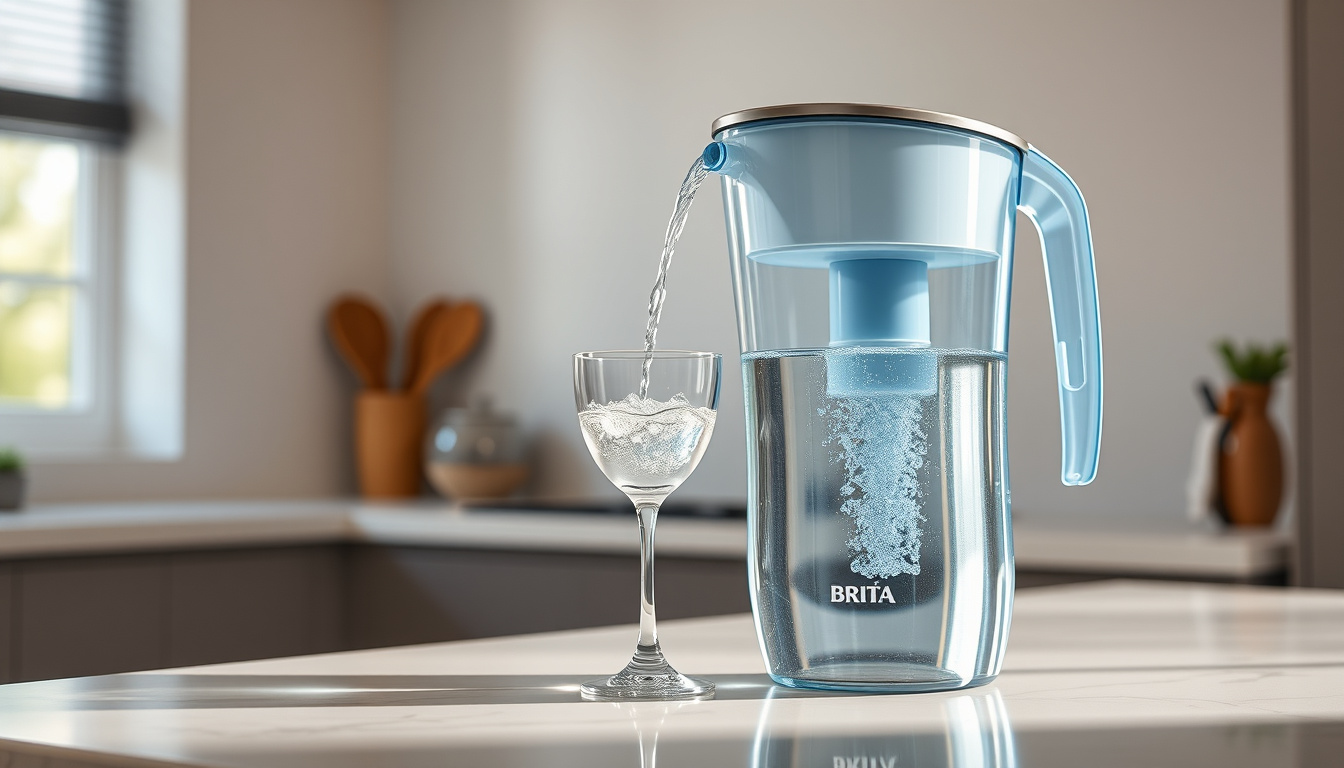

If you’ve ever filled a glass straight from the tap and thought “this could taste better,” you’re not alone. Brita water filter jugs have been a fixture in UK kitchens for decades, with the Marella Cool Jug earning a 4.7 out of 5 rating from 251 reviewers on Home Tester Club. Below, we’ll sort through the hype and the data to find out which Brita model actually deserves your counter space.
Starting price: £29.99 (Brita Style) · Top pick: Brita Glass Jug at £60 · Filter capacity: 1.4L (Marella Cool)
Quick snapshot
- Brita Marella Cool Jug holds 2.4L total with 1.4L filtered water (Home Tester Club)
- BBC Good Food rates BRITA Style best overall at £29.99 (BBC Good Food)
- Brita uses German filtration technology according to the manufacturer (Brita UK Official)
- Exact filter replacement costs and change intervals remain unpublished by Brita
- Microplastic and PFAS removal capabilities not disclosed in available testing data
- Regional UK water quality variations not independently mapped to Brita performance
- Home Tester Club published Marella Cool Jug review on March 28, 2026 (Home Tester Club)
- BBC Good Food updated water filter jug guide in 2026 (BBC Good Food)
- TAPP Water benchmarks updated against latest competitors (TAPP Water)
- New EU drinking water standards may tighten filtration certification requirements
- Premium competitors like Larq and TAPP Water pushing faster filtration technology
- Filter jug market facing pressure from under-sink and tap-mounted alternatives
The table below consolidates verified pricing and performance data from independent UK testing sources.
| Specification | Value | Source |
|---|---|---|
| Brita Style price | £29.99 | BBC Good Food |
| Brita Glass Jug price | £60.00 | Expert Reviews |
| BRITA Flow price | £36.66 | BBC Good Food |
| Marella Cool filtered capacity | 1.4 litres | Home Tester Club |
| Marella Cool total capacity | 2.4 litres | Home Tester Club |
| Marella Cool user rating | 4.7 / 5 | Home Tester Club |
| Filtration flow rate (Marella) | 0.1–0.2 L/min | TAPP Water |
| Barium reduction (Elite model) | 100% | Water Filter Guru |
| Copper reduction (Elite model) | 97% | Water Filter Guru |
| 95% recommendation rate | Marella Cool Jug | Home Tester Club |
Which Brita model should you buy?
Brita offers several distinct lines in the UK market, each targeting different priorities. The Brita Style sits at the budget end at £29.99, while the Brita Flow adds extra capacity for larger households at £36.66. The premium Brita Glass Jug costs around £60 and Expert Reviews rates it best for filter choice among UK water filter jugs. If counter appeal matters, the glass design also avoids the plastic taste that some users report in cheaper models.
The Brita Marella Cool Jug occupies the middle ground with a 2.4L total capacity and 1.4L filtered water chamber. It earned a 4.7 out of 5 rating from 251 reviews on Home Tester Club, with 95% of testers saying they’d recommend it. The Marella features Brita’s Smart & Easy Filling Function, allowing you to fill the reservoir without removing the lid. However, the lid itself is hand-wash only — the reservoir and carafe are dishwasher safe.
For most UK households, the Marella Cool Jug strikes the best balance between capacity, user satisfaction, and mid-range pricing. Families or heavy water drinkers should gravitate toward the Marella for its capacity, while those who want premium build quality and don’t mind the higher price tag will appreciate the Glass Jug’s filtration performance.
How well does Brita actually filter water?
Filtration performance varies significantly between Brita models. Expert Reviews measured an average TDS (total dissolved solids) level of 155ppm after Brita filtration — a useful benchmark, though TDS doesn’t distinguish between what contaminants are actually removed. More specific data comes from Water Filter Guru’s testing of the Brita Elite pitcher, which achieved 100% barium reduction, 97% copper reduction, and 26% uranium reduction in controlled tests.
One caveat: Water Filter Guru notes that Brita is certified by the Water Quality Association, IAPMO, or NSF for only 45% of its reduction claims. The remaining 55% lack independent third-party verification. This isn’t unusual in the consumer filter market, but it means you shouldn’t assume Brita handles every contaminant it markets against.
Brita’s marketing lists reduction capabilities for dozens of contaminants, but only 45% of those claims carry independent WQA, IAPMO, or NSF certification. For everyday UK tap water — which is heavily regulated — this gap rarely matters. But if you’re filtering water from a private well or an older property with known contamination issues, you’ll want lab-tested verification before trusting a Brita jug.
The implication: Brita’s certified claims are limited in scope. For common UK concerns like chlorine, limescale, and heavy metals like lead and copper, the data is solid. For emerging contaminants or less common substances, independent verification is thin.
Brita vs the competition: speed and price comparison
Brita jugs occupy the middle tier of the market, outperformed on speed by several competitors but generally accepted as sufficient for home use. TAPP Water’s benchmarking data shows the Brita Marella manages a filtration flow rate of 0.1–0.2 litres per minute. By comparison, the TAPP Water PitcherPro achieves 1 litre per minute — roughly five to ten times faster. The Philips AWP2936 sits between them at 0.2–0.3 L/min, while the Laica bi-flux matches Philips at 0.2 L/min.
The speed difference matters most if you’re refilling a large glass or filling a kettle frequently. For occasional drinking water, Brita’s pace is tolerable. For households going through multiple litres daily, the slow drip can become frustrating.
On price, Brita competes well against premium options. The Larq Pitcher Pure Vis costs £168 — nearly six times the Brita Style — though it offers two-stage filtration and UV purification. The Aarke Purifier, rated best for aesthetics by BBC Good Food, costs £79.99. At the budget end, the Phox Wave (£27.99) undercuts Brita but lacks comparable brand backing and testing data.
This comparison table shows where each model sits on price, speed, and capacity so you can weigh trade-offs directly.
| Model | Price (GBP) | Filtered capacity | Flow rate | Key strength |
|---|---|---|---|---|
| Brita Style | £29.99 | Not specified | Not specified | Best overall pick (BBC Good Food) |
| Brita Marella Cool | Not specified | 1.4L | 0.1–0.2 L/min | High user satisfaction (95% recommend) |
| BRITA Flow | £36.66 | Not specified | Not specified | Best large-capacity option |
| Brita Glass Jug | £60.00 | Not specified | Not specified | Best filter choice (Expert Reviews) |
| TAPP Water PitcherPro | Not specified | Not specified | 1 L/min | Fastest filtration |
| Philips AWP2936 | Not specified | Not specified | 0.2–0.3 L/min | Faster than Brita |
| Laica bi-flux | Not specified | Not specified | 0.2 L/min | Competitive mid-tier option |
| Phox Wave | £27.99 | Not specified | Not specified | Best eco credentials |
| Larq Pitcher Pure Vis | £168.00 | Not specified | Not specified | Best two-stage + UV purification |
| Aarke Purifier | £79.99 | Not specified | Not specified | Best aesthetics |
Cost of ownership: filter replacements and running costs
One area where clear data is frustratingly scarce is filter replacement pricing and frequency. Brita’s own marketing materials state that filtered water costs “just a few pence per litre,” though independent verification of this figure is limited. The claim carries medium confidence at best — no third party has published per-litre cost calculations based on real-world filter lifespan data.
What is known: the Brita Elite costs approximately $0.17 per gallon to operate according to Water Filter Guru, though this figure is in US dollars and based on US pricing. UK filter costs may differ. Standard Maxtra cartridges (used by most Brita jugs) typically require replacement every four weeks or after 100 litres, whichever comes first — but this guidance comes from Brita itself rather than independent testing.
Brita’s “pence per litre” claim sounds compelling, but it covers only the variable filter cost. The true cost of ownership includes the jug itself, storage space, and the environmental footprint of discarded cartridges. If budget is your primary driver, compare annual filter costs before assuming a filter jug is cheaper than bottled water.
The pattern: budget buyers should factor in the ongoing cost of replacement filters, which can exceed the jug’s purchase price over a year. A £30 jug costing £7 per month in filters works out to £84 annually — a meaningful expense that Brita’s “few pence per litre” framing somewhat obscures.
Hard water areas: does Brita make a difference?
UK tap water quality varies significantly by region, with London, the South East, and parts of the Midlands experiencing notably hard water. Brita Style’s product page on T3 notes that the jug reduces limescale buildup and improves water taste — but quantified reduction percentages for calcium and magnesium aren’t publicly disclosed.
For hard water areas specifically, a standard Brita cartridge is designed to reduce some limescale-forming minerals, but the degree of reduction depends on your local water hardness. Properties with extremely hard water (above 200mg/L calcium carbonate) may find cartridges clogging faster and lifespan shortening. In these cases, a dedicated water softener — not a filter jug — remains the most effective solution.
The trade-off: Brita handles taste and basic contaminant reduction well. For heavy limescale issues, it offers marginal improvement rather than a fix. If limescale is your primary concern, check your local water hardness on your water supplier’s website before assuming a filter jug will solve the problem.
Environmental impact: filter jugs vs bottled water
Brita’s environmental pitch centres on reducing plastic bottle waste. A single Brita jug can, in theory, replace hundreds of single-use plastic bottles annually. The brand’s own materials claim significant reduction in plastic bottle waste, and this claim aligns with the broader logic of filtered tap water versus bottled alternatives.
However, the filter cartridges themselves introduce a trade-off. Each discarded cartridge adds to landfill. Brita does offer recycling programmes for used filters, but participation rates and actual recycling rates aren’t publicly tracked. Phox Wave, rated best for eco credentials by BBC Good Food at £27.99, explicitly markets its refillable cartridge system as a lower-waste alternative — though it lacks Brita’s brand recognition and third-party testing.
For environmentally conscious buyers: the best choice depends on your usage habits and local recycling access. A Brita jug with diligent cartridge recycling likely beats bottled water on environmental impact. But a Phox Wave with a refillable system may edge it out for households prioritising minimal waste.
Upsides
- Extensive UK market testing and user reviews provide strong real-world data
- German filtration technology is well-documented and credible
- Wide price range from £29.99 to £60 accommodates different budgets
- 95% recommendation rate on the Marella Cool Jug shows consistent user satisfaction
- Reduces chlorine, limescale, and improves taste for most UK tap water
- Significant plastic bottle waste reduction potential for average households
Downsides
- Slow flow rate (0.1–0.2 L/min) frustrates heavy users compared to TAPP Water PitcherPro
- Only 45% of Brita’s reduction claims independently certified
- Filter replacement costs and frequency not transparently published
- Limited independently verified data on emerging contaminants (microplastics, PFAS)
- Cartridge waste partially offsets bottled water environmental benefit
- Lid not dishwasher safe on Marella Cool Jug
What experts and users say
The BRITA Style water filter jug is the best all-rounder. It reduces limescale, makes water taste noticeably nicer, and sits comfortably in most UK kitchen budgets at under £30.
— T3 review (technology and lifestyle outlet)
Brita filter jugs are incredibly popular in the UK market. They offer a simple, affordable way to improve tap water quality without complicated installation.
— The Independent (major UK newspaper, wellbeing editor)
The Brita Elite achieved a filtration rate of 2.92 GPH in our testing. For a countertop pitcher, this is competitive — though it falls short of under-sink systems.
— Water Filter Guru (specialist water filtration testing publication)
Related reading: Eco-friendly household products · Science-backed health benefits
Maximising the lifespan of your Brita jug starts with sourcing cheapest cartridge replacements, which our guide helps navigate for the best UK deals.
Frequently asked questions
How often should I replace a Brita filter cartridge?
Brita recommends replacing standard Maxtra cartridges approximately every four weeks or after 100 litres, whichever comes first. However, this guidance comes from the manufacturer rather than independent testing, and replacement frequency may vary depending on local water hardness and usage volume.
Does a Brita jug remove fluoride from tap water?
Standard Brita filter cartridges are not designed to remove fluoride. Brita’s published reduction data focuses on chlorine, limescale-forming minerals, lead, copper, and certain organic compounds. If fluoride removal is a requirement, look for specific reverse osmosis or activated alumina filter systems.
Can Brita filter jugs handle very hard water?
Brita jugs reduce some limescale but are not designed as water softeners. Properties with extremely hard water (above 200mg/L calcium carbonate) may experience faster cartridge wear and reduced effectiveness. A dedicated water softener is more appropriate for persistent hard water issues.
Are Brita filter cartridges recyclable?
Brita offers a cartridge recycling programme, though actual recycling participation rates aren’t publicly disclosed. Some components can be recycled through standard kerbside collection if cleaned and separated, but the process requires effort that many users may not undertake consistently.
How does Brita’s filtration speed compare to under-sink filters?
Brita jugs filter at 0.1–0.2 L/min, which is significantly slower than under-sink systems capable of 2–3 L/min or more. For households that need large volumes of filtered water quickly — for cooking, for example — a plumber-fitted under-sink filter or a high-capacity option like the TAPP Water PitcherPro may be more practical.
Is the Brita Glass Jug worth the extra cost over the Brita Style?
Expert Reviews rates the Brita Glass Jug best for filter choice, and the glass construction avoids potential plastic taste transfer that some users report with cheaper plastic models. At approximately £60 versus £29.99 for the Style, the Glass Jug costs twice as much — whether it’s worth it depends on how much you value build quality and taste neutrality.
For UK households navigating the choice between budget simplicity and premium performance, the decision comes down to usage patterns and local water quality. A Brita Style at under £30 covers the basics well. The Marella Cool Jug adds meaningful capacity and earns strong user reviews. But if your kitchen goes through several litres daily and speed matters, the slow drip of even the best Brita model will eventually become a frustration worth avoiding.

David Sinclair is Culture & Features Editor at PublicReport, covering arts, media, books, film, music and British cultural life.