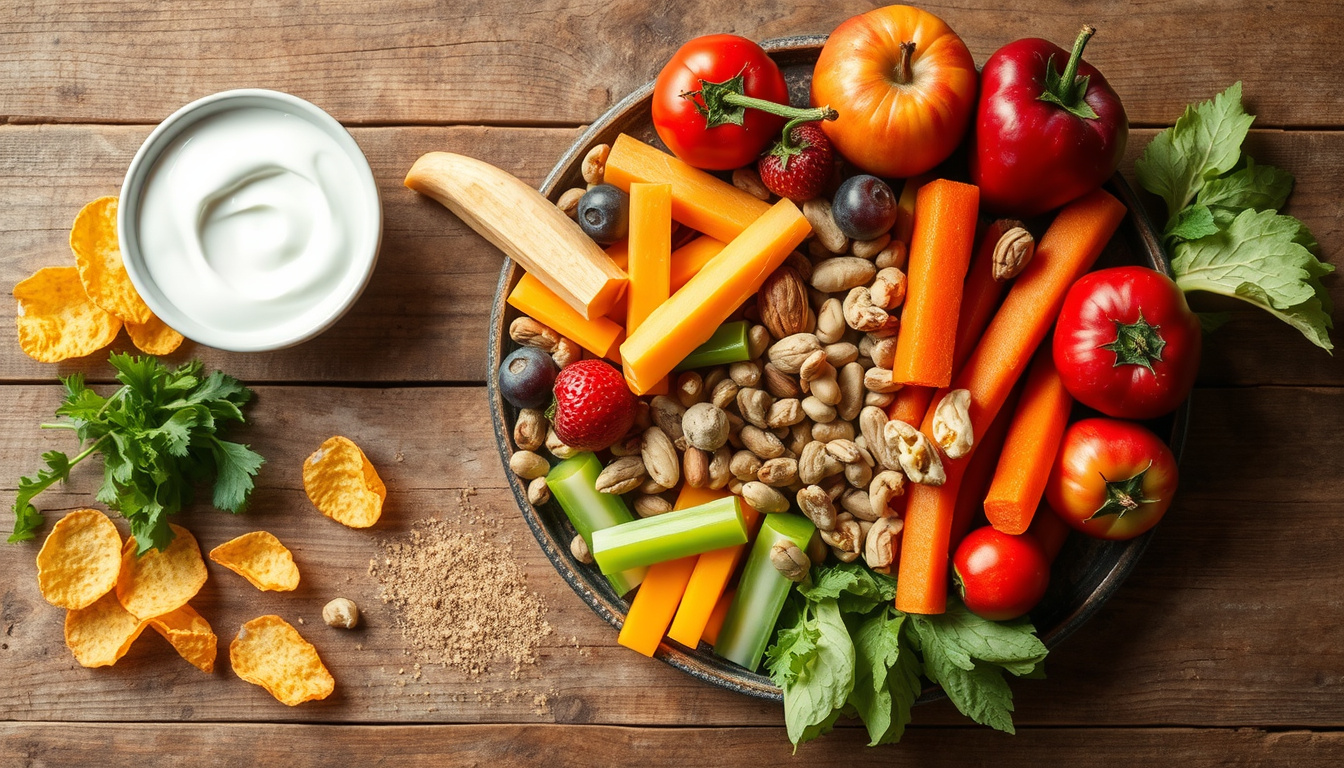
Few things complicate a trip to the kitchen quite like the gap between what we want to snack on and what we know we should. The good news is that building a genuinely healthy snack doesn’t require a chef’s precision—just a simple formula: protein plus fiber, capped near 200 calories. We break down the healthiest snacks ranked by nutrition science, plus what to avoid and how to handle cravings.
U.S. snack market value: over $160 billion per year ·
Share of daily calories from snacks: about 20–25% in U.S. adults ·
Protein target per snack: 10–15 grams ·
Fiber target per snack: 3–5 grams ·
Typical snack frequency: 2–3 times per day
Quick snapshot
- Snacking contributes a meaningful share of daily calories in U.S. adults (British Nutrition Foundation)
- Fiber and protein increase satiety more than sugar and refined carbs (MedlinePlus (U.S. National Library of Medicine))
- Government health bodies recommend fruit, vegetables, and low-fat dairy as snack bases (CDC (U.S. public health agency))
- Which single snack is “healthiest” depends on individual health needs and allergies
- Whether all-day snacking supports or hinders weight loss varies by person
- The exact health ranking of different snack foods lacks a standardized definition
- People are typically hungry three to four hours after a meal (Mayo Clinic Health System (nonprofit medical center))
- About 20% of daily calories can come from snacks and drinks (British Nutrition Foundation) (Mayo Clinic Health System (nonprofit medical center))
- More brands are reformulating for higher protein and lower added sugar
- Consumer demand for “snackable” vegetables is rising
Key facts at a glance — a simple reference for what makes a snack healthy and what to watch for.
| Attribute | Recommendation |
|---|---|
| Healthy snack definition | minimally processed, rich in fiber, protein, or healthy fats |
| Typical serving | 100–200 calories |
| Key nutrients | fiber, protein, unsaturated fats, vitamins, minerals |
| Limit these | added sugars, trans fats, sodium over 200 mg per serving |
| Satiety builders | pair protein with carbohydrate for longest fullness (MedlinePlus (U.S. National Library of Medicine)) |
| Portion strategy | do not eat straight from the package (CDC (U.S. public health agency)) |
What are the top 10 healthiest snacks?
The answer starts with a pattern: combine protein with fiber-rich fruits, vegetables, or whole grains, as the American Cancer Society (leading cancer prevention organization) recommends. Keep portions around 100–200 calories — the Mayo Clinic Health System (nonprofit medical center) suggests snacks under 200 calories for lasting satisfaction.
1. Fruit and vegetable snacks
- Apple slices with peanut butter (protein + fiber)
- Carrot sticks with hummus (CDC includes celery, carrots, cucumbers)
- Banana with almonds
2. Yogurt, cheese and dairy
- Greek yogurt (plain, no added sugar — American Heart Association (U.S. cardiovascular authority) emphasizes checking labels)
- Cottage cheese with fruit
- Low-fat cheese sticks
3. Nuts and seeds
- Almonds, walnuts, pistachios (portion to a small handful)
- Chia pudding or hemp seeds
4. Whole-grain and protein snacks
- Air-popped popcorn (NHS (U.K. health authority) lists popcorn as a healthy option)
- Boiled eggs
- Rice cakes with avocado or low-fat cream cheese
The pattern: every snack from this list contains at least two food groups — a carbohydrate source paired with protein or healthy fat. UW Health (academic medical center) recommends this exact approach for stable energy.
A single swap matters more than a perfect diet. Replacing a 300-calorie chocolate bar with a 150-calorie apple-and-peanut-butter combo cuts daily added sugar by nearly half while doubling fiber intake.
The pattern: a simple swap—replacing a high-sugar snack with a protein-fiber combo—rebuilds the entire snacking habit.
What is the healthiest food to snack on?
There is no single “healthiest” snack — the NHS (U.K. health authority) recommends mashed avocado on toast, rice cakes with low-fat cream cheese and cucumber, while the Food Standards Scotland (government food safety body) suggests fruit and vegetable sticks with reduced-fat hummus.
- Whole fruit is a nutrient-dense default: an apple, banana, or orange gives fiber, vitamins, and water — and needs no prep.
- Vegetable sticks with hummus combine crunch with protein and healthy fat.
- Boiled eggs and Greek yogurt offer portable protein without added sugar.
The healthiest snack depends on medical needs, allergies, and activity level. Harvard Health Publishing (university medical division) advises choosing whole, minimally processed foods that contain healthy sources of fats, carbohydrates, and protein.
What is “healthiest” for a person managing diabetes (low-carb, high-fiber) differs from what an athlete needs after training (higher protein and carbs). The best snack is the one tailored to your body’s current demand.
The implication: there is no universal winner, only the best fit for a person’s specific metabolic and lifestyle context.
What is a snack you can eat all day?
High-volume, low-calorie picks — cucumber, celery, watermelon — allow large portions for few calories because of their water and fiber content. CDC (U.S. public health agency) includes celery and cucumbers on its snack list, noting that portioning into a bowl prevents mindless eating.
Best all-day options
- Air-popped popcorn (3 cups ≈ 100 calories)
- Rice cakes (1 cake ≈ 35 calories)
- Crunchy vegetables: bell peppers, cucumber, celery
- Watermelon or berries
Snacks to avoid eating all day
- Chips, candy, pastries — they lack the water and fiber that signal fullness
- Mindless all-day eating still counts toward total calorie intake
The British Dietetic Association (UK professional body for dietitians) warns against buying less nutritious snacks on impulse and suggests planning ahead to have healthy options available.
What this means: volume eating works only when the food has low caloric density and high water or fiber content.
What are the 10 unhealthiest snacks I should avoid?
Added sugars, trans fats, and high sodium are the main unhealthy markers. The American Heart Association (U.S. cardiovascular authority) advises evaluating packaged snacks by serving size, calories, added sugars, and sodium on the Nutrition Facts label.
- Candy, chocolate bars and sweets — high added sugar, low satiety
- Chips, fries and processed savoury snacks — trans fats and excessive sodium
- Sugary drinks and soda — empty calories with no fullness benefit
- Pastries, donuts and cakes — refined carbs and added sugar
What should I eat if I crave junk food?
Replace rather than eliminate. Harvard Health (university medical division) suggests more nutritious carbohydrate choices (fruit, whole-grain crackers) balanced with a little protein or healthy fat. For a sweet craving: Greek yogurt with berries. For a salty craving: popcorn with a sprinkle of paprika.
The catch: replacing, not eliminating, is the realistic pathway to dietary change.
What snacks fill you up but are low in calories?
The most filling snacks combine protein with fiber. MedlinePlus (U.S. National Library of Medicine) states that pairing protein with carbohydrate helps a snack keep you full for the longest.
- Greek yogurt (15–20g protein per serving)
- Cottage cheese (14g protein per half-cup)
- Air-popped popcorn (fiber and volume)
- Boiled eggs (6g protein each)
What snack kills hunger?
The combination of high protein and high fiber is most effective. Examples: an apple with a tablespoon of peanut butter (protein + fiber + healthy fat), or a small bowl of oatmeal with nuts.
What drink kills hunger?
Drinks with protein or fiber — milk, kefir, broth, green tea — blunt hunger better than sugary sodas. Mayo Clinic Health System (nonprofit medical center) recommends snacks that combine carbohydrates, protein, and fat for long-lasting satisfaction.
The pattern: protein and fiber together are the most effective satiety signal for the brain.
How to Build a Healthy Snack in 3 Steps
A repeatable framework from dietitians and health agencies makes snacking simple.
- Pick a protein base. Greek yogurt, cottage cheese, boiled eggs, hummus, or nut butter. MedlinePlus (U.S. National Library of Medicine) says protein paired with carbohydrate keeps you full longest.
- Add fiber from produce or whole grains. Apple slices, carrot sticks, berries, whole-grain crackers, or popcorn. The CDC (U.S. public health agency) recommends canned fruit without added sugars and whole-grain crackers and breads.
- Cap it at 200 calories. UW Health (academic medical center) suggests targets: ≤200 calories, ≤10g sugar, ≥2.5g fiber, ≤140mg sodium, ≥7g protein per serving.
This framework applies whether you’re packing a lunch box or choosing a snack from the supermarket. It also aligns with British Dietetic Association (UK professional body for dietitians) advice to check nutrition labels and plan ahead.
The implication: this three-step formula creates a repeatable template that works across any kitchen or culture.
What we know vs. what remains unclear
Confirmed facts
- Snacking contributes 20–25% of daily calories in U.S. adults (British Nutrition Foundation)
- Fiber and protein increase satiety more than sugar and refined carbs (MedlinePlus (U.S. National Library of Medicine))
- Government health bodies recommend fruit, vegetables, and low-fat dairy as snack bases (CDC (U.S. public health agency))
What’s unclear
- Which single snack is “healthiest” depends on individual health needs and allergies
- Whether all-day snacking supports or hinders weight loss varies by person
- The exact health ranking of different snack foods lacks a standardized definition
The pattern: the science is solid on what to snack on, but the quantity and timing remain deeply individual.
Expert perspectives
“Eat patterns that emphasize vegetables, fruits, whole grains, and limited-added-sugar snacks.”
— U.S. Dietary Guidelines Advisory Committee (federal nutrition guidance body)
“Quick homemade snack ideas such as mashed avocado and boiled egg.”
— NHS Healthier Families (U.K. health authority)
“Healthy snack ideas include fruit, vegetable sticks with low-fat yogurt or reduced-fat hummus.”
— Food Standards Scotland (government food safety body)
These perspectives all converge on the same principle: minimally processed foods, balanced across food groups, portioned intentionally. For the American snacker facing a convenience-store aisle, the choice is clear: pick the option that contains a protein and a fiber together, or default to a piece of fruit. For the U.K. snack buyer, this gives a straightforward daily ceiling — a practical tool to prevent overconsumption.
Frequently asked questions
What are the best healthy snacks for weight loss?
High-protein, high-fiber options like Greek yogurt, cottage cheese, boiled eggs, apple slices with peanut butter, and air-popped popcorn help manage hunger and stay within a calorie deficit.
What are good healthy snacks for kids?
Fruit skewers, yogurt drops, cheese cubes, whole-grain crackers with hummus, and mini rice cakes with avocado are kid-friendly and nutrient-dense.
What healthy snacks are easy to take to school?
Pre-portioned apple slices with peanut butter, carrot sticks, cheese sticks, boiled eggs, and popcorn in a lunch box travel well and don’t require refrigeration for a few hours.
What are healthy Indian snacks?
Roasted chickpeas (chana), vegetable cutlets baked rather than fried, idli, dhokla, fruit chaat, and yogurt-based lassi are traditional options that fit the protein-fiber formula.
What are healthy sweet snacks I can buy?
Look for individually wrapped dark chocolate squares, unsweetened apple sauce pouches, fruit and nut bars (with few ingredients), and Greek yogurt cups without added sugar.
What healthy snacks can I buy at the supermarket?
Hummus, pre-chopped vegetables, plain Greek yogurt, cottage cheese, boiled eggs (pre-cooked), almonds, popcorn kernels, rice cakes, and fresh fruit are widely available on any supermarket shelf.
Related reading: Smart Watch Health Comparison — tracking activity and snacking patterns with wearables.

Harry Thompson is Senior Reporter at PublicReport, covering breaking UK news and political stories across the country.