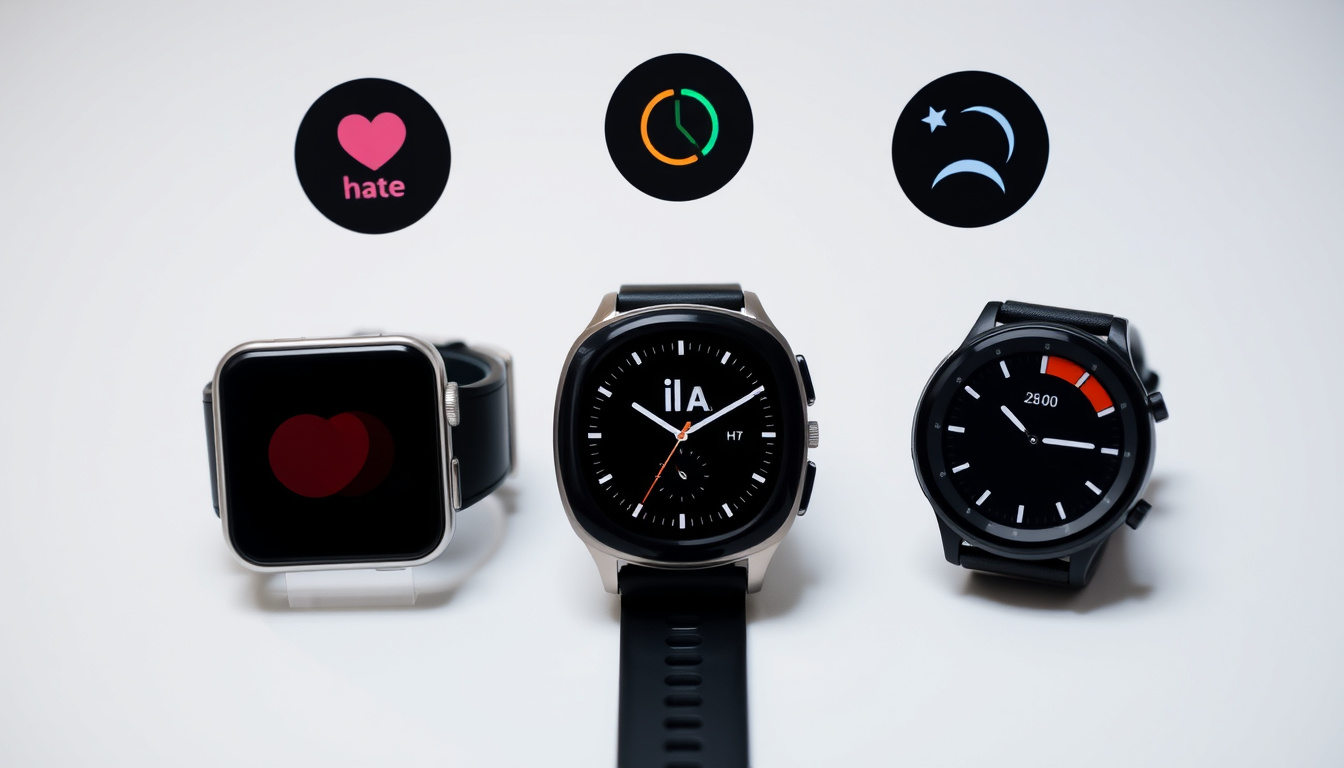
The best smart watch is no longer just a notifications machine. For anyone who has felt that nightly vibration while trying to switch off, or stared at the price tag of a flagship model, the question has shifted from “which one?” to “is one actually right for me?”
Global smartwatch shipments (2023): 50.4 million units (IDC) ·
Apple Watch market share: 30% (Counterpoint Research) ·
Average smartwatch price range: $100 – $800 ·
Users who wear smartwatch daily: over 60% of owners (Pew Research) ·
Number of smartwatch brands with ECG: 5 major brands (Apple, Samsung, Garmin, Withings, Fitbit)
Quick snapshot
- Apple Watch Series 10 includes ECG and temperature sensor (Family Vision)
- Samsung Galaxy Watch 7 series offers ECG and blood pressure tracking, but BP may require a Samsung phone (Wareable)
- Garmin watches lead in fitness and battery life, but lack ECG on many models (MoneySavingExpert)
- Cheap smartwatches under $50 often lack accurate sensors (Which?)
- Long-term health outcomes from smartwatch monitoring are still under study (Nature)
- Blood pressure accuracy without cuff calibration is variable (All Health and Care)
- ECG features are expanding in the UK, but Garmin’s ECG offering is not available in the UK market yet (Wareable)
- Look for more watches to adopt blood pressure monitoring as sensor tech matures, but medical validation remains the hurdle.
Here is how the leading models compare across the health metrics that matter most.
| Feature | Apple Watch Series 10 | Samsung Galaxy Watch 7 | Garmin Venu 3 | Fitbit Versa 4 |
|---|---|---|---|---|
| ECG | Yes | Yes | No | No |
| Blood Pressure | No | Yes (requires calibration & Samsung phone) | No | No |
| Battery Life | 18 hours | 40 hours | 14 days | 6 days |
| Best For | iPhone users | Android users | Athletes | Budget health tracking |
The pattern is clear: each brand makes you pick a priority—health monitoring with an iPhone lock-in, fitness capabilities with a weaker smart features, or a balance that compromises on both.
Which is the best smart watch to buy?
The answer depends on your phone and your priorities. For iPhone owners, the integration is the selling point.
Apple’s Watch Series 10 offers the most polished experience, but it doesn’t work with Android. Samsung’s Galaxy Watch 7 is the top choice for Android users, offering comparable health tools.
Top smartwatch brands compared
- Apple Watch is the best overall for iPhone users due to its tight integration and advanced health sensors.
- Samsung Galaxy Watch 7 offers the best experience for Android users, with ECG and blood pressure tracking.
- Garmin Venu 3 leads for athletes with exceptional battery life and fitness metrics, but lacks an ECG.
Key features to consider
Consider your phone first. The Apple Watch is a paperweight for Android users. Samsung’s best features are often exclusive to Samsung phones. Garmin focuses on fitness, not smart features.
The choice is between a smaller health feature set with longer battery life (Garmin) or a full smartwatch experience that demands a daily charge (Apple, Samsung).
Is it worth buying a cheap smart watch?
If your budget is under $100, you are walking into a minefield. While the price is tempting, the health data could be unreliable.
According to All Health and Care, cheap smartwatches often lack accurate sensors for heart rate and blood oxygen, which can lead to misinformed decisions about your health.
Performance and reliability trade-offs
Cheap sensors struggle with heart rate accuracy during high-intensity exercise, and the lack of water resistance means you can’t wear them in the pool or even in the shower. Most budget models don’t have the battery life or the GPS accuracy of their premium counterparts.
When a budget smartwatch makes sense
If you only want step counting and notifications, a basic tracker from a reputable brand like Fitbit or Xiaomi will serve you better than a cheap unknown knockoff. The appeal is clear, but the value is dubious.
A $40 smartwatch is an expensive way to get data you can’t trust. You are paying a small premium to be the product, often with poor privacy policies.
What are the downsides of smart watches?
Beyond the initial cost, there are hidden costs that show up in your daily routine. It’s not just about the battery dying or the screen cracking; it’s about the data you are generating and the constant connection.
The Wareable review of the best smartwatches notes that most require daily charging, a burden not present with traditional watches. But the deeper issues are privacy and data security.
Battery life limitations
Most smartwatches with a quality screen need to be charged every day or two. If you forget, you’re back to using your phone for basic functions, which defeats the purpose.
Privacy and data security concerns
Your heart rate, sleep patterns, and location are valuable data. The Nature study is clear that this data sharing can happen with third parties, sometimes without your full knowledge or consent.
Screen size and durability
The glass screen is a point of vulnerability, and dropping it can lead to a cracked display, which is expensive to repair.
The implication: a smartwatch is a data collection device on your wrist, and the convenience comes with a privacy trade-off you should be aware of.
Can I leave my phone at home and use my smart watch?
Yes, but it depends on the model you choose. If you buy a cellular model, you can leave your phone behind.
The MoneySavingExpert guide highlights that the Apple Watch and Samsung Galaxy Watch offer cellular versions, allowing you to make calls and stream music without your phone.
Standalone cellular models vs Bluetooth-only
With a Bluetooth-only watch, you are tethered to your phone’s range. A cellular watch, like the Apple Watch Series 10 GPS + Cellular, works independently, which is liberating for runners or a quick trip to the shop.
What you can do without your phone
You can take calls, send texts, stream Apple Music or Spotify, and even use maps. But it’s not a full replacement; the watch screen is small for anything more comprehensive.
You can leave home without your phone, but you can’t leave behind the subscription cost for the LTE connection on your watch.
The pattern is that a cellular watch is a true independent device, but it’s also a second phone line you’ll pay for every month.
Which smart watch brand is best for health?
If we’re talking about dedicated health tools, the answer is not one brand, but a focus on specific features. For those who need an ECG to monitor for heart palpitations, the choice is narrower.
Family Vision positions the Apple Watch as a premium option for its ECG, sleep, and cycle insights. The hardware is there, but its usefulness is often overstated.
Heart monitoring: ECG and palpitations
The Apple Watch and Samsung Galaxy Watch have FDA-cleared ECG apps. This feature can record the electrical activity of your heart and help identify signs of atrial fibrillation (AFib).
However, as All Health and Care points out, a smartwatch ECG is not a substitute for a 12-lead ECG performed in a hospital.
Blood pressure tracking capabilities
Samsung Galaxy Watch offers blood pressure monitoring, but it requires calibration with a traditional cuff and may require a Samsung phone to work. This is a workaround, not a breakthrough. According to the 2025 Nature paper on cuffless blood pressure monitoring, such technology is not yet proven accurate enough for clinical decisions.
Cardiologist opinions on smartwatch data
Cardiologists say that while watches can help with early detection, they cannot replace a medical diagnosis. The data is only as good as what you do with it; a single irregular reading shouldn’t panic you, but it should encourage a visit to your GP.
Why it matters: you are buying a preventative health tool, not a diagnostic one. The sensor is a prompt to seek medical advice, not a doctor in a box.
backmarket.co.uk, smarthomemag.net, womenshealthmag.com, independent.co.uk, smarthomemag.net
Frequently asked questions
How long do smartwatch batteries typically last?
It depends on the brand. Apple Watch lasts up to 18 hours, Samsung up to 40 hours, and Garmin can last up to 14 days. Basic fitness trackers like the Fitbit Versa 4 can last around 6 days.
Are smartwatches waterproof?
Most modern smartwatches are water resistant to 50 meters, which is fine for swimming. However, you should check the specifications. Cheaper models may not have sufficient seals for heavy use or water sports.
Can I make phone calls from a smartwatch?
Yes, you can make and receive calls if it’s a Bluetooth model paired to your phone, or if it has a standalone cellular connection you can use it without the phone.
Do I need a phone plan for a cellular smartwatch?
Yes, a standalone cellular watch requires its own data plan, which is an additional monthly cost. Some providers offer “watch only” plans for a small fee on top of your existing plan.
Which smartwatch is best for running?
Garmin is often considered the best for running due to its advanced GPS, training plans, and long battery life. However, the Apple Watch with its fitness app is a strong contender for casual runners who own an iPhone.
Can a smartwatch detect sleep apnea?
Some newer models, like the Samsung Galaxy Watch 7, have received FDA clearance for detecting signs of sleep apnea. This is a significant step forward, but it’s usually a signal to see a sleep specialist for a full diagnosis.
How accurate is smartwatch step counting?
Step counting is generally accurate for most daily activities, but it can be less reliable for certain movements like pushing a pram or carrying groceries. It’s more useful when seen as a trend over days than as an exact count.
Related reading

Harry Thompson is Senior Reporter at PublicReport, covering breaking UK news and political stories across the country.