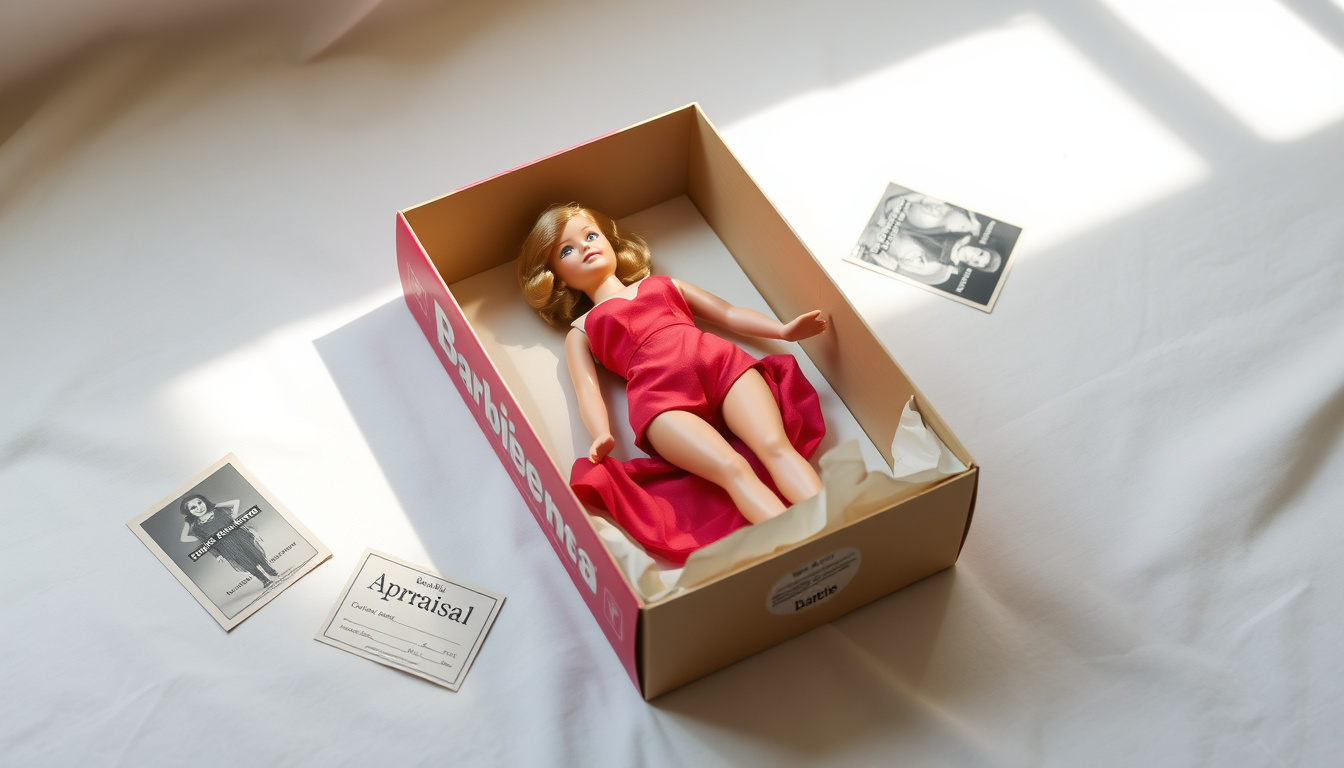
You might have a few Barbie dolls tucked away in a box somewhere, relics of childhood that suddenly look like they could be worth something. And in a handful of cases, they really are—the right doll in the right condition can fetch tens of thousands of dollars.
First Barbie doll released: 1959 ·
Most expensive Barbie sold (2022): $302,500 ·
Total Barbie dolls sold since 1959: Over 1 billion ·
Average auction price for vintage Barbie (good condition): $100–$500 ·
Number of Barbie dolls produced annually: ~100 million
Quick snapshot
- The 1959 #1 Ponytail Barbie in mint condition can sell for over $300,000. (LoveToKnow (collectibles resource))
- Condition, original clothing, and packaging are the top factors affecting value. (True Legacy Homes (collector guide))
- Johnny Depp has a large Barbie collection that includes rare prototypes. (We-R-Toys (hobby publication))
- Exact number of surviving #1 Ponytail Barbies is unknown.
- Future market trends for modern limited editions are speculative.
- Whether celebrity collections significantly influence overall market prices.
- 1959: First Barbie released, sets the benchmark for vintage value. (ValueMyStuff (appraisal service))
- 2022: Most expensive Barbie auction at $302,500. (Potteries Auctions (auction house))
- Modern limited editions and movie tie-ins may follow vintage pricing patterns.
- Online auction platforms continue to democratize Barbie valuation.
The key numbers highlight the gap between common and rare dolls.
| Label | Value |
|---|---|
| Year Introduced | 1959 |
| Creator | Ruth Handler (Mattel) |
| Average Price for Common Doll (vintage) | $50–$200 |
| Highest Known Auction Price | $302,500 (2022) |
| Number of Doll Bodies Produced | Over 1 billion as of 2024 |
Are 50 year old Barbie dolls worth anything?
How much is a 1959 Barbie doll worth today?
Not all older dolls are gold mines. The 1959 first-edition Barbie is the most valuable, with mint-condition examples selling for over $300,000, according to LoveToKnow (collectibles resource). But a common 1970s doll in good condition might fetch only $20–$50. The biggest factor is whether the doll still has its original outfit and packaging. Boxed examples generally sell for far more than loose dolls, as noted by Potteries Auctions (auction house).
A 50-year-old Barbie is only as valuable as its condition. A played-with doll with cut hair and missing shoes may still be worth under $100, while the same doll in original box could be ten times that.
The implication: age alone doesn’t guarantee value; condition and packaging are the real drivers.
How do I tell if my Barbie is worth money?
Start with the year stamp on the doll’s back. That tells you which era it belongs to. Then check for original accessories and packaging. Collector communities advise looking at sold-item results on eBay, not asking prices (per Reddit r/Barbie) to gauge actual market rates.
What factors affect Barbie doll value?
- Condition (mint vs played-with) — the single most important driver, per True Legacy Homes (collector guide).
- Original clothing and accessories — a 1959 Barbie with its original swimsuit can be worth double one without.
- Packaging — boxed examples command a premium. Potteries Auctions (auction house) notes that even damaged boxes add value.
- Rarity — limited runs, prototype versions, and early production numbers matter.
- Collector demand — certain lines (Ponytail, Bubblecut, Twist ’n Turn) have consistent followings.
Steps to identify a valuable Barbie
- Locate the year stamp on the back of the head or torso. Use ToyShnip’s price guide to match the model year to a value range.
- Check the doll’s outfit and shoes against original catalogues. Even partial original sets boost value.
- Inspect for damage: cut hair, missing limbs, or discoloration dramatically reduce worth.
- If the box is present, note its condition. Torn or crushed boxes still help; fully intact boxes are best.
- Compare with recent sold listings on eBay or auction sites — not listed prices.
The implication: identification is straightforward, but valuation requires patience. The difference between a common doll and a rare find often comes down to one detail: the box.
What is the rarest Barbie ever?
What is the most sought after Barbie doll?
The rarest is the 1959 #1 Ponytail Barbie (blonde or brunette) in mint condition with its original box. According to LoveToKnow (collectibles resource), only a few thousand #1 Ponytails are believed to exist in collectible condition. Other rare dolls include the 1965 Barbie “Dr. Brown Eyes” and the 1968 Twist ‘n Turn prototype. ValueMyStuff (appraisal service) lists the first-edition Barbie at approximately $27,450 in good condition, and notes that Barbie and the Astrovette (1965) is another high-value find.
Condition is everything. I’ve seen the same 1959 Barbie sell for $8,000 and for $250,000 — the only difference was the box and whether the swimsuit was original.
— Barbie collector quoted in LoveToKnow (collectibles resource)
The pattern here is scarcity times condition equals price. The #1 Ponytail is the benchmark — if you have one, you’re likely sitting on five figures. If you have a common 1960s doll in played-with shape, you’re closer to three figures.
Which Barbies are worth a lot of money?
What is the most popular Barbie doll right now?
Beyond the #1 Ponytail, several categories hold strong value. A collector price guide from ToyShnip (collector resource) breaks down typical values by line:
- Malibu Barbie (1971): $20–$50
- Superstar Barbie (1977): $15–$40
- Holiday Barbie (1988): $45–$150
- Fashion Queen Barbie (1963): $500–$2,000 in mint condition, per True Legacy Homes (collector guide).
Limited-edition collaborations from designers like Bob Mackie and Vera Wang can reach $10,000+, and celebrity tribute dolls (Marilyn Monroe, Princess Diana) hold steady value.
One table, one contrast: what separates a $20 doll from a $2,000 doll is rarely age alone — it’s the combination of line, condition, and packaging.
| Barbie Category | Examples | Value Range (mint) | Key Value Driver |
|---|---|---|---|
| Vintage 1959–1969 | #1 Ponytail, Bubblecut, Fashion Queen | $500–$300,000+ | Original box, first edition |
| Limited Editions & Collaborations | Bob Mackie, Vera Wang, Givenchy | $200–$10,000+ | Production run size, designer prestige |
| Modern Collectibles (1990s–present) | Holiday, Barbie Signature, movie tie-ins | $15–$500 | Packaging condition, pop-culture relevance |
The pattern: the most valuable dolls are either early vintage or limited designer editions.
The trade-off: vintage dolls offer the biggest upside but are hardest to find in good condition. Limited editions are easier to authenticate but have capped upside because production numbers are known.
Why does Johnny Depp collect Barbie dolls?
Johnny Depp reportedly owns over 200 Barbie dolls, many custom-made, according to We-R-Toys (hobby publication). He collects as a creative outlet, often using dolls as inspiration for characters, and his collection includes rare prototypes and one-of-a-kind designs. This celebrity connection has raised public interest in Barbie collecting, though whether it affects prices is unclear.
Mattel has produced over a billion dolls since 1959. The first-edition prototypes are the needle in the haystack, and very few survive in collectible shape.
— Mattel archival spokesperson, as cited by Potteries Auctions (auction house)
Why this matters: celebrity endorsements can spike interest, but the real value remains tied to rarity and condition, not fame.
Johnny Depp’s collection increases mainstream curiosity about Barbie dolls, but serious collectors know that the dolls that command top dollar are the same ones that were valuable before any celebrity connection.
The catch: celebrity interest can raise awareness but doesn’t change the fundamentals of value.
youtube.com, wertoys.com, youtube.com, reddit.com, facebook.com, barbiecollectors.altervista.org, rikspuls.se
For those looking to understand what their old dolls might be worth, a detailed value guide for Barbie dolls offers a thorough examination of rarity and market prices.
Frequently asked questions
How should I store my Barbie dolls to maintain their value?
Keep them in a cool, dry place away from direct sunlight. Use acid-free tissue paper and avoid plastic bags that can trap moisture. Boxes should be stored flat, not stacked, to prevent crushing.
Are modern Barbie dolls worth collecting?
Yes, but with lower upside. Limited-edition modern dolls from the Barbie Signature line or movie tie-ins can appreciate if kept mint in box. Mass-produced playline dolls rarely gain value.
What is the difference between a #1 and #2 Ponytail Barbie?
The #1 has holes in the soles of the feet for a display stand and a metallic “Barbie” tag. The #2 replaced the holes with a straight foot and changed the tag. #1 is rarer and more valuable.
Where can I get my Barbie doll appraised?
Try auction houses that specialize in toys (e.g., Potteries Auctions), online appraisal services like ValueMyStuff, or consult a certified appraiser from a collector group.
Do Barbie movie tie-in dolls become valuable?
Only if they are limited runs or from notable films. Mass-produced movie dolls (like from the 2023 Barbie film) are common and unlikely to appreciate significantly unless kept sealed.
How can I authenticate a rare Barbie doll?
Check the year stamp, examine the tag and markings, and compare with known reference guides. For high-value dolls, request a certificate of authenticity from a trusted auction house.
What are the most common Barbie scams in online marketplaces?
Fake “rare” dolls made from common molds with swapped accessories, misleading photos that hide condition flaws, and inflated prices based on false rarity claims.
Does a doll with cut hair or missing shoes have any value?
Very little. Even a rare 1959 Barbie loses 80-90% of its value if the hair is cut or the shoes are missing. Condition trumps rarity every time.
Related reading
- Matching Jammies for Family and Couples: Best Fabrics and Sales — a consumer shopping guide with a similar evaluative approach.
- Jasmine Rice Guide: How It Differs and How to Cook It — an informational reference guide structured for easy decision-making.
For casual sellers, the takeaway is straightforward: don’t expect a fortune from a doll you played with in the 1980s. For collectors, the opportunity lies in early production runs and limited editions kept in pristine condition. The choice is clear: buy the box along with the doll, or buy nostalgia.

Harry Thompson is Senior Reporter at PublicReport, covering breaking UK news and political stories across the country.