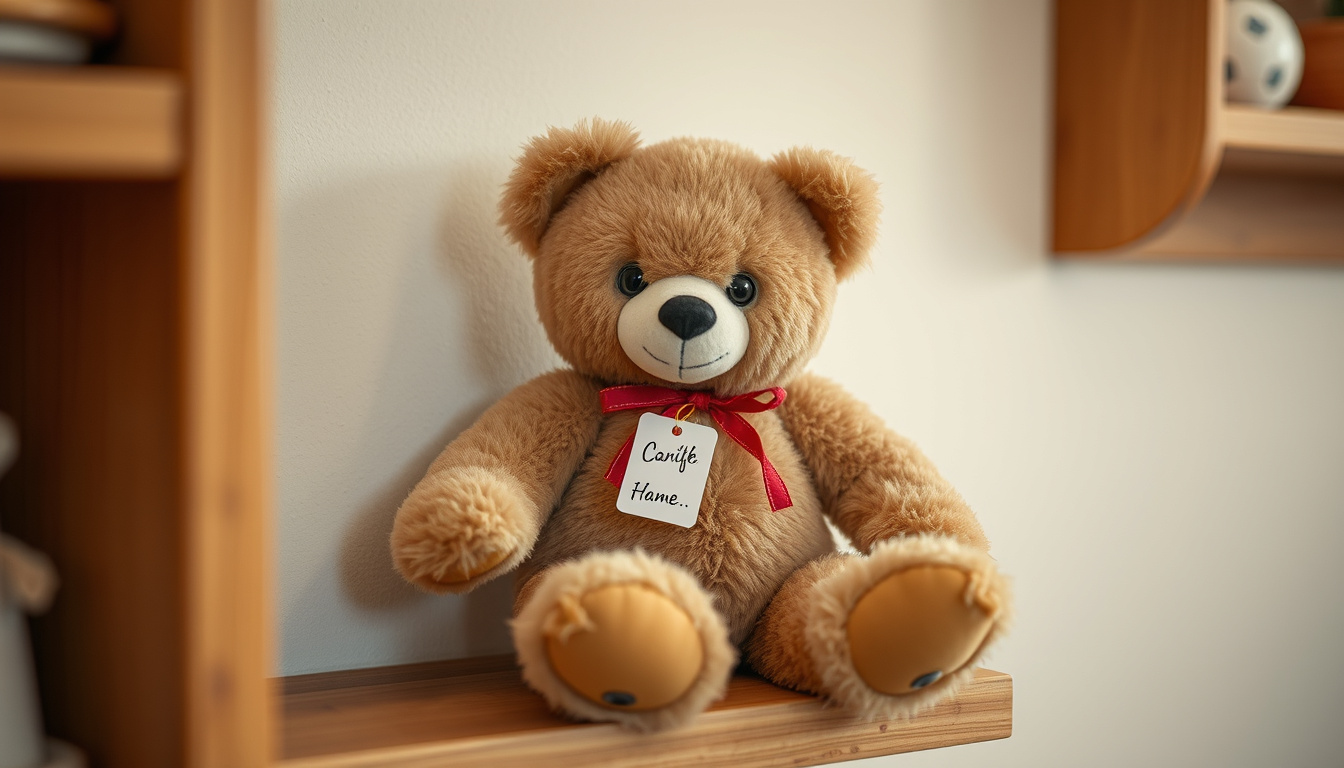
Few objects cross from nursery to auction room quite like the teddy bear. Since the first bears appeared after a 1902 political cartoon, the category has grown into a market where an early Steiff sold for £8,500 and a standard new bear still costs less than a cinema ticket. Here’s how to sort out definitions, prices, names, and the psychology — without losing the soft toy in the spreadsheet.
Year of Origin: 1902 · Namesake: President Theodore Roosevelt · Most Expensive Teddy Bear Sale: $2.1m (Steiff Louis Vuitton) · Average Price (Standard): $20–$50 · UK Bears Owned: 100m+ (est.)
Quick snapshot
- Named after President Theodore Roosevelt after the 1902 cartoon episode (Wikipedia (collaborative encyclopedia)).
- A 1906–07 Steiff bear sold for £8,500 at auction (Special Auction Services (UK auctioneers)).
- Dedicated teddy bear sales are an established auction category (Christie’s (international auction house)).
- Which maker — Morris Michtom or Margaret Steiff — moved first is still a matter of debate, not settled record. (Denhams (UK auction house))
- Auction estimates are starting points, not guarantees; condition and competition decide final prices (Denhams (UK auction house)).
- The “record price” headline depends on which category is being measured: new retail, limited edition, or early antique. (Denhams (UK auction house))
- 1902: the political cartoon and the first “Teddy’s Bear” appear (Wikipedia (collaborative encyclopedia)).
- 1910s–20s: the soft toy becomes a global nursery staple (Wikipedia (collaborative encyclopedia)).
- 2000s: dedicated teddy bear auctions establish the collectible market, with Christie’s sales totalling £107,750 and £174,576 (Christie’s (international auction house)).
- Specialist sales continue to appear regularly at UK auction houses such as Denhams (Denhams (UK auction house)).
- For gift buyers, UK retailers offer personalised and limited-edition bears (The Toy Shop (UK teddy retailer)).
- Charity drives still send bears to children in need (The Teddy Trust (children’s charity)).
Six numbers tell most of the teddy bear story, from the 1902 origin to the record auction room.
| Label | Value |
|---|---|
| Year of Origin | 1902 |
| Namesake | President Theodore Roosevelt |
| Most Expensive Sale | $2.1m (Steiff Louis Vuitton) |
| Collector Term | Arctophile |
| Average Price (Standard) | $20–$50 |
| Typical Material | Mohair, cotton, polyester stuffing |
What is the definition of a teddy bear?
A teddy bear is a soft toy in the shape of a bear, typically stuffed with cotton, wool, or synthetic fibre. The name comes from President Theodore “Teddy” Roosevelt, and the origin is usually traced to a 1902 hunting trip where he refused to shoot a bear (Wikipedia (collaborative encyclopedia)).
What is slang for teddy bear?
- Teddy — the everyday short form.
- Cuddle bear or cuddly toy — a soft plush comfort object.
- Stuffed animal — the broader retail category for plush toys.
The implication: the word “teddy” carries the origin story with it — a president’s nickname, not a factory brand.
What is the price of a teddy bear?
Price is the easiest part to misunderstand. The same category contains £15 shop-bought bears and £8,500 early Steiff bears, so the answer depends on which market you are in.
- Standard new bears: $20–$50 in ordinary retail terms.
- Modern limited editions: roughly £70–£160 in auction listings (Denhams (UK auction house)).
- Early 20th-century bears: £540 to £5,000 at specialist sales (C&T Auctioneers (dolls and teddy specialists)).
- Record headlines: $2.1m for the Steiff Louis Vuitton bear, the most-quoted price in the market.
Which teddy bear is expensive?
- Early Steiff mohair: a 1906–07 bear sold for £8,500 against a £4,000–£6,000 estimate (Special Auction Services (UK auctioneers)).
- A C&T sale recorded a Steiff brown mohair bear from circa 1909 at £2,500 and a cinnamon centre-seam example at £5,000 (C&T Auctioneers (dolls and teddy specialists)).
- British wartime oddities can outbid plainer bears: a rare Farnell WWII gas-mask holder sold for £840 (C&T Auctioneers (dolls and teddy specialists)).
- Limited replicas can be more approachable: a Steiff Schwarzbar replica 1907 edition of 4,000 has an estimate of £80–£120 (Auction-Net (UK auction listings)).
What is the most collectible teddy bear?
- Steiff is the benchmark: early mohair, jointed limbs, and the original button push bears to the top of the market.
- British makers such as Farnell and British United Toy Manufacturing appear consistently in specialist catalogues.
- Auction-Net also lists a Steiff Teddy Rose 1926 replica, limited edition of 10,000, with an estimate of £60–£70 (Auction-Net (UK auction listings)).
A 1906–07 Steiff bear sold for £8,500 — well above its £4,000–£6,000 estimate — because collectors pay for condition, provenance, and the button.
Why do ladies love teddy bears?
People often frame this as a child’s habit, but adult buyers are the reason bear auctions exist. The same comfort object that helps a child settle also shows up in collections, hospital wards, and charity appeals.
Why do girls use teddy in bed?
- A bear is a familiar sensory anchor; it exists to be held.
- Plush toys are easy to grip and carry, which makes them natural bedtime companions.
- Charities describe the role as comfort first, decoration second (The Teddy Trust (children’s charity)).
Why do I love teddy bears as an adult?
- Nostalgia: a bear can carry childhood memories in one object.
- Collecting: adults value design history, rarity, and potential auction value.
- Gifting: personalised bears work as sentimental keepsakes for new babies, birthdays, and memorials (The Toy Shop (UK teddy retailer)).
What this means: it is not a male/female thing — it’s an attachment thing. Naming a bear, keeping it on a bed, or paying £2,000 for a 1910 Steiff are all ways of keeping a small piece of security close.
What is a cool name for a teddy bear?
Naming a bear is a small ritual. The best names usually come from a memory, a food, or a favourite character.
- Classic: Bearnard, Winnie, Teddy, Rosie.
- Food-themed: Cookie, Honey, Biscuit, Marmalade.
- Pop-culture: Paddington, Yogi, Winnie-the-Pooh, Baloo.
- British-flavoured: Alfie, Arthur, Poppy, Monty.
- Personalised: many UK retailers can stitch a name or date onto the bear (The Toy Shop (UK teddy retailer)).
The trade-off: a cool name is one the owner can say with a straight face when introducing a bear to visitors.
What is a person who loves teddy bears called?
The collecting community has its own word: an arctophile.
- An arctophile is someone who loves teddy bears; serious collectors use the same term.
- Arctophiles can follow specialist auctions at Christie’s, C&T, Denhams, and Special Auction Services.
- Some collectors focus on early Steiff and British makers; others chase modern artist bears or limited editions.
Arctophiles do not all chase the same bear. A modern Steiff limited edition can sit at £70–£160 in one sale, while a rare 1909 centre-seam bear reaches £5,000 — knowing which one you are buying is the real skill.
Why this matters: the word matters less than the behaviour — collecting, cuddling, and giving bears is a spectrum, not a single hobby.
For anyone comparing bears, one pattern stands out: the older and more hand-finished the surface, the higher the auction estimate tends to be.
| Specification | Typical range |
|---|---|
| Body material | Mohair, wool, cotton, or synthetic plush |
| Stuffing | Cotton wool, kapok, or polyester fibre |
| Standard size | 10–20 inches (25–50 cm) |
| New retail price | $20–$50 |
| Modern limited-edition auction price | £70–£160 |
| Early 20th-century auction price | £540–£5,000 |
| Collector term | Arctophile |
| Condition premium | Original button, eyes, pads, and growler raise value |
The pattern: a modern shop-bought bear and an early Steiff bear share a face shape but not an economy. The specifications tell you which one you are actually holding.
A short timeline of the teddy bear market
Four moments matter more than the rest: the cartoon, the factory, the nursery boom, and the auction-house boom.
| Date | Event | Signal |
|---|---|---|
| 1902 | Political cartoon of Theodore Roosevelt inspires Morris Michtom to create “Teddy’s Bear” | Origin point (Wikipedia (collaborative encyclopedia)) |
| 1906 | Steiff produces mass-market teddy bears in Germany | Factory scale (Wikipedia (collaborative encyclopedia)) |
| 1910s–20s | Teddy bears become a global children’s toy phenomenon | Nursery classic (Wikipedia (collaborative encyclopedia)) |
| 2000s | Dedicated teddy bear auctions establish the collectible market | Collector asset (Christie’s (international auction house)) |
In the 2000s, the market shifted from children’s toy to collectible asset. Provenance — the bear’s history, packaging, and original features — now matters as much as cuteness.
Why this matters: the timeline explains the price spread. A 1906 bear is not a 2006 bear with a different bow; it is a different category entirely.
What we know and what we don’t
Confirmed facts
- Early Steiff bears are among the most collectible; a 1906–07 example sold for £8,500 (Special Auction Services (UK auctioneers)).
- UK auction houses hold dedicated bear sales with realisable prices from £70 to £5,000 (Denhams (UK auction house)).
- Dedicated teddy bear auctions are a recognised category at international auction houses (Christie’s (international auction house)).
What’s unclear
- Whether Morris Michtom or Margaret Steiff produced the first commercial bear first.
- Whether the term “teddy bear” started in the US or Germany.
- Auction estimates are not guarantees; final prices can outrun expectations in a competitive room.
The balance of evidence is clearer than the folk history suggests: the auction data is solid, while the origin story has a few soft edges.
Voices from the bear world
“An early bear is a piece of social history with a face. Condition, button, and provenance tell you whether it’s a £200 bear or an £8,500 bear.”
Collector expert, World of Bears (UK teddy bear retailer)
“The first bears were designed as movable characters, not decorations. That jointed body is part of why the Steiff tradition still commands premiums.”
Richard Steiff, early Steiff designer
“Sending a teddy bear to a child in distress does more than fill a hand; it provides a tangible source of comfort.”
The Teddy Trust (children’s charity)
Taken together, these voices point the same way: a teddy bear is a companion object first, and an investment object for a smaller group of buyers.
For a UK buyer, the choice is clear: if the bear is for a child or a memory, buy new from a trusted retailer and spend what feels right; if it is for a collection, buy early mohair with provenance and original features at auction — or treat the purchase as a £70–£160 modern keepsake and enjoy it for what it is.
specialauctionservices.com, auction-net.co.uk, valuableantiques.org, candtauctions.co.uk, ebay.co.uk
Frequently asked questions
Are teddy bears safe for babies?
For babies, choose bears with no small detachable parts and washable materials. If in doubt, follow the manufacturer’s age recommendation.
How do I clean a teddy bear?
Check the label first. Spot-clean most modern plush bears with mild soap and cold water, then dry flat away from direct heat.
What is the best teddy bear to buy as a gift?
For a child, a soft, washable classic in a safe size is hard to beat. For an adult collector, a Steiff limited edition or a makers’ bear with a certificate tends to be the safer choice.
How can I tell if a teddy bear is valuable?
Look for maker’s labels or the Steiff button, original eyes and pads, mohair or early fabric, and clear ownership history. Auction results show early Steiff and rare British makers attracting the strongest bids.
What is the story behind the original teddy bear?
President Roosevelt refused to shoot a bear during a 1902 hunting trip; the cartoon that followed inspired Morris Michtom to create “Teddy’s Bear.”
Do adults collect teddy bears?
Yes — they are called arctophiles, and specialist sales at Christie’s, C&T, Denhams, and Special Auction Services cater to them.
Can teddy bears be personalised?
Many UK retailers offer embroidered or custom bears for new babies, birthdays, and memorial gifts.
Where can I buy a teddy bear in the UK?
New bears are sold by high-street and online retailers; collectible bears appear in dedicated sales at Denhams, C&T, and specialist auctioneers.
The questions above cover the usual starting points — the next question is usually “which bear do I actually want?”
Related reading

Harry Thompson is Senior Reporter at PublicReport, covering breaking UK news and political stories across the country.