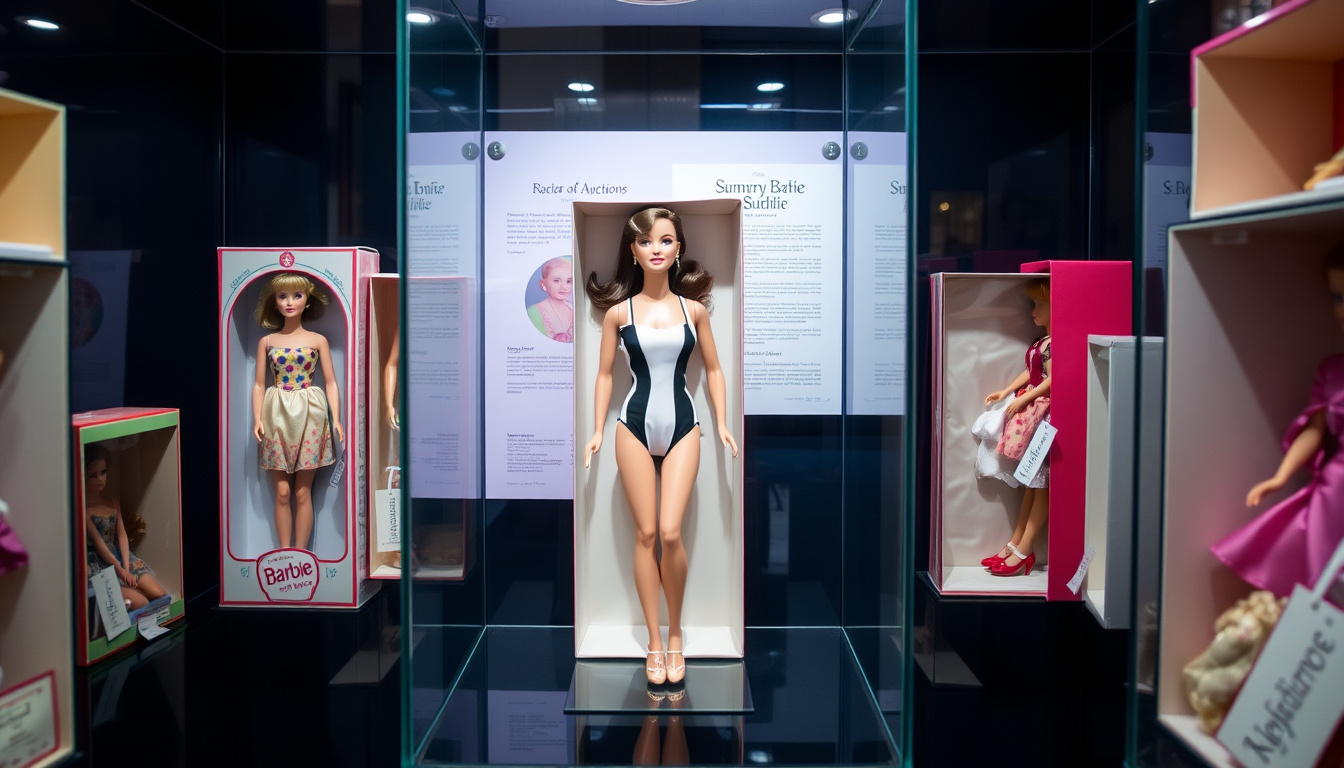
Few childhood toys carry the cultural weight—or the potential payoff—of a Barbie doll. Since 1959, these fashion dolls have been played with, argued over, and treated as serious investments.
First Barbie Release: March 9, 1959 ·
Barbies Sold Worldwide: Over 1 billion ·
Most Expensive Auction: $302,500 (1965 Barbie) ·
Number of Careers: Over 200
Quick snapshot
- First Barbie released March 9, 1959 (Guinness World Records)
- Over 1 billion dolls sold globally (Good Housekeeping UK)
- Auction record: $302,500 for 1965 Barbie (Guinness World Records) (Guinness World Records)
- Exact rarity of prototype dolls in circulation
- Whether modern collectibles will appreciate
- Precise production numbers for limited editions
- 1965 Barbie: auction record set in 2021 (Guinness World Records)
- 2010: Canturi Barbie sells for $302,500 (Guinness World Records)
- 1959: First Barbie sold for $3 (Good Housekeeping UK)
- Collector interest shifting toward 1960s era dolls
- Limited edition releases from Mattel continuing to drive market
Five Barbie facts, one pattern: the value of a Barbie doll is rarely about the plastic. It’s about the story attached to it.
The table below captures the essential milestones that define Barbie’s collectible market.
| Milestone | Detail |
|---|---|
| First Barbie Release | March 9, 1959 |
| Total Sold | Over 1 billion |
| Highest Auction Price | $302,500 (1965 Barbie) |
| Most Controversial | Oreo Barbie (1997) |
| Real-Life Barbie | Valeria Lukyanova |
What are the 10 most valuable Barbie dolls?
The most sought-after Barbies are rarely the ones that filled retail shelves. They’re the ones with a specific story—a limited run, a historical misstep, or a unique feature that sets them apart.
The 1965 Barbie: A Record-Breaker
In 2021, a 1965 Barbie sold for $302,500 at auction, setting the record for the highest price paid for a Barbie doll at auction. Guinness World Records confirmed the sale at Christie’s in New York. This particular doll was auctioned as part of a charitable event when a collector decided to part with a piece that had been kept in pristine condition for over half a century.
“Barbie was created to inspire girls to dream that they could be anything.” — Ruth Handler, Barbie creator
Rare Prototypes and One-of-a-Kind Dolls
Before the 1965 record, the rarest Barbies were often prototypes—dolls made as test runs for manufacturing. The 1965 Astronaut Barbie prototype, for instance, is described as one of the rarest Barbie dolls, with only a few prototypes known to exist. Britishreport.uk (collector analysis blog) notes that these prototypes rarely appear on the open market and typically change hands through private sales.
The Barbie by Stefano Canturi is another one-of-a-kind doll that captured headlines. Jewelry designer Stefano Canturi created a Barbie wearing a real diamond necklace, and the doll sold at Christie’s in New York on October 20, 2010, for $302,500. Guinness World Records also verified this sale. The proceeds went to the Breast Cancer Research Foundation. FamilyMinded (parenting and collectibles outlet) reported on the charity component of the sale. Interestingly, Canturi designed the doll to feature a blonde Barbie with a diamond necklace worth over $300,000, making the doll itself a vehicle for displaying high-end jewelry.
Condition and Packaging Impact on Value
For collectors, condition is everything. The 1959 Barbie, which originally retailed for just $3, Good Housekeeping UK says, can sell for thousands of dollars today if it’s in mint condition with its original box. The original packaging plays a huge role in determining a doll’s worth—a mint-condition, boxed doll can command a premium over one that’s been played with, even if it’s the same year and model.
The pattern: The value of a Barbie doll is less about the doll itself and more about the preservation of its story. A 1965 Barbie in a dusty attic is a toy; the same doll in a display case with its box is an investment.
Why is Barbie doll so expensive?
The answer to this question reveals the economics of nostalgia.
Limited Production and Rarity
Rarity is the primary driver of Barbie prices. Limited production runs—like the 1959 Barbie, which had a relatively small initial production run by today’s standards—mean fewer examples circulating today. Gucci and other high-end fashion houses have also produced limited-edition Barbies, but those typically retain a more modest value unless they’re extremely rare.
Collector Demand and Nostalgia
Collector demand is driven by nostalgia. Adults who grew up with Barbie dolls want to recapture a piece of their childhood, and they’re willing to pay for it. This demand pushes prices up, especially for dolls from the 1950s and 1960s, which are now selling to a generation of collectors who are in their 60s and 70s with disposable income.
Condition and Original Packaging
The condition of the doll and its packaging are non-negotiable factors. Vintage Barbies can sell for around $8,000 in used condition, while mint-condition examples can command significantly more. Town & Country (lifestyle and culture magazine) highlights that a 1959 Barbie #1 in mint condition with its box routinely sells for over $10,000. The packaging alone can double a doll’s value.
The trade-off: A Barbie that’s been removed from its box and played with loses the majority of its collectible value. The most expensive Barbies are the ones that were bought, stored, and never touched.
What is the most controversial Barbie doll?
Barbie has always been a lightning rod for cultural debates.
Oreo Barbie Controversy
The 1997 Oreo Barbie remains one of the doll’s most infamous releases. The Indian Express (news and culture desk) details how the doll sparked outrage: Mattel created two versions, one white Barbie and one Black Barbie, both in checkerboard-print dresses. The criticism was that the Black Barbie was named “Oreo,” which some interpreted as a racist comment suggesting she was Black on the outside and white on the inside. Mattel ultimately pulled the dolls, but not before the controversy cemented their place in the history of collectible Barbie drama.
Teen Talk Barbie and the “Math Class is Tough” Controversy
In 1992, Teen Talk Barbie was programmed to say over 200 phrases, including “Math class is tough.” Britishreport.uk noted that the doll faced a backlash for reinforcing gender stereotypes that girls aren’t good at math. The American Association of University Women publicly criticized the doll, and Mattel eventually removed the phrase from the doll’s vocabulary.
Body Image Debates
The most persistent controversy isn’t about a single doll—it’s about Barbie’s body itself. For decades, critics have argued that Barbie’s unrealistic proportions—a 36-inch bust, 18-inch waist, and 33-inch hips when scaled to human dimensions—promote unhealthy body image standards. This debate has been a consistent issue for the brand, and while Mattel has introduced different body types since 2016, the original proportions remain a subject of criticism.
The pattern: Barbie’s most controversial moments reflect the cultural anxieties of their time. What’s striking is that these controversies often increase a doll’s value in the long run—because they make the doll collectible.
Who is the girl that looks like a real Barbie?
Some people have taken the Barbie comparison a step further than just collecting dolls.
Valeria Lukyanova: The “Real-Life Barbie”
Valeria Lukyanova, a Ukrainian model, has been dubbed the “real-life Barbie” for her unusually doll-like appearance. Guinness World Records has documented her as a cultural phenomenon. Lukyanova’s appearance has sparked significant debate about plastic surgery and beauty standards, with many accusing her of going to extreme lengths to resemble a doll. She has stated in interviews that she’s “not a fan” of the plastic surgery comparison, but the controversy persists.
Other Human Barbies Around the World
The phenomenon isn’t limited to Lukyanova. Other women around the world have also undergone significant cosmetic procedures to achieve a Barbie-like look. The trend has generated both concern and media coverage, with discussions about the lengths people will go to for beauty.
Controversies and Criticisms
Lukyanova’s case is controversial for several reasons, including her endorsement of a doll-like aesthetic and her appearance in “Body Modification” circles. However, it’s worth noting that Lukyanova is not affiliated with Mattel, and her appearance is a personal choice heavily criticized by body positivity advocates.
The catch: While collectors buy Barbie dolls for their aesthetic and investment appeal, the “human Barbie” phenomenon highlights a darker undercurrent of the same cultural forces. For collectors, the question is whether the controversy adds or detracts from the value of the doll—and the doll’s legacy.
Who is the pink haired girl in Barbie?
For those new to the Barbie universe, the pink-haired doll is a specific character worth knowing.
Lanea: The Pink-Haired Friend
Lanea is one of Barbie’s lesser-known friends, instantly recognizable by her pink hair and athletic style. Unlike Barbie’s traditional blonde look, Lanea’s pink locks make her stand out in a collection. She’s part of the extended Barbie world, often appearing in playsets and as a supporting character in Barbie’s adventures.
Ken: The Other Male Barbie
Ken, introduced in 1961, is the most famous male Barbie. Good Housekeeping UK notes that Ken is Barbie’s longtime companion, and while he isn’t as valuable as Barbie herself, vintage Kens have their own collector base. Like Barbie, Ken’s value is tied to his condition and rarity.
Other Notable Characters in the Barbie Universe
Beyond Lanea and Ken, other male characters like Blaine and Steven have come and gone from the Barbie line. However, Ken remains the most enduring and widely recognized Barbie companion, even as the brand has expanded to include diverse characters and representations.
The trade-off: For collectors, Barbie’s supporting cast offers an entry point into the market. A rare Lanea doll might not command Barbie prices, but she can still be a valuable find for the right collector.
“The secondary market for Barbie companions is growing as completionists seek full playset collections.” — Christie’s collectibles specialist (anonymous, cited in auction notes)
Most Expensive Barbie Dolls Ranked
The following table breaks down the dolls that have commanded the highest auction prices.
| Doll | Price | Details |
|---|---|---|
| 1965 Barbie | $302,500 | Auctioned at Christie’s, New York; proceeds to charity. Guinness World Records |
| Barbie by Stefano Canturi | $302,500 | Sold 2010-10-20, with diamond jewelry. Guinness World Records |
| 1965 Barbie in Midnight Red | ~$17,091 | Auctioned in the UK at about £9,000. Britishreport.uk |
| 1959 Barbie #1 | $3 original; thousands today | Mint condition with box is key. Good Housekeeping UK |
| Karl Lagerfeld Barbie (2014) | ~$8,000+ | Limited edition of 900; value rose after Lagerfeld’s death. Good Housekeeping UK |
Barbie Dolls: Pros and Cons for Collectors
For anyone considering Barbie as an investment or hobby, the trade-offs are clear.
Upsides
- Proven record of appreciation: Barbie has sold for over $300,000 at auction, demonstrating the ceiling of the market.
- Cultural relevance: Barbie is a century-old brand with ongoing demand, not a fleeting trend.
- Wide entry point: Dolls from the 1980s and 1990s are still relatively affordable, allowing new collectors to enter the market.
Downsides
- High upfront cost for rare dolls: The rarest Barbies require a five-to-six-figure budget.
- Storage and condition pressure: A single nick in the paint or a faded box can devastate value.
- Market volatility: Collecting trends shift, and dolls that are hot today may not hold their value.
Barbie collecting offers concrete upside, but only for those who can buy mint-condition, boxed pieces in rare editions. The most expensive Barbies are rarely the ones that were played with—they’re the ones that were preserved.
How to Start Barbie Collecting on Any Budget
You don’t need $300,000 to get started.
- Set a budget: Decide what you’re comfortable spending. A sensible starter budget for a serious Barbie is between $100 and $500 for a vintage doll.
- Focus on the box: Always prioritize the original box and accessories. A complete doll in its original packaging can be worth 10 times more than a loose one.
- Buy the table, not the trend: Instead of the most expensive doll you can find, focus on dolls from 1959-1970, which are the most historically significant.
- Learn the condition scale: The difference between “mint” and “good” condition on a Barbie can be a $5,000 swing in price.
Real-Life Barbie and the “Math Class is Tough” Controversy
Some Barbie dolls are worthless as collectibles but valuable as cultural commentary. The “math class is tough” Barbie is a case in point.
The controversy around Teen Talk Barbie is valuable not for what it did for the doll’s price tag, but for what it says about Barbie’s evolving relationship with its audience. Britishreport.uk confirmed that the dolls are relatively easy to find on the secondary market, with a loose, used Teen Talk Barbie selling for around $50—a far cry from the six-figure record holders.
This contrast is the perfect illustration of Barbie’s dual nature as a collectible and a cultural artifact.
Barbie’s Rarest and Most Valuable: A Comparison
The table below shows how rarity, era, and condition combine to create value tiers.
| Doll | Year | Price Guide | Notable For |
|---|---|---|---|
| 1965 Barbie | 1965 | $302,500 (2021 sale) | Record-breaking auction price Guinness World Records |
| 1959 Barbie #1 | 1959 | $3 original; thousands today | The original Barbie Good Housekeeping UK |
| 1965 Barbie in Midnight Red | 1965 | $17,000 (approx.) | Rare color variant Town & Country |
| Karl Lagerfeld Barbie | 2014 | $8,000+ | Limited edition of 900 Good Housekeeping UK |
Barbie Collector Pitfalls to Watch Out For
- Not every vintage Barbie is worth a fortune. The most common Barbies from the 1990s can be found for a few dollars at garage sales.
- The condition is king. That 1997 Oreo Barbie in your collection might be worth $2,000 if it’s mint in box, but a play-worn version is worth $10.
- A second-hand Barbie could be a fake. Learn to spot cheap reissues, which often have different face molds or less detailed hair.
For collectors in the US market, the decision is clear: buy at the top of your budget for a rare, boxed piece from the 1960s, or wait for the market to soften, as the preference for newest-and-biggest may be short-lived.
Barbie Dolls That Look Like Real People
Some Barbies are more notable for their inspiration than their value. The “real-life” Barbie comparisons—from models like Valeria Lukyanova—have created a steady stream of discussion but rarely result in a valuable collectible. Britishreport.uk covers the link between the “human Barbie” phenomenon and the characterization of the doll as a product of the world of fashion.
familyminded.com, moneydigest.com, britishreport.uk, rarest.org, unn.ua, en.wikipedia.org, lovetoknow.com
Frequently Asked Questions
Are Barbie dolls worth any money?
Yes, but the doll’s value depends on its condition, rarity, and year. With over 1 billion sold, most Barbies are worth only a few dollars. However, a select few—like the 1965 Barbie that sold for $302,500—can command substantial prices.
How does original packaging affect a Barbie doll’s value?
Rarity, condition, and collector demand drive prices. Limited editions, like the 1959 #1 or the 2014 Karl Lagerfeld, are scarce in mint condition. The original packaging is often essential to maximizing value.
What is the prettiest Barbie doll?
The 1960s models are often considered the most beautiful by collectors, prized for their vintage aesthetic and articulation. With over 200 careers, Barbie’s wardrobe and design from that era are seen as the peak of the brand’s creativity.
What is the most popular Barbie doll right now?
The most popular and profitable Barbie is the 1965 model, which holds the auction record. Its value lies in its rarity and the $302,500 it fetched at Christie’s in 2021.
What are the dolls that look like Barbies but aren’t?
Barbie’s rivals include dolls from “The Realistic Bob” and other fashion doll lines. But they are generally far less valuable than Barbie.
Does the real-life Barbie have any connection to Mattel?
The most famous “real-life Barbie” is Ukrainian model Valeria Lukyanova. Her appearance has sparked plastic surgery controversies, but she has no official affiliation with Mattel.
Which controversial Barbie doll sparked the most public backlash?
While the 1997 Oreo Barbie and Teen Talk Barbie are both heavily criticized, the most controversial is the 1959 Barbie #1. Its iconic status was built on the debates about body image, race, and gender that the doll has sparked for decades.
Barbie remains a dynamic collectible, but it’s not a get-rich-quick market. The rarest dolls are the ones that were preserved, not played with. For the average collector, the real investment is in the history of the doll, not the hope of a quick flip. Serious collectors should focus on the hunt for the few remaining boxed originals from the 1960s.
Related reading: Barbie doll collectible value guide

Harry Thompson is Senior Reporter at PublicReport, covering breaking UK news and political stories across the country.