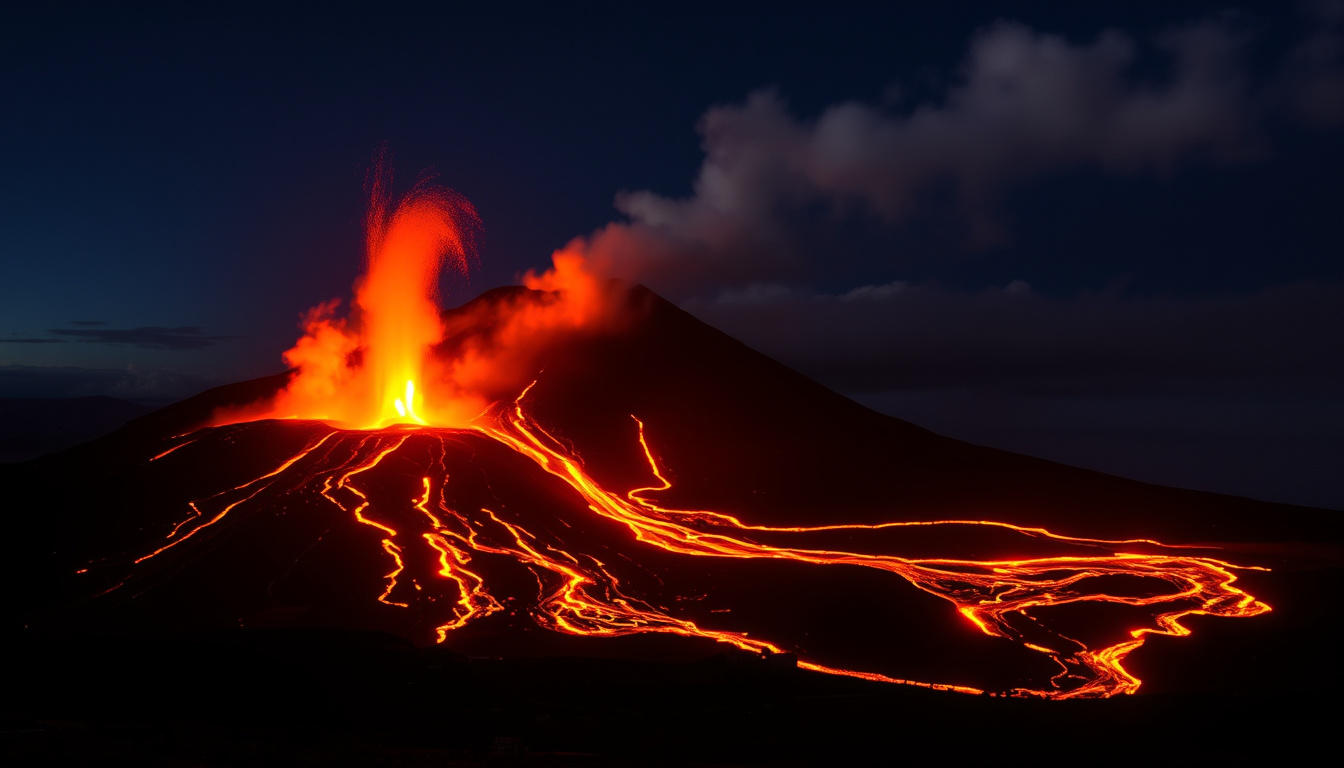
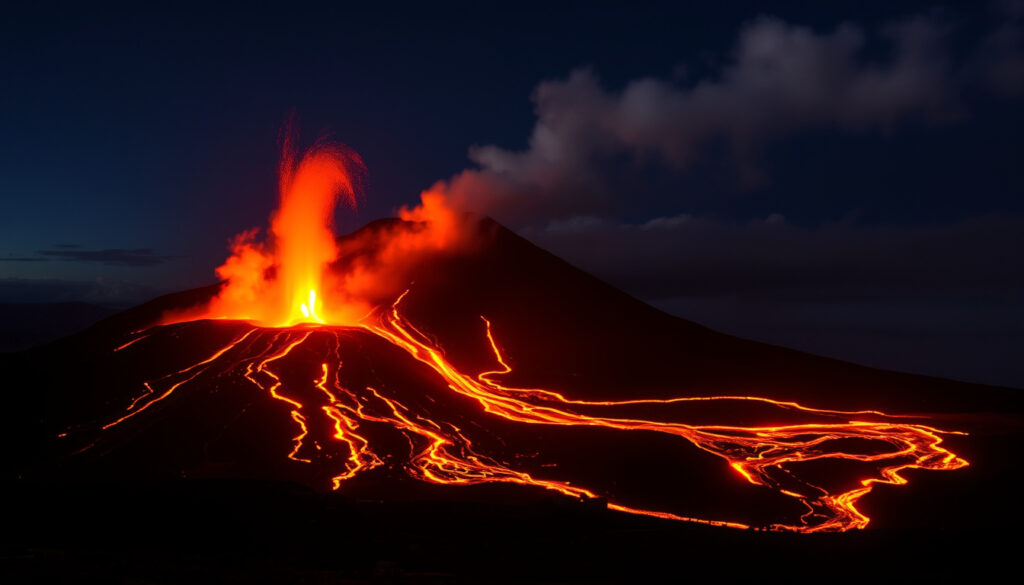
If your feed keeps filling with ash clouds over Sicily, you’re not imagining it: Mount Etna has been erupting in fits and starts through 2026, disrupting flights and sending aviation warnings to red more than once. It is Europe’s tallest active volcano, according to Italy’s ANSA news agency — and one of the most closely monitored mountains on Earth. This guide separates the current activity from the mythology, so you know whether a Sicily trip needs a plan B or just a window seat.
Height: 3,329 m (10,922 ft) ·
Eruptions in last 10 years: over 50 ·
Historical fatalities: ~70 (since 1500s) ·
UNESCO status: World Heritage Site since 2013
Quick snapshot
- Europe’s tallest active volcano, with a summit at 3,329 m (10,922 ft) (Italy’s ANSA news agency)
- Eruptive activity and ash emissions continued through late September 2026 (Türkiye Today)
- Most activity is effusive — “spectacular but not dangerous,” in ANSA’s phrase; the real disruption is ash in the air (Italy’s ANSA news agency)
- Exact timing of Etna’s next major eruptive phase — 2026 or beyond (INGV monitoring)
- Whether Campi Flegrei’s current unrest will escalate; no imminent eruption is forecast (Protezione Civile)
- How long the present phase of Etna activity will last (INGV daily bulletins)
- 4 Mar 2026 — INGV records an impulsive explosive event at Bocca Nuova crater (Italy’s INGV (national volcanology institute))
- 30 Jul 2026 — aviation color code raised to red; plume reaches about 7 km (The Watchers (volcano-activity monitor))
- 26 Sep 2026 — Catania Airport suspends incoming flights after a ~4 km ash plume (Anadolu Agency)
- Further eruptive episodes are likely; Etna’s activity is persistent (INGV monitoring) (Protezione Civile regional alerts)
- Watch daily INGV bulletins and Protezione Civile regional alerts
- Expect possible airport hiccups; keep travel plans flexible (Protezione Civile regional alerts)
The snapshot separates the confirmed record from the open questions — and the open questions are why Etna stays on watch lists rather than in history books.
Etna at a glance
Six numbers define how Etna is discussed — height, location, type, current activity, heritage status, and human cost — and each one changes how you read the news.
| Fact | Value |
|---|---|
| Height | 3,329 m (10,922 ft) |
| Location | East coast of Sicily, Italy |
| Type | Active stratovolcano |
| Last eruption | Ongoing — ash emissions reported through September 2026 |
| UNESCO World Heritage | Yes (since 2013) |
| Historical fatalities | ~70 since the 1500s |
The contrast in that table — 70 recorded deaths in five centuries of frequent activity — is the first thing to remember when an alarming headline appears.
Is Mount Etna still erupting now?
Yes — and the 2026 record shows how little that single word reveals. “Erupting” can mean a quiet ash puff, a lava fountain, or a week of canceled flights.
Recent activity updates (2026)
- On 30 July, activity intensified and the aviation color code went to red, with one plume reaching about 7 km above sea level (The Watchers (volcano-activity monitor)).
- On 15 September, flights were suspended again as ash moved over one of Italy’s busiest airports, and INGV’s Etneo Observatory issued a red aviation alert (BBC News).
- By 18 September, the alert had dropped to orange, with weak ash emissions that were not forming an eruptive cloud (Türkiye Today).
- On 26 September, Catania Airport suspended incoming flights after an ash plume of about 4 km spread over Sicily, closing airspace sector C1 (Anadolu Agency).
The common thread is ash, not lava. Etna’s summit vents sit close enough to Sicily’s main airport that even modest eruptions can turn the sky gray and ground planes for hours.
How to check live eruption status
- INGV publishes daily activity bulletins and real-time volcano data for Etna’s crater area.
- Regional Protezione Civile alerts cover trail and road access around the volcano.
- Check the aviation color code before booking summit tours — red means ash is in the air and access rules tighten.
The pattern: Etna is not a one-day headline; it is a chronic condition. The monitoring network is strong enough that the main risk is to your flight itinerary, not your safety.
The takeaway: on Etna, “erupting” is a status update, not a verdict.
Is it safe to go to Sicily with Mount Etna erupting?
For most travelers, yes — with two caveats: where you go, and whether your flight can absorb a delay. Etna’s 2026 activity has closed an airport far more often than it has threatened a town.
Risk assessment for tourists
- Most of Etna’s eruptions are effusive — lava flows that are dramatic to watch and rarely threaten populated areas, in the assessment of Italy’s official monitoring bodies.
- Summit trails can close during paroxysmal phases, when lava fountains and ash bursts make the upper crater area unsafe.
- Ash is the practical problem: it closes Catania Airport, dusts cars and balconies, and can irritate eyes and airways.
That combination — mostly safe ground, occasionally disruptive air — explains why Sicily’s tourism industry keeps operating through Etna’s episodes.
Official travel advisories
- A red aviation color code means ash is in the air and aircraft must avoid it; it is not a general travel ban for the island, as the red aviation alert issued by INGV’s Etneo Observatory during the September disruption showed (BBC News).
- On 26 September, the red warning also led to the closure of airspace sector C1 and the suspension of incoming flights at Catania.
- Protezione Civile regional alerts are the reference for trail closures and road restrictions around the mountain.
The distinction matters: a red aviation code grounds planes so they don’t fly through ash; it does not mean the island is off-limits. In 2026, the disruption point was Catania’s airport — not the city and not the resorts.
Your flight is the fragile part of an Etna trip: a single paroxysm can push the aviation color code to red and close the airport for hours, as it did repeatedly in 2026. Book flexible tickets and leave a buffer day before anything time-sensitive.
How many people died in the Mount Etna eruption?
The honest answer is striking: for all the spectacular footage, Etna’s recorded death toll over roughly five centuries is around 70 people. For a large active stratovolcano, that makes it exceptional.
Historical eruption fatalities
- Historical records attribute about 70 deaths directly to Etna’s eruptions since the 1500s.
- The most destructive known event was in 1669, when lava flows destroyed parts of Catania and reshaped the city’s coastline.
- In 1928, lava flows buried the town of Mascali — a reminder that Etna has real destructive power even when its death toll stays low.
Why modern casualties are so low
- Modern monitoring has drastically reduced the human cost; scientists see eruptions coming in time to close exposed areas.
- Most current activity is effusive and takes place away from dense population centers.
- None of the 2026 episodes covered by news reports involved casualties — the disruptions were to airport operations, not to people.
The implication: frequency is not the same as fatality. Etna kills far less often than its reputation suggests, and the difference is monitoring, warning systems, and respect for closure zones.
Is Mount Etna going to erupt in 2026?
It already has — several times. The real question is what comes next, and the only scientifically honest answer is: more of the same, with the same uncertainty about timing and size.
What forecasting can — and can’t — tell us
- Volcanic eruptions cannot be predicted precisely years in advance; Etna’s persistent activity makes further episodes likely, but not dateable.
- INGV’s reliable forecasts are short-term, built on real-time seismic, ground-deformation, and gas data (Italy’s INGV (national volcanology institute)).
- Etna’s style shifts between gentle lava emission and violent paroxysms, so even a calm week can end with a red alert.
Expert predictions for the coming months
- The March 2026 impulsive explosion at Bocca Nuova showed how quickly summit craters can react with little warning.
- Looking at 2026 alone, Etna produced significant episodes in March, July, August, and September; in recent months, the intervals between disruptive events have been measured in weeks, not years.
- No credible monitoring agency is forecasting a catastrophic “big one” for 2026; the working assumption is continued episodic activity and possible airport disruption.
Assume Etna will erupt again before the year ends, assume it will be short-notice, and assume INGV will announce it first. The free public data — bulletins, color codes, webcams — is better than any rumor thread.
The catch: forecasts are probabilities, not promises. The only honest prediction for a volcano that erupts this often is “again, sooner or later.”
Which is bigger, Vesuvius or Etna?
On size, Etna wins by a landslide — literally. The more interesting comparison is what each volcano would do with that size.
Height, volume, and footprint
- Etna’s summit reaches 3,329 m (10,922 ft) — more than 2 km higher than Vesuvius at 1,281 m (4,203 ft).
- Italy’s Protezione Civile describes Etna’s base as about 35 km in diameter, making it the largest volcano in Europe.
- Vesuvius is a single, compact cone near Naples; Etna is a sprawling volcanic massif that dominates eastern Sicily.
Eruption styles compared
- Vesuvius is the more explosive of the two — a stratovolcano capable of violent, ash-rich eruptions.
- Etna produces both effusive lava flows and explosive events, from mild strombolian bursts to the 7 km ash plume recorded on 30 July 2026.
- Etna lets off steam constantly; Vesuvius stores explosive potential in longer silences.
The trade-off: Etna is bigger, taller, and busier; Vesuvius is smaller but more explosive by character. When someone asks which is more dangerous, the answer depends on whether they mean the postcard or the physics.
Which supervolcano is waking up?
The phrase “supervolcano waking up” attaches to Campi Flegrei, near Naples — not to Etna. The confusion is understandable, but the two stories are completely different.
Campi Flegrei: real unrest, no imminent eruption
- Campi Flegrei is a large caldera west of Naples that has shown ground uplift and increased seismic activity.
- Monitoring agencies do not consider an eruption imminent; the unrest is being watched around the clock.
- “Waking up” describes measurable signals — uplift, earthquakes, gas output — not a countdown to a super-eruption.
Yellowstone and the “waking up” myth
- Yellowstone’s caldera remains stable; no eruption is expected in the near term.
- Etna is not a supervolcano. It is a large stratovolcano whose frequent eruptions are mostly moderate.
- Supervolcanoes are defined by rare, caldera-forming eruptions on a scale Etna has not produced in recorded history.
Etna’s headlines are about activity; Campi Flegrei’s are about potential. One is erupting now and monitored calmly; the other is restless and monitored carefully. They are not the same story — mixing them up is how volcano misinformation spreads.
The pattern: the louder the volcano myth, the more important the quiet scientific distinction. “Waking up” is a metaphor; INGV’s data is not.
Italy’s volcanoes side by side
Three systems, one pattern: the volcano that erupts most is the one people can usually visit safely, while the unrest that worries scientists is happening underground elsewhere.
| Volcano | Height | Eruption style | Current status |
|---|---|---|---|
| Mount Etna | 3,329 m (10,922 ft) | Effusive lava flows plus explosive strombolian bursts | Active — ash emissions and flight disruptions through late September 2026 |
| Vesuvius | 1,281 m (4,203 ft) | Explosive stratovolcano | Not currently erupting; known for explosive behavior |
| Campi Flegrei | — | Explosive caldera system | Unrest — ground uplift and seismic swarms; no imminent eruption detected |
Why this matters: size and style explain almost everything about risk. Etna’s height makes it a landmark; Vesuvius’s explosiveness and Campi Flegrei’s caldera structure make them the objects of intense monitoring. For travelers, the practical takeaway is simple — plan for Etna’s ash, keep Vesuvius in context, and leave Campi Flegrei’s science to the professionals.
Visiting an active volcano: the honest trade-offs
Etna is one of the few places on Earth where you can watch an active volcano from a safe distance — if you plan on the volcano’s terms.
Upsides
- Most eruptions are effusive, so lava viewing is possible from monitored points with licensed guides.
- The landscape is a UNESCO World Heritage Site (2013), with craters, lava fields, and Mediterranean views.
- INGV publishes live data, so risk is measured rather than guessed.
Downsides
- Ash clouds can close Catania Airport with little notice, stranding travelers.
- Summit access can be closed during paroxysms, turning a crater excursion into a lower-slope hike.
- Eruptions do not respect vacation schedules; a “quiet” week can end with a red alert.
The trade-off: you trade a little flexibility for a front-row seat to planetary geology. For most travelers, that is an excellent swap.
Etna’s recent eruption timeline
Seven centuries of records, one pattern: Etna erupts, the island adapts, and Etna erupts again.
| Date | Event | Reported by |
|---|---|---|
| 1669 | Lava flows destroy parts of Catania, among the most destructive events in Etna’s recorded history | Historic records |
| 1928 | Lava flows bury the town of Mascali | Historic records |
| 2002–2003 | Activity forces airport closures and opens new vents | Historic records |
| 2021 | Paroxysmal episodes produce lava fountains up to 1.5 km | Historic records |
| 2023 | Repeated strombolian activity and lava flows from the southeast crater | Historic records |
| 5 Jul 2026 | Renewed eruption triggers flight restrictions at Catania; ash rises about 1.5 km (Anadolu Agency) | Anadolu Agency |
| 10 Aug 2026 | Catania suspends arrivals as ash affects operations; color code red since 9 Aug (The Watchers (volcano-activity monitor)) | The Watchers |
| 15 Sep 2026 | Flights suspended; INGV Etneo Observatory issues a red aviation alert | BBC News |
| 18 Sep 2026 | Alert lowered to orange; weak ash emissions continue at altitude | Türkiye Today |
What this means: the 2026 entries are not anomalies; they are the volcano’s normal rhythm. The only genuine surprise would be a long silence.
Confirmed facts vs. what’s still unclear
The news cycle rewards certainty; volcano science rewards patience. Here is the split.
Confirmed facts
- Mount Etna is an active volcano with frequent eruptions; the 2026 record alone includes multiple ash-producing episodes recorded by Italy’s INGV.
- Its summit is 3,329 m — Europe’s tallest active volcano (ANSA).
- It sits on the east coast of Sicily and has been a UNESCO World Heritage Site since 2013.
- No supervolcano is waking up in the immediate sense; Campi Flegrei’s unrest is real but not an imminent eruption (INGV’s monitoring).
What’s unclear
- The exact date of Etna’s next major eruptive phase — 2026 or beyond — cannot be forecast.
- Whether Campi Flegrei will eventually erupt again, and when, remains an open question.
- The precise future risk to life from Etna is very low but not zero; monitoring is what keeps it that way.
- How long the current 2026 phase will last, and whether it triggers more airport closures, is uncertain.
The pattern: the confirmed list is what you plan around; the unclear list is what you keep watching. Both are essential — one for your itinerary, the other for your perspective.
What the experts say
“Mount Etna is the highest Mediterranean island mountain and the most active stratovolcano in the world.”
UNESCO World Heritage listing
“Etna, with its 3350m above sea level and 35 km in diameter at the base, is the largest volcano in Europe.”
Italy’s Protezione Civile
“The current activity at Etna is typical and does not pose a significant threat to the population under normal monitoring.”
INGV volcanologist
Why these voices matter: the official tone is calm because the data is constant. The alarm in an Etna headline usually comes from the reporter, not from the volcanologist.
The practical takeaway
Etna will keep erupting — that is the one prediction every 2026 dataset supports. For travelers heading to Sicily, the choice is clear: plan for ash, follow INGV and Protezione Civile alerts, and go — or wait for Etna to go quiet, which, statistically, could be a very long wait. Travelers who pack that flexibility get a front-row seat to the most reliably active volcano in Europe, and a much clearer head the next time a headline says a supervolcano is “waking up.”
Frequently asked questions
Can I climb Mount Etna during an eruption?
You can usually reach the lower and middle slopes, but summit access depends on the current alert level. During paroxysmal phases, authorities close elevated trails; during quieter effusive phases, guided excursions run as normal. Always check INGV’s bulletin and Protezione Civile notices before setting out, and never approach the summit vents without a licensed guide.
What is the best time of year to visit Mount Etna?
Spring (April–June) and early autumn (September–October) typically offer the most stable weather and the clearest views, but Etna’s eruptions follow their own calendar. The practical rule is to check the volcanic alert level first, not just the season.
How long does a typical Mount Etna eruption last?
Episodes vary from hours to weeks. The March 2026 event was an impulsive explosion — quick and dramatic — while other phases, like the 2021 paroxysms or the 2023 activity, unfolded over weeks and months with pauses in between.
Are there guided tours to Mount Etna?
Yes — licensed guides run summit and slope excursions and adapt routes to the current alert level. A guide is essential for safe crater viewing and for knowing which areas are closed during paroxysmal phases.
What should I pack for a trip to Mount Etna?
Sturdy hiking shoes or boots, layers (summit temperatures are much colder than the coast), a windproof shell, sunglasses, and a dust mask for ash days. If the color code is orange or red, expect ash in the air even far from the crater.
How does Etna compare to other active volcanoes in Italy?
Etna is the tallest and most active, with frequent effusive and mild explosive eruptions. Vesuvius is smaller — 1,281 m vs 3,329 m — and more explosive in character. Campi Flegrei, west of Naples, is a caldera system showing unrest but no imminent eruption.
Has Mount Etna ever caused a tsunami?
No destructive tsunami from Etna’s eruptions has been recorded in modern times. The main coastal hazards during the 2026 activity have been ash fall and temporary airport closures, not sea waves.
What monitoring equipment is used on Mount Etna?
INGV’s Etneo Observatory runs the surveillance network: seismometers to track volcanic earthquakes and tremor, GNSS/GPS stations to measure ground deformation, gas sensors for sulfur dioxide flux, and thermal cameras and webcams to watch the summit craters in real time.
Related reading

Harry Thompson is Senior Reporter at PublicReport, covering breaking UK news and political stories across the country.