
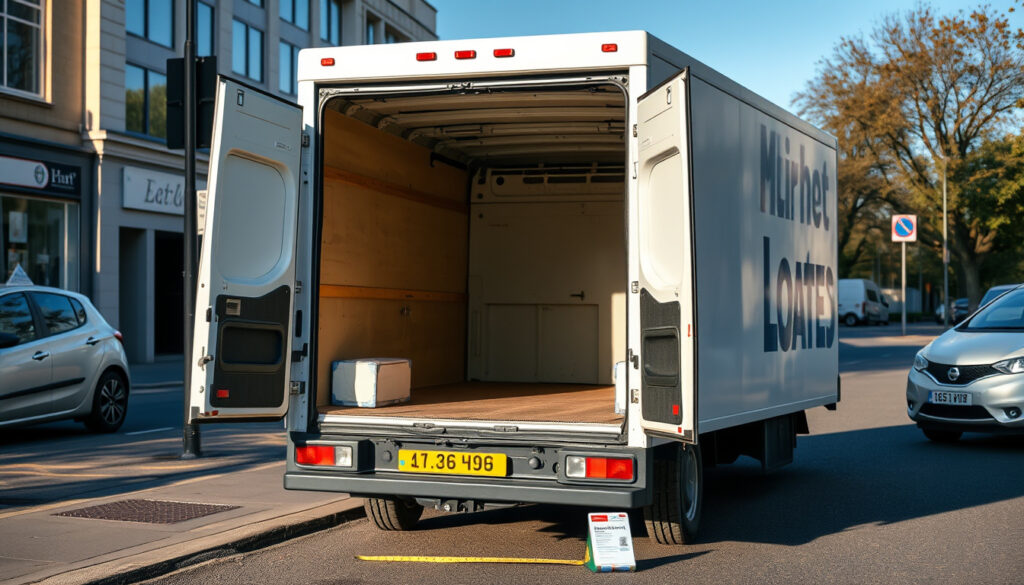
Few questions in the mobile home are quite as practical: you need to move a three‑bedroom house across town, or haul heavy stock for your business, and everyone says ‘get a Luton van,’ but what exactly is a Luton van, why is it called that, and can you legally drive one on a standard car licence? This guide lays out the facts on licence limits, size, and what it really takes to use a Luton for moving, including that with the right dimensions and payload it can handle a surprising amount of gear, but there are rules that affect drivers in the UK and Ireland.
Maximum legal weight: 3.5 tonnes · Typical internal height: 2.7 metres · Common payload capacity: 800–1,000 kg · Driving licence required: B category (standard car licence) · Typical length: 6–8 metres
Quick snapshot
- Named after the town of Luton, with over‑cab design from Bedford Vehicles Acorn Insurance
- 3.5‑tonne model can be driven on a standard B licence Metro Vehicle Hire
- Internal height roughly 2.2 m, load volume 15–20 m³ Metro Vehicle Hire
- Exact payload varies by manufacturer and configuration; 800–1,200 kg typical but no central database.
- Number of trips needed for a three‑bed house depends on furniture density and dimensions.
- Over‑cab “peak” height not standardised across brands.
- 1 Jan 1997: UK driving‑test change – drivers who passed after this date need C1 licence for vans over 3.5 t Hire2You
- Hiring or buying a Luton van – check licence rules, compare payload to your load.
- Tail‑lift and long‑term options available from major rental firms.
Six key numbers that define a typical Luton van, drawn directly from UK and Irish hire‑industry sources.
| Parameter | Value |
|---|---|
| Maximum authorised mass (MAM) | 3.5 tonnes |
| Typical internal height | 2.7 m |
| Typical internal length | 6–8 m |
| Typical internal width | 2.2 m |
| Payload (3.5t model) | 800–1,000 kg |
| Driving licence required | B (standard car) |
Why is a van called a Luton?
The name traces directly to the Bedfordshire town of Luton, home of Bedford Vehicles — a major British van manufacturer. According to Acorn Insurance, a UK insurance specialist, the “Luton” body style emerged when Bedford built a box van with a distinctive over‑cab storage area, often called the “Luton peak.” Acorn Insurance
- Bedford Vehicles produced the original Luton vans in the 1950s–1970s.
- The over‑cab section adds roughly 1 m³ of storage above the driver’s cabin.
- Today the term is generic for any large box van with an over‑cab locker.
History of Luton bodied vans
- The design was pioneered by Bedford Vehicles (Luton) in the mid‑20th century.
- It became the standard for UK removals because the extra overhead space holds lightweight items.
The town of Luton and coachbuilding
- Luton was a centre for UK coachbuilding and commercial vehicles.
- Other makers like Ford and Leyland later adopted the “Luton” style.
Difference between Luton and box vans
- Classic box vans have a straight roofline; Luton vans have the forward “peak” over the cab.
- That peak adds load volume without increasing wheelbase.
The implication: the name is a genuine place‑name, not marketing. Every Luton van today carries a legacy of British industrial history.
Can I drive a Luton van on a B licence?
For the vast majority of Luton vans on UK and Irish roads — those with a maximum authorised mass (MAM) of 3.5 tonnes or less — a standard Category B (car) licence is sufficient. Multiple hire‑industry sources confirm this. Hire2You, a UK vehicle hire specialist, states that most Luton vans fall within the B‑licence limit. Pace Van Hire echoes that a 3.5‑tonne Luton van is perfectly legal on a standard licence.
What is a B licence?
- B licence covers vehicles up to 3.5 tonnes MAM and no more than 8 passenger seats.
- You may also tow a trailer up to 750 kg (subject to vehicle limits).
Weight limits for Luton vans
- Most common Luton vans are built at 3.5 tonnes gross weight.
- Heavier models — 7.5‑tonne versions — exceed the B‑licence threshold.
Licence requirements for 3.5t and above
- Drivers who passed their test before 1 Jan 1997 have C1 entitlement (up to 7.5 tonnes) automatically. Hire2You
- Post‑1997 test passers need a separate C1 licence to drive vans over 3.5 tonnes.
- For 7.5‑tonne Lutons: a C1 or full C licence is required.
Irish driving licence regulations
- Irish B licence is equivalent to UK B: 3.5 tonnes MAM limit.
- Enterprise Rent‑A‑Car (Ireland) confirms a Luton van can be driven on a standard Irish driving licence if under 3.5t.
- No additional international permit needed for UK‑licence holders driving in Ireland and vice‑versa.
The implication: Licence rules are the primary gatekeeper for Luton van access.
What is a Luton size van?
Size varies by manufacturer, but there is a common standard that hire companies use. Metro Vehicle Hire, a UK van rental firm, gives external dimensions roughly 3–3.3 m high, 2–2.2 m wide, and 6.5–7 m long. Metro Vehicle Hire
Typical dimensions of a Luton van
- External height: 3.0–3.3 m
- External width: 2.0–2.2 m
- External length: 6.5–7.0 m
Internal load space measurements
- Internal height: 2.0–2.2 m
- Internal width: 2.0–2.1 m
- Internal length: 3.5–4.2 m
- Load volume: 15–20 cubic metres Acorn Insurance
Common length, width, height
- Length is where the biggest spread exists: short‑wheelbase Lutons start at 6 m, long‑wheelbase go to 8 m.
- Width rarely exceeds 2.2 m externally to fit standard parking bays.
What this means: a Luton van offers roughly the same floor space as a small one‑bedroom flat — but the internal height is what sets it apart from a medium‑sized panel van.
How big is a 3.5 tonne Luton van?
The 3.5‑tonne version is the most common and the one most people drive on a B licence. Its size is tightly regulated by the MAM limit. Acorn Insurance gives typical load dimensions of around 4 m long, 2.2 m wide, 2.2 m high, with payload roughly 1,000–1,200 kg. Acorn Insurance
Weight and payload of 3.5t Luton
- Payload is the key number: subtract weight of the empty van from 3,500 kg.
- Typical kerb weight ~2,500–2,700 kg, leaving 800–1,200 kg payload. Metro Vehicle Hire
External dimensions
- Overall height around 2.7–3.3 m (including Luton peak).
- Overall length 6–7 m.
Comparison with other van sizes
- Small panel van: typical payload 400–700 kg, internal height 1.4 m.
- 7.5‑tonne Luton: payload up to 2,500 kg, internal length over 6 m. Acorn Insurance
The catch: a 3.5‑tonne Luton may look big, but the payload limit means you can carry a lot of bulky but light items — dense loads like furniture or renovation materials may hit the weight limit before filling the space.
Here is a direct side‑by‑side of the two main Luton van weight classes, showing the jump in capacity.
| Parameter | 3.5‑tonne Luton | 7.5‑tonne Luton |
|---|---|---|
| External length | 6.5–7 m | ~8.35 m Titan Storage |
| Internal length | 3.5–4.2 m | ~6.1 m |
| Internal height | 2.0–2.2 m | ~2.4 m |
| Payload | 800–1,200 kg | up to 2,500 kg |
| Licence needed (post‑1997) | B | C1 |
| Typical load volume | 15–20 m³ | ~30 m³ |
Is a Luton van big enough to move a house?
In short: for a one‑ to two‑bedroom flat, a standard 3.5‑tonne Luton van is ideal. For a three‑bedroom house, it depends on how much furniture you have and how efficiently you pack. Titan Storage, a UK storage and removals company, notes that a 7.5‑tonne Luton lorry (internal 6.1 m × 2.35 m × 2.4 m) can handle a three‑bedroom house in a single trip. Titan Storage The smaller 3.5‑tonne version typically needs two trips for a three‑bed home.
Moving a one‑bedroom flat
- One‑bed: sofa, bed, wardrobe, kitchen goods – fits easily in 15 m³.
- Luton van can do it in one go with space to spare.
Moving a three‑bedroom house
- Three‑bed: volume of furniture (including large beds, sofa set, dining table, white goods) likely exceeds 20 m³.
- Expect two trips in a 3.5‑tonne Luton, or one trip with a 7.5‑tonne Luton.
When you need a larger van or truck
- Four‑bedroom house or multiple large appliances: a 7.5‑tonne Luton or even a full‑size removal truck.
- Always check payload against measured weight of your goods.
A 3.5‑tonne Luton gives you the space of a one‑bedroom flat but the payload of about four adults. For a house move, think in trips: one for the fragile/long items, a second for the heavy boxes. Hire a tail‑lift version if you’re moving appliances without a loading ramp.
Why this matters: knowing the difference between volume and weight is the difference between one trip and a ruined Saturday. Measure your load before you hire.
What we know for certain
Confirmed facts
- Luton vans are named after the town of Luton and the Bedford Vehicles design. Acorn Insurance
- 3.5‑tonne Luton vans can be driven on a B licence in the UK and Ireland. Pace Van Hire
- Internal height of a typical Luton is around 2.2 m. Metro Vehicle Hire
What remains uncertain
- Exact payload varies by brand – always check the VIN plate.
- Number of trips for a three‑bed house depends on furniture density – no industry‑wide formula.
- Over‑cab peak dimensions are not standard – some vans add only 30 cm, others 50 cm.
- Hire costs fluctuate seasonally – summer rates can be 30 % higher.
“Our Luton vans are designed for ease of use — any driver with a standard Category B licence can operate them for removals or deliveries.”
Enterprise Rent‑A‑Car (Ireland)
“If you passed your test on or after 1 January 1997, you are restricted to vehicles up to 3.5 tonnes on a B licence. That includes most Luton vans. But check the specific model.”
Croxdale Group, a UK‑based vehicle hire provider
For private movers and small‑business owners across the UK and Ireland, the Luton van remains the most practical one‑day hire vehicle. Its combination of internal height — enough to stand upright — and payload capacity just shy of a tonne makes it the default choice for transporting bulky, lightweight goods. The decision comes down to licence check and load assessment: if you have a B licence and your goods weigh under 900 kg, a 3.5‑tonne Luton is your best bet. If you need more capacity, the 7.5‑tonne version offers nearly double the payload but requires a C1 licence. The trade‑off: one trip versus two trips — and possibly a licence upgrade.
vanreviewer.co.uk, nationwidehireuk.co.uk, successvanhire.co.uk
Frequently asked questions
What is the difference between a Luton van and a standard box van?
A Luton van has an over‑cab storage area (the “peak”) that box vans lack. This adds usable volume without requiring a longer wheelbase.
Can I drive a Luton van in Ireland with a UK licence?
Yes. UK B licence holders can drive a 3.5‑tonne Luton van in Ireland under the mutual recognition of driving licences. The same weight limit applies.
How much does a Luton van hire cost per day?
Typical daily hire rates in the UK and Ireland range from £60 to £120 for a 3.5‑tonne Luton van, depending on location, mileage allowance, and whether a tail lift is included.
Do Luton vans have tail lifts?
Yes, many hire companies offer Luton vans with a hydraulic tail lift as an optional upgrade, useful for heavy items like washing machines or large boxes.
Is a Luton van suitable for a 2‑bedroom house move?
Yes. A 3.5‑tonne Luton van has enough volume (15–20 m³) to move a two‑bedroom house in one trip, provided you don’t exceed the payload limit.
What to check before buying a used Luton van?
Check the VIN plate for the MAM and tyre load indexes; inspect the Luton peak for water damage; and verify the service history. Also check the payload by deducting kerb weight from 3,500 kg.

Jonathan Cross is Editor-in-Chief at PublicReport, overseeing editorial policy, corrections, standards, and publication decisions. He writes occasional leader columns and major political stories.