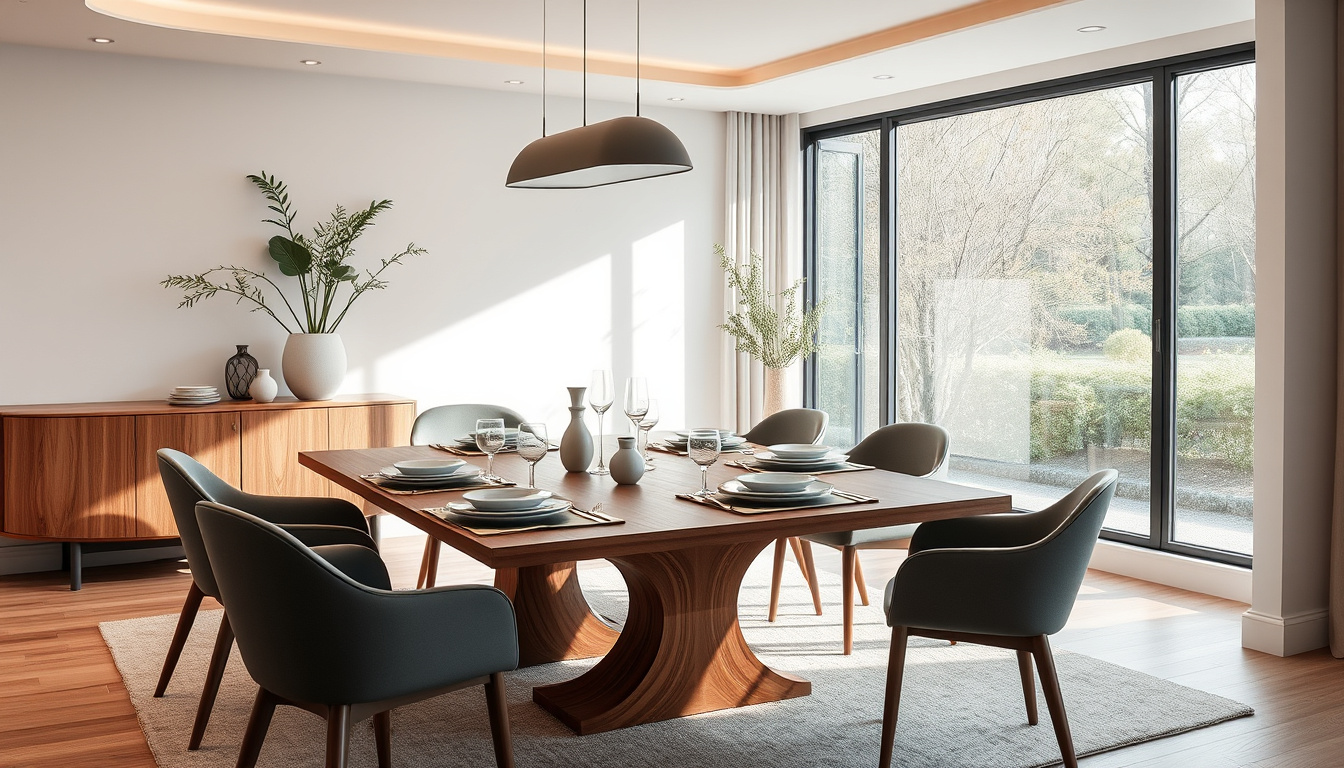
Few pieces of furniture pull a room together like a dining table — it’s where meals happen, bills get paid, and the guest who stayed too long ends up in conversation. If you’re shopping in Ireland in 2026, the choices are wider than ever — compact extendables for city apartments, solid oak statements for family homes, and round pedestal designs quietly overtaking the classic rectangle — and knowing what’s trending, what to pay, and where the money is best spent is the difference between a table that works and one that doesn’t.
Average solid wood table: $1,200 – $3,000 ·
Most popular shape: Rectangle ·
Top Irish retailer price: €2,215 ·
2026 trend: Sustainable materials and round shapes
Quick snapshot
- Oak is a top choice for durability (Southern Current)
- Round tables work well in small spaces (Corcoran’s Furniture)
- Extendable tables are increasingly popular (Wowcher Ireland)
- Exact 2026 price trends due to wood supply volatility (Southern Current), and whether glass tables will see a wider resurgence (Red Tree Furniture)
- 2023–2024: Rise of organic and sustainable materials; 2025: Round and oval tables start gaining market share (Red Tree Furniture)
- 2026: Natural wood, extendable designs, and multi-functional tables predicted to dominate (Southern Current)
- 65% of buyers now look for FSC-certified timbers, and earthy tones like terracotta and sage green are replacing greys (Red Tree Furniture)
Average Irish prices, shape preferences, and durability rankings — the essentials before you browse.
| Label | Value |
|---|---|
| Most popular shape | Rectangle |
| Average price in Ireland | €1,500 – €2,500 |
| Best wood for durability | Oak |
| Trend for 2026 | Sustainable materials and round tables |
| Top mistake | Choosing a table too large for the room |
| Average solid wood table (global) | $1,200 – $3,000 |
| Buyers seeking FSC-certified wood | 65% |
What are the dining table trends for 2026?
What furniture styles are popular in 2026?
- Organic shapes, curved edges, and soft silhouettes are leading the 2026 style guide from Red Tree Furniture (Irish furniture retailer).
- Pedestal bases are gaining ground over four-legged designs for a cleaner, more open look.
- Earthy tones such as terracotta and sage green are replacing starker greys in dining-room palettes (Red Tree Furniture).
What materials are trending for dining tables?
- Wood remains the most popular category, especially oak, walnut, and pine (Southern Current, Irish dining-table buyers’ guide).
- Glass tables are seeing growing preference in urban apartments, including Dublin and Galway (Red Tree Furniture).
- Sustainability is a major pillar: 65% of buyers now look for FSC-certified timbers (Red Tree Furniture).
Why this matters
Buyers who prioritise FSC-certified oak are paying for longevity, not just looks — 65% of Irish shoppers now factor sourcing into their table choice (Red Tree Furniture).
The pattern: sustainable materials are no longer a premium add-on; they are the default starting point for a 2026 dining table.
How much should you pay for a dining table?
What is the average cost of a dining table?
- Across Irish retailers, the typical range sits between €300 and €1,500 (Southern Current).
- Premium solid-wood pieces from Irish retailers like Kingsbury Furniture (Irish furniture store) stretch past €2,800.
Factors that affect dining table price
- Material is the biggest driver: solid hardwood costs more than veneer or particleboard (Southern Current).
- Size and shape matter — larger rectangular tables command a premium over compact rounds.
- Retailer positioning also plays a role: high-end stores add design and finishing costs.
Budget dining table options in Ireland
- Pine tables land in the €300–€600 band (Southern Current).
- Oak ranges from €500 to €1,200 and is described as durable and scratch-resistant (Southern Current).
- Walnut sits higher at €700–€1,500, offering a darker, richer colour (Southern Current).
The pattern is unmistakable: you’re paying for density and grain, not just brand names. Budget buyers in Ireland should aim for oak in the €500–€1,200 range rather than a cheaper veneer that wears out in a few years.
What are the best tables for a small dining room?
Best shapes for small dining rooms
- Round tables save space and fit tighter corners (Corcoran’s Furniture, Irish small-table specialist).
- Rectangular tables with benches maximise seating along walls (Wayfair Ireland (furniture marketplace) offers a dedicated small-table category).
Space-saving features like drop-leaf and extendable
- Foldable tables, nesting sets, extendable designs with built-in storage, and wall-mounted fold-down tables are highlighted for Irish homes (Wowcher Ireland, deal platform).
Recommended sizes for small spaces
- For two people, aim for 60–80 cm width; for four, 120–140 cm length when space allows (Wowcher Ireland).
- Compact guides from Michael Murphy (Irish furniture retailer) and Corcoran’s Furniture reinforce the space-efficient approach.
The catch: a round pedestal table gives you legroom and a softer flow, but if you often work with laptops or serving dishes at the table, a rectangle with a bench may serve you better long-term.
What dining table style is most popular?
Most popular styles: modern, farmhouse, industrial
- Modern minimalist leads globally, favouring clean lines and neutral finishes (Red Tree Furniture).
- Farmhouse style remains a strong contender in Ireland, with rustic wood and sturdy legs.
- Industrial style — metal frames paired with wood tops — is popular in loft-style apartments (JYSK Ireland (furniture chain) lists both round and rectangular options).
How to match table style with your decor
- Consider existing flooring and wall tones before choosing a table finish.
- Match the table’s visual weight to the room’s proportions — a heavy farmhouse table can overwhelm a compact dining nook.
The trade-off: a modern minimalist table pairs well with bold chairs and lighting, while a farmhouse piece anchors a cosy, traditional room. Choose the style that complements your existing furniture, not the one that merely photographs well.
What are some common mistakes to avoid when decorating a dining table?
Over-decorating the table
- Avoid clutter — keep the centrepiece low so it doesn’t block conversation across the table.
- Use a single tall vase or a low bowl, not both, to maintain sightlines.
Ignoring proportion and scale
- Leave at least 36 inches (91 cm) from the table edge to walls or furniture so chairs can slide out comfortably.
- A table that’s too large for the room is the top mistake cited in buying guides (Southern Current).
Choosing the wrong table size for the room
- Measure both the room and the table before purchase — remember to account for chair depth when pushed in.
- For a family of four, a 120–140 cm table is usually enough; for six, go to 150–180 cm (Wowcher Ireland).
What this means: measure twice, buy once. A table that fits properly makes the room feel larger and the meals more comfortable.
What’s the best wood for a dining table?
Oak vs walnut vs maple
- Oak is the most popular for durability and grain, priced around €500–€1,200 (Southern Current).
- Walnut offers a darker, richer colour at €700–€1,500 (Southern Current).
- Pine is the budget option at €300–€600, but it’s softer and more prone to dents (Southern Current).
Three woods, one pattern: density and hardness rise with price, and oak sits at the sweet spot for Irish households.
| Wood | Price (€) | Durability | Best for |
|---|---|---|---|
| Pine | 300–600 | Low–Moderate | Budget, rustic look |
| Oak | 500–1,200 | High | Daily use, families |
| Walnut | 700–1,500 | High | Rich aesthetic, premium |
Hardwood vs softwood
- Hardwoods (oak, walnut, maple) resist scratches and last decades.
- Softwoods (pine) are cheaper but dent easily and may need refinishing sooner.
Care and maintenance tips
- Use coasters and placemats to protect the surface from heat and moisture.
- Oil solid wood tables every 6–12 months to maintain the finish.
The implication: if you entertain often or have kids, oak is the practical choice; walnut is for those who want a statement piece and don’t mind the premium.
Dining table size guide
Five capacities, one pattern: clearance — not just table length — determines whether a room feels comfortable.
| Capacity | Min Width | Min Length | Recommended Clearance |
|---|---|---|---|
| 2 people | 60–80 cm | 80–120 cm | 36 inches from walls |
| 4 people | 90–100 cm | 120–140 cm | 36 inches from walls |
| 6 people | 100–110 cm | 150–180 cm | 36 inches from walls |
| 8 people | 110–120 cm | 200–240 cm | 36 inches from walls |
The pattern: width matters less than length for seating capacity, but both need clearance to feel liveable.
Extendable vs fixed tables
Upsides
- Flexibility for guests and large gatherings
- Space-saving when closed — ideal for apartments
- Good for small dining rooms that double as workspaces
Downsides
- Heavier and more complex mechanism
- Can be more expensive than fixed tables of similar size
- The seam may show over time
For Irish apartment dwellers, the extendable is a practical middle ground — it gives you a compact footprint for daily life and a full-size table for holidays (Wowcher Ireland).
Dining table timeline: 2023–2026
- 2023–2024: Rise of organic and sustainable materials — buyers start prioritising natural finishes and responsibly sourced wood (Red Tree Furniture).
- 2025: Round and oval tables begin gaining market share, with pedestal bases appearing in Irish showrooms (Red Tree Furniture).
- 2026: Natural wood, extendable designs, and multi-functional tables are predicted to dominate the Irish market (Southern Current).
The pattern: the Irish market is moving from statement materials to flexible, lower-impact designs that earn their floor space.
What’s confirmed vs what’s unclear
Here’s the editorial read: some claims are solid, others are still in flux.
Confirmed
- Oak is a top choice for durability (Southern Current)
- Round tables work well in small spaces (Corcoran’s Furniture)
- Extendable tables are increasingly popular (Wowcher Ireland)
Unclear
- Exact price trends for 2026 due to wood supply volatility (Southern Current)
- Whether glass tables will see a wider resurgence (Red Tree Furniture)
- Whether the shift to earthy tones is a lasting 2026 change or a shorter trend cycle (Red Tree Furniture)
The pattern: material costs are the wildcard — if wood prices spike, expect the gap between pine and oak to widen.
What experts say
“Buyers are moving away from stark greys and toward warmer, earthier tones — terracotta, sage green, and natural wood finishes are leading the way in 2026.”
Style guide from Red Tree Furniture (Irish furniture retailer)
“Oak is the workhorse of dining tables. It’s dense, scratch-resistant, and ages beautifully — which is why it sits at the top of most buyers’ lists.”
Woodworking expert quoted in Southern Current (Irish buyers’ guide)
“For compact homes, the extendable table is the smartest investment — it shrinks for daily life and expands for the holidays.”
Space-saving guide from Wowcher Ireland (deal platform)
The consensus across all three sources is the same: a good table fits the room, the budget, and the way you actually live.
For Irish buyers, the 2026 dining table is a choice between warmth and practicality. Sustainable materials, round shapes, and extendable designs are leading the market, but the real decision comes down to how the table fits your space and your life. For anyone in a Dublin apartment, the compact extendable is the clear winner; for a family home in Cork, a solid oak rectangle is the investment that lasts. For first‑time buyers in Ireland, the choice is clear: measure your room, pick oak if you can stretch the budget, and let the wood speak.
ezlivingfurniture.ie, mediaroar.uk, italianfurnitureireland.wordpress.com, mandiinteriors.ie, jysk.ie, wochenbriefing.de
Frequently asked questions
Can I use a dining table as a desk?
Yes — many compact extendables double as desks. Just ensure the height is comfortable (around 75 cm) and add a desk mat to protect the surface.
How to protect a dining table from scratches?
Use felt pads under plates, coasters for glasses, and a tablecloth or runner for daily use. For solid wood, apply a protective oil or wax every 6–12 months.
What is the standard dining table height?
Standard dining tables are 28–30 inches (71–76 cm) high. Pair with chairs that seat you comfortably with knees at 90 degrees.
Should I buy a round or rectangular table?
Round tables are better for small spaces and conversation; rectangular tables maximise seating and work well in larger rooms. Choose based on your room’s shape and how you entertain (Corcoran’s Furniture).
How to clean a wood dining table?
Wipe with a damp (not wet) cloth and dry immediately. Avoid harsh chemicals; use a mild soap solution for tough stains and follow with wood polish.
Are glass dining tables durable?
Glass tables are durable if tempered, but they show fingerprints and can chip on impact. They suit modern, light-filled rooms and are reportedly growing in urban Irish apartments (Red Tree Furniture).
What is the best dining table for a family of four?
A 120–140 cm rectangular table in oak is the sweet spot — it seats four comfortably, leaves room for serving dishes, and offers durability for daily use (Southern Current).
For most Irish buyers, the right answer is the table that fits the room and the routine, not the one that trends hardest.

Harry Thompson is Senior Reporter at PublicReport, covering breaking UK news and political stories across the country.