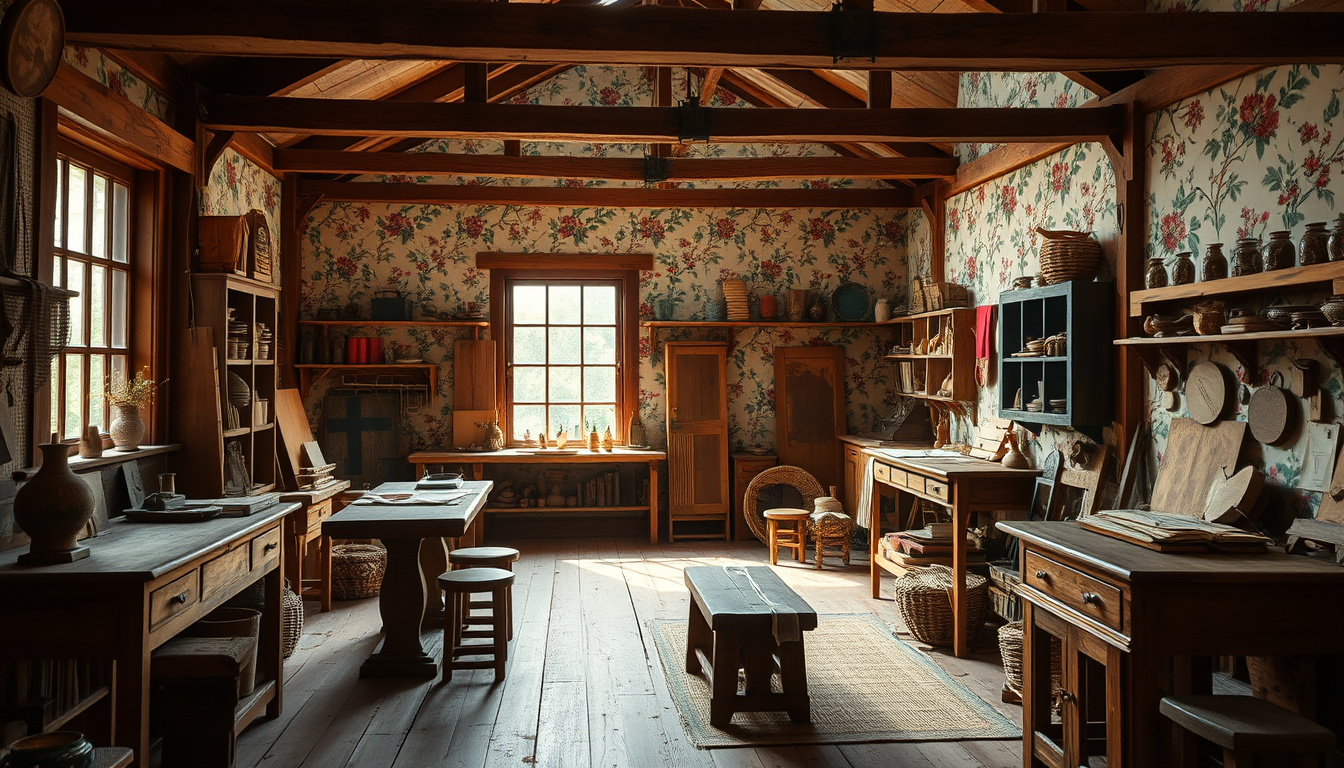
There’s a reason we still talk about wallpaper patterns designed 140 years ago. William Morris wasn’t just a designer who made pretty florals—he was a radical socialist who believed that industrial capitalism was destroying the art of everyday life.
Born: 24 March 1834 ·
Died: 3 October 1896 ·
Known for: Textile design, poetry, socialism ·
Notable designs: Strawberry Thief, Willow Boughs ·
Founded: Morris & Co. (1861) ·
Movement: Arts and Crafts
Quick snapshot
- Born 24 March 1834 in Walthamstow, England (Britannica)
- Died of tuberculosis on 3 October 1896 in Hammersmith (Britannica)
- Founder of Morris & Co. (1861) and the Arts and Crafts movement (National Trust)
- Exact details of his religious beliefs later in life — generally considered atheist or humanist
- Some minor works and attributions debated by scholars
- 1834–1896: whole life span
- 1861: founded decorative-arts firm
- 1891: founded Kelmscott Press
- 1883: joined Social Democratic Federation
- Morris & Co. still sells his patterns today
- His ideas influence modern sustainable design
- William Morris Gallery in London holds largest collection
One thing that stands out: few figures of the 19th century wore as many hats as William Morris. The table below captures the key biographical facts at a glance.
| Field | Detail |
|---|---|
| Full name | William Morris |
| Born | 24 March 1834, Walthamstow, England |
| Died | 3 October 1896, Hammersmith, England |
| Occupation | Textile designer, poet, novelist, socialist activist |
| Movement | Arts and Crafts |
| Famous works | Strawberry Thief, News from Nowhere, Kelmscott Chaucer |
| Spouse | Jane Burden |
The implication: the table shows how one man could be a designer, publisher, and political organiser simultaneously.
What is William Morris best known for?
What is William Morris’ art style called?
- Morris’s style is rooted in the Arts and Crafts movement, which the William Morris Gallery (official museum) calls the most significant art movement in Britain from the 1880s to World War I.
- It rejected industrial mass production and revived hand craftsmanship—embroidery, weaving, stained glass, calligraphy, and book design (University of Maryland Libraries).
- Morris’s designs typically feature natural forms like leaves, flowers, and birds, drawn from English gardens and hedgerows.
What is his role in the Arts and Crafts movement?
- The National Trust (historic-preservation authority) identifies Morris as the founder of the Arts and Crafts movement in Britain.
- His philosophy: “I do not want art for a few, any more than education for a few, or freedom for a few.”
- Morris argued that the division of labour under capitalism robbed workers of the joy of creation—handmaking objects restored both dignity and beauty.
Morris’s rejection of machine-made goods wasn’t nostalgia. The Taylor & Francis design-history article notes that the Kelmscott Press was deliberately built to resist the planned obsolescence built into capitalist production. For modern readers, that argument echoes in today’s sustainability and slow-fashion movements.
The implication: Morris was not simply an artist who liked old methods; he was a strategist who believed manufacturing could be moral.
What was William Morris’s famous quote?
What is the context of his most iconic quote?
- His most famous line comes from the 1880 lecture “The Beauty of Life”: “Have nothing in your houses that you do not know to be useful, or believe to be beautiful.”
- The Encyclopaedia Britannica (reference publisher) identifies this as the core of Morris’s aesthetic creed.
- It was a direct attack on the cluttered, mass-produced knick-knacks that filled Victorian homes.
What is William Morris’s most famous literary work?
- Morris’s utopian novel News from Nowhere (1890) imagines a future socialist England without private property, class, or industrial drudgery.
- He also wrote The Earthly Paradise (1868–1870), a long narrative poem that sold well enough to fund his design work.
- His epic poem “The Defence of Guenevere” (1858) showed his Pre-Raphaelite roots.
Morris preached simplicity but produced some of the most intricate, labour-intensive wallpapers ever made. Strawberry Thief took months to engrave by hand. That tension—luxury handcraft vs. socialist equality—still sparks debate among design historians.
The catch for contemporary admirers: buying an authentic Morris & Co. wallpaper today can cost as much as a small piece of furniture. Morris’s dream of art for everyone remains partly unfulfilled.
What is William Morris’ most famous design?
What are the most famous Morris prints?
- Strawberry Thief (1883): depicts thrushes stealing strawberries from a garden. One of the most recognisable textile designs ever produced.
- Willow Boughs (1887): a calm, flowing pattern of willow leaves on a light ground, still best-selling today.
- Acanthus (1875): large, sweeping leaves inspired by classical ornament.
What is the Strawberry Thief pattern?
- It was created for the dining room of Morris’s own home, Kelmscott Manor.
- The Britannica profile notes that Morris used natural indigo dyes and hand-block printing, a slow process that made each run limited.
- The design is now a cultural shorthand for English Arts and Crafts style.
The pattern: across Morris’s 600+ wallpaper and textile patterns, the same theme repeats—nature, handwork, and a quiet rebellion against machine-made monotony.
Did William Morris believe in God?
What was his religious upbringing?
- Morris was baptised in the Church of England and attended Oxford with the intention of becoming a clergyman.
- He soon fell under the influence of the Pre-Raphaelite circle and abandoned the church.
How did his beliefs evolve?
- By the 1880s, Morris openly identified as a socialist and had grown critical of organised religion.
- He was a signatory to petitions for secular education and involved with the humanist movement in London.
- Most scholars, including the University of Maryland Libraries (academic guide), describe him as an atheist or agnostic humanist in his later years.
What this means: Morris’s moral drive came not from religion but from a deeply held belief that people deserved beauty and dignity here and now, not in an afterlife.
What caused William Morris’ death?
How did his health decline?
- Morris suffered from increasing fatigue and a persistent cough in the early 1890s.
- His doctor diagnosed “inflammation of the lungs” but later accounts attribute the cause to tuberculosis.
- The Britannica entry confirms he died on 3 October 1896 at his home in Hammersmith.
What is his legacy after death?
- The Arts and Crafts movement influenced architecture, furniture, and design well into the 20th century.
- Morris & Co. continues to license his patterns, and the William Morris Gallery holds the largest public collection of his work.
- His political writings, especially News from Nowhere, are still read in university courses on utopian literature and socialist history.
British designers and eco-activists increasingly cite Morris as a precursor to the circular economy. For the UK’s design schools, his lesson is clear: sustainability without beauty won’t sell, and beauty without ethics is hollow.
Timeline
- 1834 — Born in Walthamstow, Essex (Britannica)
- 1856 — Met Jane Burden; began working with Pre-Raphaelite Brotherhood
- 1861 — Founded Morris, Marshall, Faulkner & Co. (later Morris & Co.) (National Trust)
- 1877 — Began public lecturing on art and socialism
- 1883 — Joined the Social Democratic Federation (Britannica)
- 1890 — Published News from Nowhere
- 1891 — Founded Kelmscott Press (University of Iowa Morris Archive)
- 1896 — Died of tuberculosis
Confirmed facts vs. what remains unclear
Confirmed facts
- Date and place of birth and death — verified by Britannica and National Trust
- Cause of death: tuberculosis
- Famous designs: Strawberry Thief, Willow Boughs — confirmed by William Morris Gallery
- Founding of Morris & Co. and Kelmscott Press
- Socialist activist — documented by University of Maryland Libraries
What remains unclear
- Exact details of his late-life religious views — most sources call him atheist or agnostic humanist, but no definitive statement survives.
- Attribution of some minor early poems and designs — academic debate continues.
Key quotes from William Morris
“Have nothing in your houses that you do not know to be useful, or believe to be beautiful.”
William Morris, “The Beauty of Life” lecture (1880)
“Dreamer of dreams, born out of my due time.”
William Morris, from The Earthly Paradise
“I do not want art for a few, any more than education for a few, or freedom for a few.”
William Morris, on socialism and design
“The true secret of happiness lies in taking a genuine interest in all the details of daily life.”
William Morris
William Morris in the 21st century
Morris would probably be amused and a little frustrated that his most socialist ideas—art for everyone, handcraft over industry—are now sold as luxury lifestyle goods. But the core of his argument has aged better than most: when you make things with care, they last. When you make them to be beautiful, people keep them. For the UK’s craft sector, the choice is stark: embrace Morris’s model of ethical production, or keep competing on price in a market that values cheap over good.
williammorrissociety.org, britannica.com, en.wikipedia.org, vam.ac.uk, williammorristile.com, pieceworkmagazine.com, ozfocushub.org
Frequently asked questions
How many children did William Morris have?
He and Jane Burden had two daughters: Jenny (born 1861) and May (born 1862). May became a noted embroiderer and designer in her own right.
What is the Kelmscott Press?
Founded in 1891, the Kelmscott Press was Morris’s private printing press that produced handcrafted books using medieval-inspired typefaces and woodcuts. Its most famous product is the Kelmscott Chaucer. According to the University of Iowa Morris Archive, Morris described it as a protest against capitalist printing practices.
Was William Morris a socialist?
Yes. He joined the Social Democratic Federation in 1883 and later helped found the Socialist League. He lectured widely and wrote extensively on socialist theory.
What is the Strawberry Thief pattern?
It is Morris’s most famous textile design, created in 1883. It depicts thrushes stealing strawberries and was hand-printed using natural indigo dye.
Where is William Morris buried?
He is buried in the churchyard of St. George’s Church, Kelmscott, Oxfordshire, near his beloved Kelmscott Manor.
What is the William Morris Society?
A UK-based educational charity that promotes the study and appreciation of Morris’s life and work. They publish the Journal of William Morris Studies.
How did William Morris influence the Arts and Crafts movement?
He founded the movement in Britain and inspired similar movements across Europe and the United States. His emphasis on handcraft and natural design directly shaped the work of designers like Charles Rennie Mackintosh and Gustav Stickley.

Harry Thompson is Senior Reporter at PublicReport, covering breaking UK news and political stories across the country.