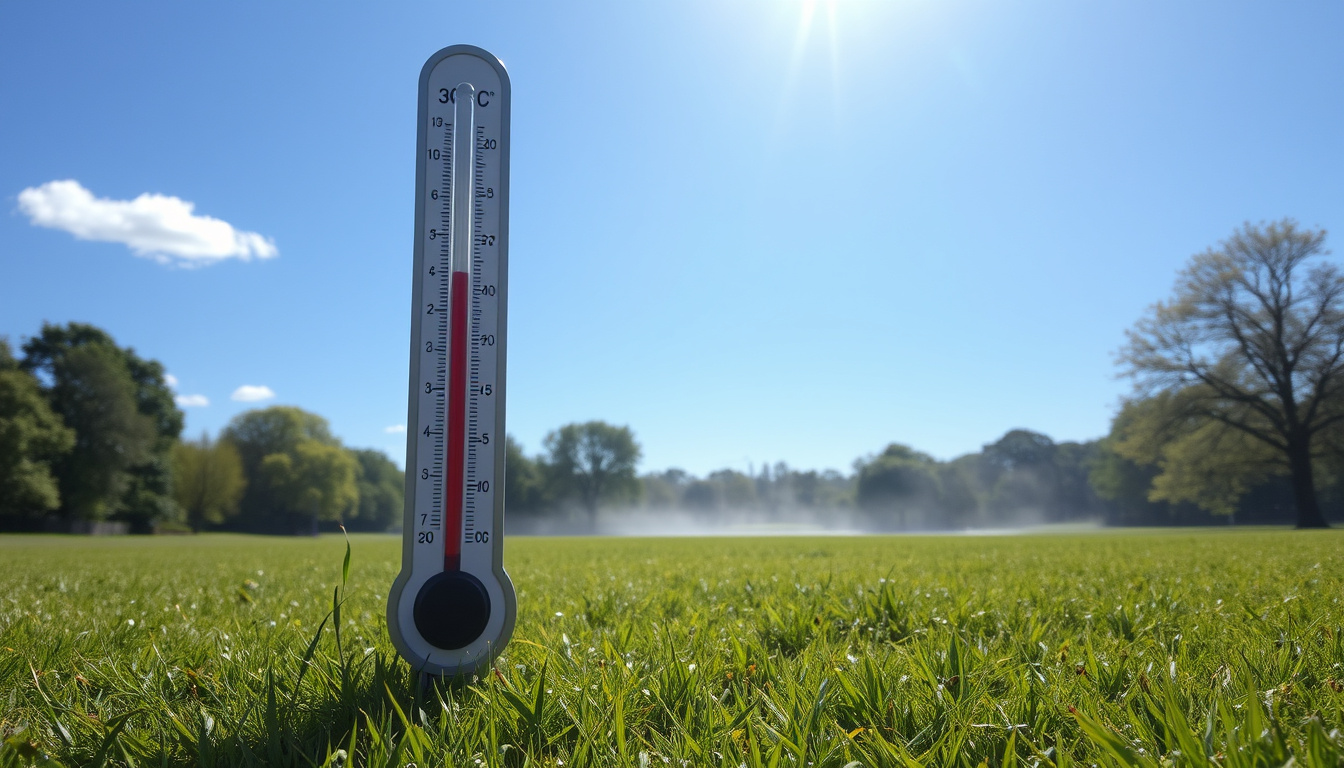
A whisper of summer is finally reaching the UK after a damp spring. The Met Office is predicting a spell of warm weather in early June 2025, with temperatures climbing well above average for a few days.
Expected peak temperatures: 26°C (Met Office blog) ·
Mini heatwave period: 3–10 June 2025 ·
1976 heatwave duration: 15 days (Met Office) ·
1976 heatwave deaths: Thousands (estimated) (The Conversation) ·
2026 global temperature forecast: Hottest year on record (projected) (The Guardian)
Quick snapshot
- Mini heatwave expected 3–10 June 2025 (Met Office long-range forecast)
- Temperatures up to 26°C (Met Office blog)
- Warmest in southern England and Wales (Met Office long-range forecast)
- Short-lived – not an official heatwave (Met Office long-range forecast)
- Lasted 15 days (Met Office)
- Peak temperatures over 35°C (Met Office)
- Estimated thousands of excess deaths (The Conversation)
- Severe drought and water restrictions (Met Office)
- 2025: short warm spell, not a prolonged heatwave (Met Office blog)
- 1976: extreme duration and intensity (Met Office blog)
- Met Office says 2025 not hotter overall (Met Office blog)
- Different weather patterns (Met Office blog)
- Projected hottest year globally (The Guardian)
- UK may see more frequent heatwaves (The Guardian)
- Climate whiplash: wet winter, hot summer (The Guardian)
- Uncertain long-range forecasts (The Guardian)
Six key facts about the 2025 mini heatwave and its historical context:
| Fact | Value |
|---|---|
| Expected high temperature | 26°C |
| Mini heatwave start | 3 June 2025 |
| Mini heatwave end | 10 June 2025 (approx) |
| 1976 heatwave duration | 15 days |
| 1976 peak temperature | 35.9°C |
| 2026 global forecast | Hottest year on record |
What’s the weather going to be like in June in the UK?
The Met Office long-range forecast for the period 23 May to 1 June 2025 indicated warm and fair weather, especially over the Bank Holiday weekend. However, the more significant warm spell is expected between 3 and 10 June, when high pressure is likely to dominate. Met Office long-range forecasters said rain and showers were still possible, mainly across Northern Ireland and Scotland, but drier interludes were expected to last longer across the south and east of England.
What temperatures are expected during the mini heatwave?
Temperatures could reach 26°C around 10 June, according to Met Office analysis. A two-day blast of summery weather from 3 June has been highlighted by forecasters, with the jet stream potentially bucking to allow hot air from Europe to push north. Later in the month, around 17 June, the Met Office said parts of the UK could see 32–33°C, though they described the exact peak as uncertain (Met Office YouTube).
Which parts of the UK will see the highest temperatures?
Southern England and Wales are predicted to be the warmest areas. London could see 30°C on Friday of the hot spell, with humid air making it feel uncomfortable for many in the south. Scotland and Northern Ireland should still see fair weather but with more cloud and a greater chance of rain.
When exactly will the warm spell arrive and how long will it last?
The mini heatwave is expected to begin around 3 June and last through to approximately 10 June. However, the exact duration is uncertain and may vary by region. The Met Office noted that some locations in southeast England could experience a technical heatwave if a threshold is breached for three consecutive days, but for most of the country it will feel like a brief warm interlude rather than a sustained heatwave.
How long did the 1976 heatwave last in the UK?
The 1976 UK heatwave remains the benchmark for extreme summer heat. According to Met Office records, it lasted 15 consecutive days from 23 June to 16 July 1976, with maximum temperatures reaching or exceeding 32°C every day. The peak temperature of 35.9°C was recorded at Cheltenham on 3 July.
How many people died in the heatwave of 1976?
The 1976 heatwave is sometimes romanticised, but its human toll was severe. The Conversation has warned against romanticising the event, pointing to an estimated thousands of excess deaths. The extreme drought and water restrictions added to the misery, with reservoirs running dry and a nationwide hosepipe ban in place.
Is this year hotter than 1976 in the UK?
No, not by any measure. The 2025 mini heatwave is a short, warm spell, whereas 1976 was a prolonged and extreme heatwave. The Met Office has emphasised that the two events have entirely different patterns: 1976 featured a persistent high-pressure block that brought weeks of scorching heat and severe drought; 2025, by contrast, is a brief injection of warm air followed by a return to more typical unsettled conditions.
How does summer 2025 compare to summer 1976 (Met Office)?
The Met Office’s own comparison notes that 2025 is not necessarily hotter overall. While individual days may feel warm, the duration and intensity of 1976 far exceeds anything forecast for this year. The Met Office blog specifically stated that “cloud and rain meant the weather would not feel like a heatwave for many people, even if some isolated stations in the southeast briefly met a technical threshold.”
What were the maximum temperatures in 1976?
The highest temperature recorded during the 1976 heatwave was 35.9°C at Cheltenham on 3 July, with many other stations exceeding 32°C for 15 consecutive days. In contrast, the 2025 mini heatwave is expected to peak around 26°C early in June, with a possible spike to 32–33°C later in the month – but even that would be short-lived.
| Feature | 2025 Mini Heatwave | 1976 Heatwave |
|---|---|---|
| Duration | ~7 days (short spell) | 15 consecutive days |
| Peak temperature | 26°C (early June); 32–33°C (late June) | 35.9°C |
| Type | Brief warm spell, not a heatwave | Prolonged heatwave with drought |
| Impact | Limited, some health alerts | Thousands of excess deaths, severe drought |
Is summer 2026 going to be hot in the UK?
Long-range predictions are inherently uncertain, but the trend is clear. Leading climate scientists have projected that 2026 will be the hottest year on record globally, driven by ongoing climate change. For the UK, this could mean more frequent and intense heatwaves, though the specific pattern – “climate whiplash” – may also bring wetter winters and drier summers.
Is summer 2026 going to be hotter than 2025?
It’s impossible to say with confidence. The 2026 projection is a global average, not a UK-specific forecast. However, the underlying warming trend makes it more likely that the UK will experience above-average temperatures in future years. The Met Office’s long-range outlooks indicate that warm spells like the June 2025 mini heatwave may become more common.
What does ‘climate whiplash’ mean for the UK?
Climate whiplash refers to rapid swings between weather extremes – from very wet winters to very hot summers. The UK has already seen examples: a wet winter followed by a brief but intense heatwave in early summer 2025. This pattern is expected to intensify, meaning that short, intense hot spells may become more frequent even if the overall summer average temperature does not rise dramatically.
How to sleep in heat?
When the temperature stays high at night, getting quality sleep becomes a challenge. The British Red Cross offers practical advice: keep your bedroom cool during the day by closing curtains, use a fan, and opt for light bedding. Hydrate before bed and avoid caffeine and alcohol.
What is the Egyptian sleeping method?
A viral tip known as the “Egyptian sleeping method” involves dampening a sheet or using a cooling towel to lower body temperature. While not scientifically proven, many sleep experts say the principle of evaporative cooling can help. The method: wet a thin sheet, wring it out, and use it as a cover – but be careful not to soak the mattress.
What is the best position to sleep in when it’s hot?
Sleep experts recommend lying on your side with your legs apart to maximise airflow and reduce body contact with the mattress. This position helps dissipate heat and keeps you cooler than sleeping on your back or stomach. A British Red Cross guide also suggests using a bowl of cold water in the room and placing a cool cloth on your wrists and neck.
Timeline signal
- 23 June – 16 July 1976: UK heatwave: 15 consecutive days with max temp ≥32°C (Met Office)
- 3–10 June 2025: Mini heatwave forecast: temperatures up to 26°C, short warm spell
- 2026: Projected to be the hottest year on record globally (The Guardian)
Confirmed facts vs What’s unclear
Confirmed facts
- Mini heatwave expected early June 2025 (Met Office long-range forecast)
- Temperatures could reach 26°C (Met Office blog)
- 1976 heatwave lasted 15 days (Met Office)
- Egyptian sleeping method is a viral tip
What’s unclear
- Exact duration of the mini heatwave (may be 2–5 days depending on region)
- Whether 2026 will actually be the hottest year (prediction, not confirmed)
- Precise number of deaths in 1976 heatwave (estimates vary)
Quotes from experts
The setup would feel humid for many people in the south. Some locations in southeast England could experience a technical heatwave if a threshold is breached for three consecutive days.
— Met Office spokesperson, in Met Office blog
There was about a 15% chance of exceeding the June record of 35.6°C that weekend, particularly on Sunday.
— Honor, Met Office forecaster, via Met Office YouTube
To keep cool at night, close your curtains during the day, use a fan, and hydrate before bed. Avoid caffeine and alcohol.
— British Red Cross guidance
The 1976 heatwave is often romanticised, but its dangers should not be forgotten. Thousands of excess deaths occurred during that summer.
— The Conversation
The 2025 mini heatwave is a fleeting contrast to the prolonged misery of 1976. But as climate change intensifies, short hot spells like this may become the new normal. For the UK, the takeaway is clear: prepare for warmer nights, and don’t underestimate the health risks even of a brief temperature spike.
Frequently asked questions
What is a mini heatwave?
A mini heatwave is a short period of unusually warm weather, typically lasting 2–5 days, without meeting the official Met Office heatwave criteria. It’s a colloquial term used by forecasters and media to describe a brief warm spell.
When does summer officially start in the UK?
Meteorological summer starts on 1 June and ends on 31 August. Astronomical summer begins with the summer solstice around 21 June.
What is the Met Office definition of a heatwave?
The Met Office defines a heatwave as when a location records at least three consecutive days with maximum temperatures meeting or exceeding a threshold specific to that county (usually 25°C+ in most of England).
How can I prepare for a mini heatwave?
Stay hydrated, avoid strenuous activity during peak heat, close curtains during the day, and use fans. Vulnerable people should check on neighbours. The British Red Cross provides first aid advice for heat-related illness.
Will this mini heatwave affect Scotland?
Scotland may see increased cloud and rain from the mini heatwave, with temperatures slightly above average but not as high as southern England. The best of the weather will be in the south and east.
Are there any health warnings in place?
As of the latest updates, no Met Office heat health warnings are in place for the June mini heatwave, but the UK Health Security Agency may issue alerts if thresholds are approached. The Red Cross advises staying cool and checking on the elderly.
What is the difference between a heatwave and a mini heatwave?
A heatwave is an official category requiring three consecutive days above a threshold. A mini heatwave is a warmer-than-average spell that does not meet that criteria, often lasting only a few days and more localized.
Related reading

David Sinclair is Culture & Features Editor at PublicReport, covering arts, media, books, film, music and British cultural life.