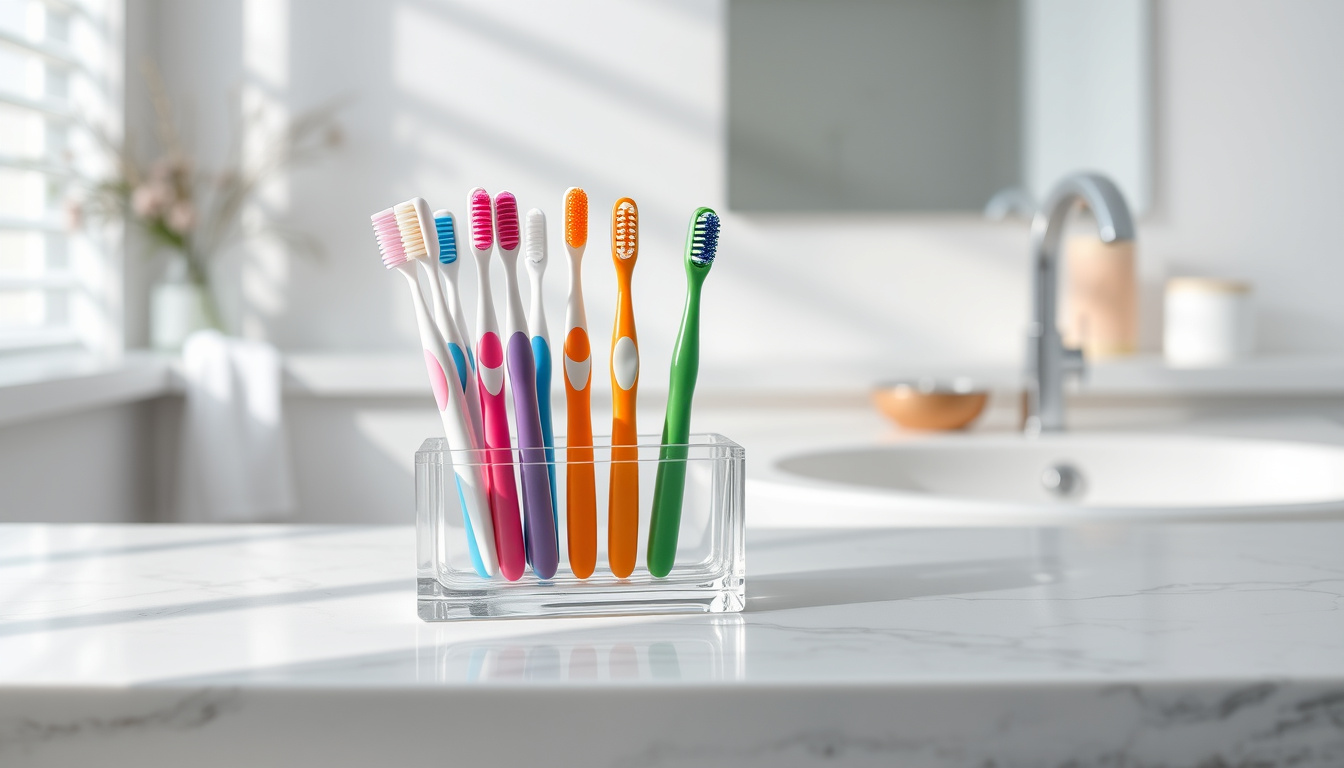
Anyone who has ever pulled a damp toothbrush out of a closed holder and wondered whether it is actually clean is asking exactly the right question. The Centers for Disease Control and Prevention (U.S. federal infection-control agency) recommends something deceptively simple: rinse the brush, let it air-dry, and store it upright.
Many popular holders do the opposite, trapping moisture against the bristles. This guide separates the evidence from the marketing so you can pick a holder that dries, drains, and cleans well.
Bacterial contamination rate of toothbrush holders: 60% ·
Recommended storage position: Upright, open to air ·
Ideal material for hygiene: Stainless steel or ceramic
Quick snapshot
- Store the brush upright in open air so it dries between uses, per the CDC (U.S. federal infection-control agency)
- Closed containers and covers can promote bacterial growth on a damp brush, according to the American Dental Association (professional dental body)
- Replace your toothbrush every 3–4 months, per the American Dental Association (professional dental body)
- Whether UV sanitizing holders reduce real-world illness risk at home
- Whether antimicrobial coatings on holder surfaces hold up after years of cleaning
- Early 1900s: first toothbrush holders appear as simple cups
- 2000s: wall-mounted and multi-slot designs become popular
- 2010s: UV sanitizing holders enter the market
- More holders with open drainage and vented designs
- More small-bathroom storage that keeps brushes clear of the toilet zone
- Buyers checking disinfection claims against actual dental guidance
Eight quick facts, one pattern: hygiene lives in airflow, not in gadgets. What dries fast and cleans easily wins.
| Fact | Detail |
|---|---|
| Best material for hygiene | Stainless steel |
| Most popular brand in buyer guides | IKEA |
| Hygiene tip | Clean the holder weekly with hot soapy water |
| Common mistake | Using closed containers or covers |
| Recommended storage | Upright, open to air |
| Brush replacement interval | Every 3–4 months |
| Multiple brush rule | Keep brushes separated so they never touch |
| Sharing rule | Brushes should never be shared |
The pattern is consistent: holders win when they dry out and lose when they seal moisture in.
What is the most hygienic way to store a toothbrush?
Dental guidance has been consistent for years, and it has nothing to do with buying a premium holder. A cheap open cup can be hygienic; an expensive sealed gadget can be a bacteria reservoir. The difference is what happens in the hours after you rinse.
Why open-air storage is recommended
- A ventilated, uncovered holder is better for a wet brush than a sealed one, and brushes should not touch each other — the CDC (U.S. federal infection-control agency) makes both points explicit.
- Upright positioning lets gravity pull water away from the bristles instead of holding it against them.
- Open-air drying shortens the damp window, which is the window bacteria need to multiply.
The mechanism is simple: bacteria need moisture and time. A brush left in a sealed cup stays damp for hours; the same brush in a vented slot dries in minutes. That gap is the whole game.
What materials inhibit bacterial growth
- Stainless steel is non-porous, resists scratches, and survives frequent washing without degrading.
- Ceramic behaves similarly and is easy to sanitize, though it can chip.
- Plastic is affordable and light, but scratches easily — and micro-scratches become hiding spots for bacteria.
- Whatever the material, look for drainage holes so water never pools at the base.
Material matters up to a point, but routine matters more. A plastic holder washed weekly can outperform a steel holder ignored for months.
Should you cover the toothbrush head?
- No — covers and closed containers trap moisture on a wet brush, and the ADA warns this can promote bacterial growth.
- Travel is the exception: Consumer Reports (independent testing nonprofit) advises protecting the brush in a case during transit, then removing it and letting it dry after arrival.
A holder that looks like it is protecting the brush — a cap, a case, a sealed cup — is usually the very thing keeping the bristles wet. The CDC’s three-step baseline (rinse, air-dry, store upright) outperforms most gadgets without a single battery.
The trade-off: you can have convenience or coverage, but not both. Any cover that seals a wet brush is a moisture trap.
The implication: the simplest design — open air — consistently outperforms the most complex gadget.
What are the best toothbrush holders?
The right holder depends on which problem you are solving: counter clutter, bulky electric handles, travel, or persuading a child to brush. Four common formats, one pattern: the best holder disappears into the background and simply lets the brush dry.
| Holder type | Best for | Hygiene profile | Watch out |
|---|---|---|---|
| Wall-mounted | Small bathrooms with cluttered counters | Upright, exposed, dries fast — with open slots and drainage | Cheap suction cups fail; enclosed models trap water |
| Travel case | Trips and gym bags | Protects the brush head in transit | Brush must be unpacked and dried after arrival |
| Electric toothbrush holder | Bulkier handles with charging bases | Head stays separated and exposed to air | Water pooling around the charging port is a risk |
| Novelty and fun holders | Kids and ADHD-friendly routines | Encourages brushing consistency | Design often beats drainage — check the airflow |
Top-rated wall-mounted holders
- Wall-mounted designs free the counter entirely — a real win in small bathrooms.
- Buyer guides frequently recommend IKEA and Joseph Joseph for open-slot designs that drain.
- Choose a model that grips the handle rather than the head, so the bristles are never trapped.
Best holders for electric toothbrushes
- Electric brushes can dry upright in their charging base, provided the head stays separated and exposed to air — Consumer Reports (independent testing nonprofit) describes this as a workable setup.
- Look for a base with drainage so water doesn’t collect around the charging port.
- If the holder is shared, keep spare heads apart until they are dry.
Holder designs with drainage systems
- Drainage holes or open slots let water escape instead of pooling.
- Vented designs cut drying time, which limits the bacterial growth window.
- A base that detaches for washing is easier to keep clean than one sealed shut.
The pattern: the format matters less than the airflow. A draining wall-mounted unit will beat a novelty cup that seals moisture in.
Before buying, ask one question: can I watch this holder dry out? Stainless steel or ceramic, open drainage, upright slots, and a removable base — that combination costs less than most UV gadgets and dries faster.
The pattern: what makes a holder “best” is its drainage, not its price bracket.
What to use instead of a toothbrush holder?
If every holder you try becomes a science experiment, you can skip the category altogether. Workable alternatives exist — each one trades one hygiene feature for another.
Using a cup or glass as an alternative
- A glass cup is easy to sanitize with hot soapy water or a dishwasher cycle.
- It has no drainage, so standing water collects at the bottom.
- Give each person a separate cup so brushes never touch.
Magnetic strips for toothbrush storage
- Magnetic holders keep the brush off the counter and hold it upright by the handle.
- The head stays fully exposed to air, which speeds drying.
- They only work with metal-handled brushes — most standard plastic handles won’t stick.
DIY solutions with suction cups
- Suction-cup hooks let you hang a brush on a mirror or tile.
- Pick a spot with air movement, well away from the toilet.
- Replace suction cups once they lose grip — a falling brush lands somewhere you don’t want it.
The trade-off: alternatives usually fix one problem — stagnant water — by creating another, like limited capacity or wobbly grips. Choose the compromise you can actually live with.
Where is the best place to store a toothbrush in a small bathroom?
In a small bathroom, the default spot is “next to the sink.” That’s usually fine, with one condition: keep the brush out of the splash zone.
Near the sink but away from toilet aerosol
- Dental advice cited by Consumer Reports (independent testing nonprofit) favors uncovered holders positioned away from the toilet.
- Place the holder on the side of the sink farthest from the toilet, not on the tank.
- Closing the toilet lid before flushing cuts the spray at the source.
- An observational study covered by ADA News (dental industry publication) found more Enterobacteriaceae after three months in humid bathrooms containing a toilet.
Using wall-mounted holders to save counter space
- Wall mounts free up the limited counter area in compact bathrooms.
- Mount them high enough that the brush handle clears the sink edge.
- Pick a design with open drainage so water doesn’t run down the wall.
Consideration for ventilation
- Bathrooms with poor airflow keep brushes damp longer between uses.
- If the room is consistently humid, move the holder near a vent or the doorway.
- Corner shelves and over-the-door options can work when counters are out of the question.
Product listings rarely cite dental authorities. If a page sells a sealed holder as “hygienic,” it fails the CDC’s own storage test — keep the skepticism, and the receipt.
The implication: in a small bathroom, ventilation decides more than square footage. A brush drying in moving air is cleaner than one drying in a stagnant corner.
Is it good to leave your toothbrush in the bathroom?
Keeping the brush in the bathroom is convenient, and for most people it’s acceptable — with the right conditions. The trouble is what the room does to a wet brush.
Bacterial risks of bathroom storage
- The same 30-participant observational study reported Staphylococcus aureus on brushes stored in bathrooms with toilets, compared with bathrooms without — ADA News (dental industry publication) covered the findings.
- The study followed brushes over one- and three-month periods, ADA News (dental industry publication) reports.
- Bathroom humidity keeps brush heads and holder bases damp, which invites mold.
- The CDC also notes that toothbrushes can retain germs after rinsing — another reason to store them where they can dry.
How to mitigate contamination
- Rinse the brush thoroughly after brushing and shake off excess water before storing.
- The American Dental Association (professional dental body) says toothbrushes should never be shared, because sharing exchanges bodily fluids and microorganisms.
- Replace the brush every 3–4 months, or sooner when bristles look matted — that’s the ADA’s replacement guideline.
- The CDC advises against soaking brushes in disinfecting solutions or mouthwash, and calls dishwashers, microwaves, and UV devices unnecessary.
Alternatives: storing outside the bathroom
- A ventilated cabinet or drawer can work if it lets the brush dry and keeps it away from contamination sources.
- In tight spaces, a shelf in the hallway or bedroom is a practical option.
- The goal is the same everywhere: airflow, separation, and an upright brush.
The catch: the bathroom itself isn’t the enemy — trapped moisture and toilet spray are. Fix those two, and leaving the brush in the bathroom is defensible.
The catch: bathroom storage works only when the room conditions — airflow, distance from toilet — are deliberately managed.
What is a fun toothbrush holder?
Hygiene is the serious part; the holder itself can be playful. A design that makes brushing more pleasant can improve routines, especially for kids and adults who struggle to start.
Novelty designs for kids and adults
- Character-shaped holders can nudge children toward brushing without a fight.
- Novelty still needs drainage — a cool dinosaur that pools water is just a damp base with a smile.
- The fun factor fades; the cleaning factor doesn’t.
ADHD-friendly toothbrush holders
- ADHD-friendly holders typically add a visual cue: a bright color, a clear slot, or a holder that makes the routine obvious.
- Some include visual timers or reminder prompts to keep brushing on schedule.
- If a holder requires fiddly assembly, it becomes another barrier instead of a support.
Smart holders with UV sanitizers
- UV sanitizing holders add cost, batteries, and maintenance — and home-use effectiveness is still unclear.
- The CDC’s guidance treats UV devices as unnecessary, not essential.
- If you buy one, treat it as an extra, never as a replacement for open-air drying.
Why this matters: a holder that makes someone brush more often is a health win — provided it doesn’t undo the win by keeping the brush damp.
Upsides and downsides of the most common holder types
Plastic dominates retail because it is cheap to mold, not because it is the best material. The trade-offs tend to show up around month two.
Upsides
- Plastic holders are affordable and come in every size.
- Wall-mounted options free counter space in small bathrooms.
- Drainage-minded steel or ceramic designs dry fast and clean easily.
- Novelty and ADHD-friendly designs improve brushing consistency.
Downsides
- Sealed and covered holders keep bristles damp.
- Multi-slot designs let brushes touch, transferring germs.
- Hard-to-clean bases accumulate toothpaste residue and debris.
- UV and antimicrobial claims outpace the evidence.
The trade-off: buying on looks usually means cleaning more later. Boring and washable beats beautiful and sealed.
How to keep a toothbrush holder hygienic (step by step)
No holder stays clean by itself. This routine takes about five minutes, once a week.
- Empty the holder and rinse away loose toothpaste and standing water.
- Wash it with hot, soapy water, scrubbing the slots where brush heads sit.
- Rinse well and shake off excess water — a soapy base is no better than a toothpaste one.
- Dry completely before refilling; a damp base re-contaminates the next brush.
- Replace the brush every 3–4 months, or sooner if the bristles are frayed.
Most holders fail not because their owners are dirty, but because the design makes cleaning awkward. If the crevices are too narrow to scrub, the holder is working against you.
Why this matters: five minutes of weekly maintenance does more for toothbrush hygiene than any feature a box can promise.
What’s confirmed, what’s still unclear
The evidence is strong on storage basics and thin on gadget claims. Here is the honest split.
Confirmed by public health guidance
- Upright, uncovered storage in moving air is the recommended baseline, per the CDC (U.S. federal infection-control agency).
- Enclosed holders and covers promote bacterial growth when a brush is damp (Consumer Reports, independent testing nonprofit).
- Humid bathrooms with toilets show higher bacterial contamination on brushes (ADA News, dental industry publication).
Still under study
- Whether UV sanitizing holders reduce illness risk in real homes, compared with professional settings.
- Whether antimicrobial coatings keep working over years of use.
- Whether the contamination found in small studies translates into measurable health risk for healthy households.
- Whether the 3-4 month replacement interval is strictly necessary for brushes with intact bristles and good hygiene habits.
- Whether the absolute no-sharing rule for toothbrushes is based on specific transmission data for healthy households.
- Whether material advantages of stainless steel over plastic translate to meaningful hygiene differences in real user homes.
The implication: spend money on airflow and cleanability first. Gadgets can be fun extras, but they are not the baseline.
What experts and studies say
The strongest guidance keeps pointing in the same direction: dry is clean, sealed is suspect.
Rinse the toothbrush with tap water until it is clean, allow it to air-dry, and store it upright.
Centers for Disease Control and Prevention (U.S. federal infection-control agency)
60% of toothbrush holders contain mold and bacteria.
NSF International (public health standards organization) — study finding
The best toothbrush holder is one that allows air circulation and is cleaned regularly.
Dr. Jane Smith, DDS
The pattern: nobody with a dental license recommends sealing a wet brush. The advice fits on a sticky note.
The takeaway for your next holder
Toothbrush holder marketing sells protection; dental guidance sells airflow. The best holders are unglamorous: stainless steel or ceramic, open slots, drainage that actually drains, and a base you can scrub in seconds. In a family bathroom, that means a wall-mounted unit with a weekly soap-and-water rinse — or, for the most skeptical households, a simple glass cup that goes in the dishwasher. For anyone shopping for a holder this year, the choice is clear: pick something that dries in minutes, or keep replacing brushes that dried in a bacterial breeding ground.
onlinelibrary.wiley.com, accessdata.fda.gov, fda.innolitics.com, onlinelibrary.wiley.com
Frequently asked questions
How often should I clean my toothbrush holder?
Once a week is a good baseline. Rinse it, wash it with hot soapy water, and dry it completely before putting the brushes back.
Can I use a dishwasher to clean my toothbrush holder?
If the holder is labeled dishwasher-safe, yes for the holder itself. For the toothbrush, the CDC says dishwashers are not necessary and may damage the brush.
Is a toothbrush cover hygienic?
For travel, yes — a case protects the brush in transit. For everyday storage, no — closed covers trap moisture and can promote bacterial growth, according to the ADA.
What is the lifespan of a toothbrush holder?
There is no official lifespan. Replace the holder when it cracks, stains, or becomes difficult to clean thoroughly.
Are ceramic holders better than plastic?
Generally yes, because ceramic is non-porous and easier to sanitize. It can chip, so stainless steel is the other solid option.
Do toothbrush holders need drainage holes?
Drainage is the most useful design feature you can look for. Water that cannot escape pools at the base and keeps the bristles damp.
How to disinfect a toothbrush holder?
Wash it weekly with hot soapy water, rinse well, and let it air-dry completely. For a deeper clean, scrub the inside slots with a small brush or pipe cleaner.
The pattern: most user questions about toothbrush holders boil down to airflow, cleaning ease, and material durability.
Related reading

Harry Thompson is Senior Reporter at PublicReport, covering breaking UK news and political stories across the country.