Few names in modern history evoke as strong a reaction as Saddam Hussein. From his rise as a young Ba’athist to his decades-long rule over Iraq, his story is one of ambition, brutality, and a final, ignominious end. This article separates verified facts from the fog of war, looking at his capture, his last words, and the legacy he left behind.
Born: April 28, 1937, Al-Awja, Iraq ·
Died: December 30, 2006, Baghdad, Iraq ·
Years in power: 1979–2003 ·
Number of wives: 4 ·
Age at death: 69 ·
Cause of death: Execution by hanging
Quick snapshot
- Born April 28, 1937 in Al-Awja, Iraq (Encyclopaedia Britannica (authoritative reference))
- Served as president of Iraq from 1979 to 2003 (Encyclopaedia Britannica)
- Captured on December 13, 2003 near Tikrit (Britannica Kids Students (educational resource))
- Executed on December 30, 2006 in Baghdad (Encyclopaedia Britannica)
- Exact wording of his last words (multiple conflicting accounts)
- Whether he personally ordered every atrocity committed by his regime
- Full extent of his hidden wealth and assets
- 1937: Born in Al-Awja
- 1979: Becomes president
- 1990: Invades Kuwait
- 2003: Captured by U.S. forces
- 2006: Executed
- Iraq continues to grapple with his legacy
- Historical revisionism by nationalist groups
- Ongoing legal cases for reparations
Eight key biographical facts, one pattern: every major milestone is tied to either war, repression, or his eventual downfall.
| Label | Value |
|---|---|
| Full name | Saddam Hussein Abd al-Majid al-Tikriti |
| Born | April 28, 1937, Al-Awja, Iraq |
| Died | December 30, 2006, Baghdad, Iraq |
| Political party | Ba’ath Party |
| Years in office | 1979–2003 |
| Spouse | Sajida Talfah (first wife) |
| Children | 5 (Uday, Qusay, Raghad, Rana, Hala) |
| Height | 6 ft 2 in (1.88 m) |
What is Saddam Hussein most famous for?
His role in the Iran-Iraq War
- Launched a full-scale invasion of Iran in 1980, leading to an eight-year war that cost hundreds of thousands of lives (Encyclopaedia Britannica (authoritative reference)).
- Used chemical weapons against Iranian forces and Kurdish civilians, including the 1988 Halabja attack (Encyclopaedia Britannica).
Invasion of Kuwait and the Gulf War
- Ordered the invasion of Kuwait on August 2, 1990, claiming it as Iraq’s 19th province (Encyclopaedia Britannica).
- Led to a U.S.-led coalition that expelled Iraqi forces in February 1991 (Encyclopaedia Britannica).
Brutal repression and human rights abuses
- His regime systematically tortured and executed political opponents, with estimates of 250,000 deaths during his rule (Encyclopaedia Britannica).
- Created a vast surveillance state with informants in every neighborhood (Encyclopaedia Britannica).
Saddam’s most famous achievements—modernizing Iraq’s oil industry and building a strong army—were also the tools that enabled his wars and repression. The same infrastructure that boosted the economy also funded chemical weapons programs.
The implication: Saddam’s fame rests on a combination of military aggression, state-sponsored brutality, and a cult of personality that made him a household name globally.
Why did the US catch Saddam Hussein?
Reasons for the 2003 invasion of Iraq
- The U.S. cited Saddam’s alleged possession of weapons of mass destruction (WMDs) and ties to terrorism as justification (Encyclopaedia Britannica (summary)).
- No WMDs were found after the invasion, leading to widespread criticism of the intelligence (Encyclopaedia Britannica).
The search for weapons of mass destruction
- U.S. and U.N. inspectors conducted extensive searches after the Gulf War, but Saddam’s regime obstructed their work (Encyclopaedia Britannica).
- After the 2003 invasion, the Iraq Survey Group concluded that Iraq’s WMD programs had been dismantled in the 1990s (Encyclopaedia Britannica).
His capture in Operation Red Dawn
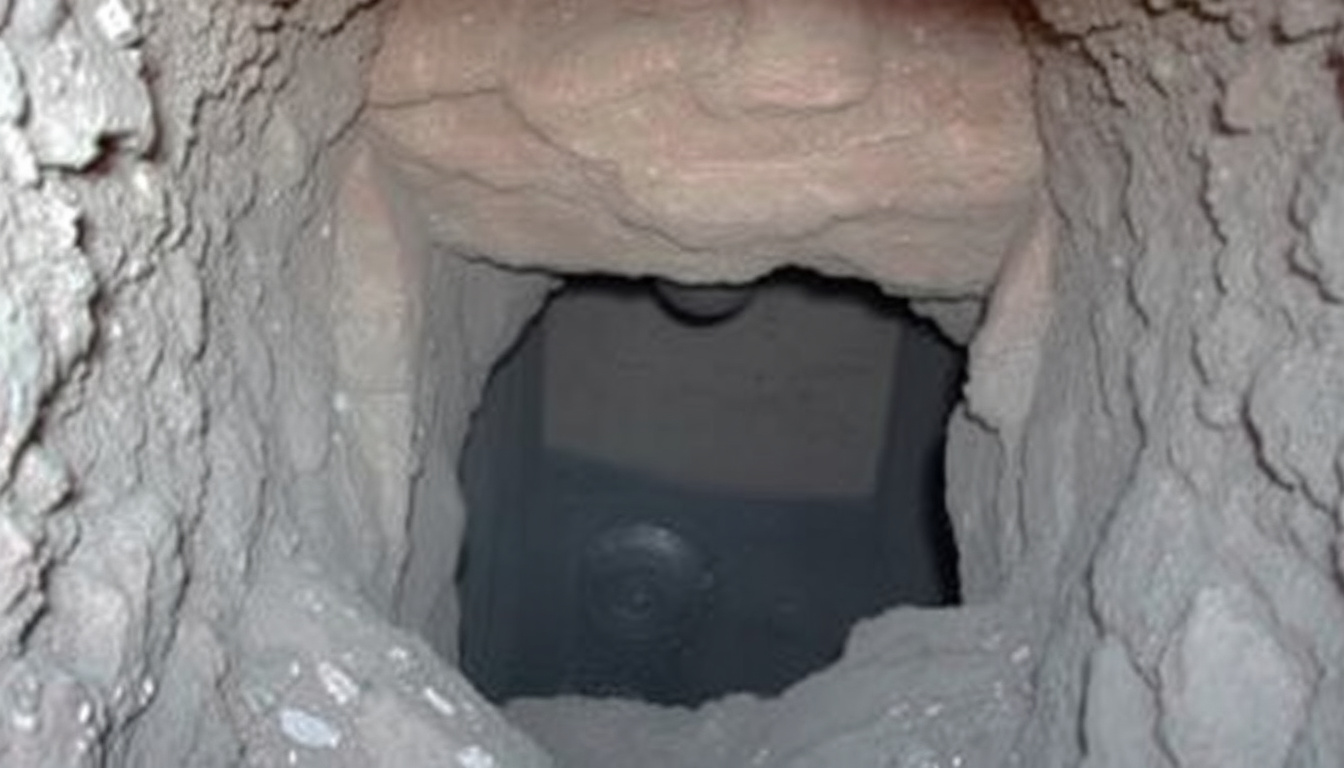
- On December 13, 2003, U.S. soldiers from the 4th Infantry Division captured Saddam near Tikrit, hiding in a spider hole under a farmhouse (Britannica Kids Students (educational resource)).
- A tip from an informant, reportedly a former bodyguard, led to the raid (Encyclopaedia Britannica).
- Saddam surrendered without a struggle, carrying a pistol but not using it (Britannica Kids Students).
The decision to capture rather than kill Saddam was deliberate: the U.S. wanted a trial to legitimize the occupation. But the messy aftermath—his execution during Eid al-Adha—stoked sectarian tensions that still burn today.
The trade-off: the U.S. invasion removed a dictator but created a power vacuum that led to years of insurgency and instability.
What did Saddam say before he died?
His final words at the execution
- Witnesses reported that Saddam’s last words included “Allahu Akbar” (God is Great) and a statement about Palestine (Wikipedia (community-edited encyclopedia)).
- A Times Now News report quotes him as saying “Long live the people” and “Down with the spies” (Times Now News (Indian news outlet)).
- He refused a hood, reportedly saying “This is for men” (Wikipedia (Execution of Saddam Hussein)).
Reactions to his death sentence
- Saddam had requested execution by firing squad, arguing it was appropriate for a commander-in-chief, but the court ordered hanging (Wikipedia).
- The White House issued a statement calling the execution “the culmination of a fair trial” (White House Archives (official U.S. government statement)).
What this means: the conflicting accounts of Saddam’s last words reflect the deep divisions in how his legacy is remembered. For his supporters, he died defiant; for his enemies, he died a coward.
Was Saddam Hussein bad or good?
Human rights record
- The Iraqi High Tribunal convicted him of crimes against humanity for the 1982 Dujail massacre, in which 148 Shia Muslims were executed (Encyclopaedia Britannica).
- His regime also used chemical weapons against Kurds, killing an estimated 5,000 in Halabja alone (Encyclopaedia Britannica).
Economic development under his rule
- Oil revenues were used to build schools, hospitals, and infrastructure, and literacy rates improved significantly during the 1970s and 1980s (Encyclopaedia Britannica).
- However, the Iran-Iraq War and the Gulf War drained the economy, leading to sanctions that devastated the population (Encyclopaedia Britannica).
Regional stability and conflict
- Saddam’s aggressive foreign policy destabilized the entire Middle East, leading to two major wars and a decade of sanctions (Encyclopaedia Britannica).
- Some Arab nationalists viewed him as a strong leader who stood up to Western imperialism, but at a terrible cost to his own people (Encyclopaedia Britannica).
Objective assessments of Saddam’s rule are nearly impossible without acknowledging the scale of human suffering he caused. The modernization he brought was real, but it came at the price of a police state that killed anyone who opposed it.
The pattern: the question “bad or good” is a false binary. Saddam was a brutal dictator who also courted nationalist sentiment. The real lesson is that authoritarian development comes with steep moral costs.
Why did people love Saddam Hussein?
Cult of personality
- Saddam’s image was everywhere in Iraq—on billboards, in schools, on television—and he was portrayed as the “father of the nation” (Encyclopaedia Britannica).
- Propaganda machinery glorified his role in building Iraq’s modern infrastructure and military (Encyclopaedia Britannica).
Nationalist appeal
- He positioned himself as a defender of Arab unity against Western imperialism and Iranian expansionism (Encyclopaedia Britannica).
- Many Iraqis initially supported the invasion of Kuwait, believing it was a blow against a neighbor that had overproduced oil and harmed Iraq’s economy (Encyclopaedia Britannica).
Benefits to certain groups
- Sunni Arabs, particularly those from Tikrit and the surrounding region, received preferential treatment in government jobs, military positions, and party membership (Encyclopaedia Britannica).
- His regime also co-opted tribal leaders through patronage networks, ensuring loyalty from key rural areas (Encyclopaedia Britannica).
Why this matters: the love for Saddam among his base was engineered through fear, propaganda, and selective benefits. It was never voluntary affection, but a calculated loyalty to a regime that rewarded obedience and punished dissent.
How many wives did Saddam Hussein have?
His marriages
- Saddam married his first wife, Sajida Talfah, in 1963. She was a cousin and the mother of his five children (Encyclopaedia Britannica).
- He later took three additional wives: Samira Shahbandar (married 1986), Nidal al-Hamdani (married 1990), and Iman Huwaysh (married 2002) (Encyclopaedia Britannica).
Children and family
- His two sons, Uday and Qusay, were key figures in his regime, controlling the media and the Republican Guard, respectively (Encyclopaedia Britannica).
- Both sons were killed in a U.S. raid in Mosul in July 2003 (Encyclopaedia Britannica).
- His daughters Raghad, Rana, and Hala fled to Jordan and have been vocal in defending his legacy (Encyclopaedia Britannica).
The catch: Saddam’s multiple marriages were partly strategic—they cemented alliances with powerful families and tribes. His family life was inseparable from his political calculations.
Timeline
- April 28, 1937 – Born in Al-Awja, near Tikrit (Encyclopaedia Britannica)
- 1957 – Joined the Ba’ath Party (Encyclopaedia Britannica)
- July 1968 – Ba’ath Party takes power; Saddam becomes vice president (Encyclopaedia Britannica)
- July 16, 1979 – Becomes president of Iraq (Encyclopaedia Britannica)
- 1980–1988 – Iran-Iraq War (Encyclopaedia Britannica)
- August 2, 1990 – Invasion of Kuwait (Encyclopaedia Britannica)
- January–February 1991 – Gulf War; Iraq expelled from Kuwait (Encyclopaedia Britannica)
- March 20, 2003 – US-led invasion of Iraq (Encyclopaedia Britannica)
- December 13, 2003 – Captured near Tikrit (Britannica Kids Students)
- October 19, 2005 – Trial begins (Encyclopaedia Britannica)
- November 5, 2006 – Sentenced to death (Encyclopaedia Britannica)
- December 30, 2006 – Executed by hanging (Encyclopaedia Britannica)
Clarity: What is confirmed and what is unclear
Confirmed facts
- Birth date and place: April 28, 1937, Al-Awja (Encyclopaedia Britannica)
- Death date and manner: December 30, 2006, execution by hanging (Encyclopaedia Britannica)
- Capture date and location: December 13, 2003, near Tikrit (Britannica Kids Students)
What is unclear
- Exact sequence of his last moments before capture (whether he was armed, whether he resisted)
- Whether he personally ordered all atrocities (e.g., the 1990 invasion of Kuwait, the Halabja attack)
- Full extent of his wealth, including hidden offshore accounts
- Number of wives and children (some accounts vary on unofficial marriages)
- Exact details of his final moments and specific last words
Quotes
“Allahu Akbar… Palestine is Arab.”
— Saddam Hussein, according to witnesses at his execution (Wikipedia)
“Saddam is a secularist and an enemy of Islam. He invaded Kuwait, a Muslim country, and killed Muslims.”
— Osama bin Laden, in a 1998 interview (Wikipedia)
Ladies and gentlemen, we got him.
— President George W. Bush, announcing Saddam’s capture, December 14, 2003 (White House Archives)
Saddam Hussein’s life was a study in contradictions: a modernizer who used oil wealth to build schools and hospitals, yet a tyrant who gassed his own people. For historians and policymakers, the lesson is clear: Saddam’s fall was a product of both his own aggression and the shifting currents of global power. The question is not whether he was bad—he was—but whether the world learned anything from his rise and destruction.
britannica.com, britannica.com, britannica.com, britannica.com, kids.britannica.com, en.wikiquote.org
Frequently asked questions
What was Saddam Hussein’s religion?
Saddam Hussein was a Sunni Muslim. He was born into a Sunni family in the Tikrit region of Iraq.
How tall was Saddam Hussein?
He was 6 feet 2 inches (1.88 m) tall, according to biographical records.
Where was Saddam Hussein born?
He was born in the village of Al-Awja, near Tikrit, in northern Iraq, on April 28, 1937.
What was Saddam Hussein’s net worth?
Estimates vary widely, but some reports suggest he amassed billions of dollars through oil revenues and corruption. The exact amount remains unclear.
How many children did Saddam Hussein have?
He had five children: two sons (Uday and Qusay) and three daughters (Raghad, Rana, and Hala).
Did Saddam Hussein use chemical weapons?
Yes, his regime used chemical weapons against Iranian forces during the Iran-Iraq War and against Kurdish civilians in Halabja in 1988.
What happened to Saddam Hussein’s sons?
Uday and Qusay were killed in a U.S. military raid on a house in Mosul on July 22, 2003.
How long did Saddam Hussein rule Iraq?
He served as president from July 16, 1979, until the U.S. invasion in April 2003, a total of nearly 24 years.

Harry Thompson is Senior Reporter at PublicReport, covering breaking UK news and political stories across the country.