Few names from 20th-century American history spark arguments quite like Lee Harvey Oswald’s — the man accused of assassinating President John F. Kennedy on November 22, 1963, still divides opinion as lone killer, patsy, or something in between. The official evidence is more specific than most people expect, and the gap between what’s proven and what’s claimed is where the Oswald story still lives.
Born: October 18, 1939 · Died: November 24, 1963 (aged 24) · Known for: Assassinating President John F. Kennedy · Accused of: Murder of President Kennedy and Officer J.D. Tippit · Killed by: Jack Ruby
Quick snapshot
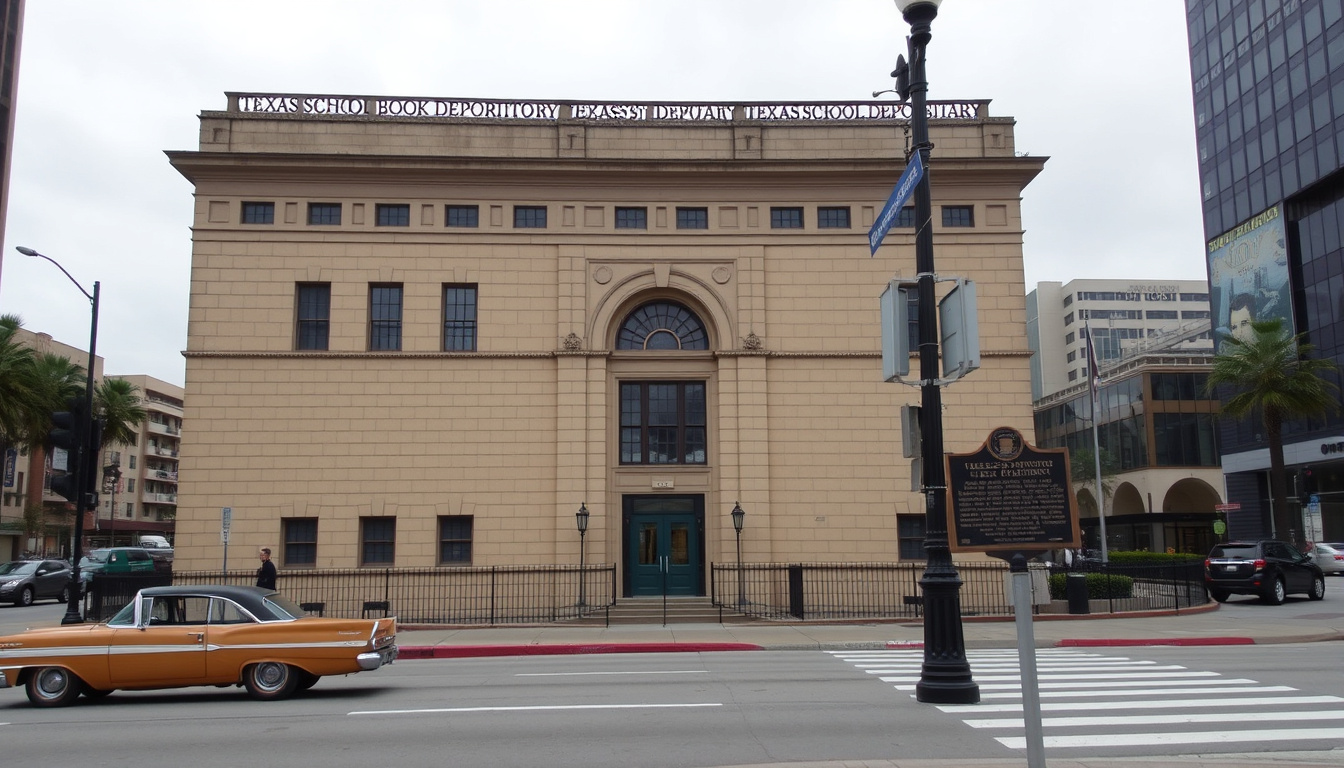
- Oswald assassinated President Kennedy from the Texas School Book Depository, per the Warren Commission (U.S. National Archives).
- Jack Ruby fatally shot Oswald in police custody two days later (U.S. National Archives).
- Oswald’s exact motive for assassinating President Kennedy was never conclusively established. (Assassination Archives and Research Center)
- Whether he acted alone — the Commission’s “lone gunman” conclusion is the most contested finding in the case (Assassination Archives and Research Center).
- Nov 22, 1963: Kennedy shot at 12:30 PM; Oswald arrested about 80 minutes later (U.S. National Archives).
- Nov 24, 1963: Oswald shot by Jack Ruby — less than 48 hours after the assassination (U.S. Government Publishing Office).
- More JFK assassination records are still being declassified and released to the public (U.S. Government Publishing Office).
Twelve key facts, one pattern: nearly all of them trace to a single federal investigation — the Warren Commission.
| Item | Detail |
|---|---|
| Full name | Lee Harvey Oswald |
| Born | October 18, 1939, New Orleans, Louisiana (U.S. National Archives) |
| Died | November 24, 1963, Dallas, Texas (U.S. National Archives) |
| Age at death | 24 |
| Occupation | Former U.S. Marine; warehouse worker |
| Charged with | Murder of President Kennedy and Officer J.D. Tippit (U.S. National Archives) |
| Killed by | Jack Ruby, November 24, 1963 (U.S. National Archives) |
| Investigated by | Warren Commission, created by President Lyndon B. Johnson (U.S. National Archives) and chaired by Chief Justice Earl Warren (U.S. Government Publishing Office) |
| Authorized by | Senate Joint Resolution 137 (Public Law 88-202) (U.S. National Archives) |
| Conclusion | Oswald assassinated President Kennedy; all commissioners concurred (U.S. National Archives) |
| Report | Approximately 888 pages (U.S. National Archives); presented September 24, 1964, and released publicly three days later (U.S. National Archives) |
| Hearings | 552 witnesses (U.S. National Archives); 26 volumes of testimony and exhibits (U.S. Government Publishing Office) |
How many times did Oswald shoot?
At 12:30 PM on November 22, 1963, the presidential motorcade rolled through Dallas and gunfire followed (U.S. National Archives). Within half an hour, President Kennedy was at a hospital, where doctors pronounced him dead at 1:00 PM. The number of shots fired in those few seconds remains the hinge on which the entire case swings.
- The Warren Commission concluded that three shots were fired from the Texas School Book Depository, where Oswald worked (U.S. National Archives).
- One of those bullets, the Commission reasoned, struck both President Kennedy and Texas Governor John Connally — the “single bullet theory” (U.S. National Archives).
- Oswald, an employee of the book depository, was arrested about 80 minutes after the shooting (U.S. National Archives).
The number is not a minor detail — it is the detail. More than three shots would mean a second shooter; fewer than three would break the Commission’s reconstruction of how Kennedy and Connally were hit. That is why “how many?” still runs through every argument about the case.
The ballistics argument is really an argument about trust: accept three shots and the Warren Report holds together; doubt the number, and the whole structure starts to tilt.
The implication: trusting the bullet count means trusting the Commission, and that trust remains the fault line in every debate about the assassination.
Where did the bullet hit Oswald?
The shot that killed Oswald also killed the trial. An accused assassin, dead while in police custody two days after the crime — no court ever heard a defense.
The simplest answer to “where did the bullet hit Oswald?” is also the most damning: not in Dealey Plaza, but in the basement of Dallas police headquarters, by Ruby’s hand (U.S. National Archives). Officers rushed him to Parkland Memorial Hospital, where he was pronounced dead shortly afterward.
The wound was mortal, and the silence it created was permanent: a question as basic as “how many shots?” was settled on paper, not in court — which is why it still runs through every argument about the case.
Why was Lee Harvey Oswald caught?
The same afternoon, Dallas police did something remarkable: they had a suspect in custody within about 80 minutes of the shooting. Oswald left the Texas School Book Depository and was arrested at the Texas Theatre (U.S. National Archives).
- Oswald resisted arrest and had to be subdued by officers (U.S. National Archives).
- He was charged with the murder of Officer J.D. Tippit — shot the same afternoon — and with the assassination of President Kennedy.
- The swift arrest gave police legal cover to hold him while the federal investigation took shape.
The double charge matters: before Oswald was known as the accused assassin of a president, he was wanted for the killing of a Dallas patrolman. That is why police felt justified holding a man who might otherwise have seemed too obvious a suspect.
How did police apprehend Oswald?
- Officers surrounded the Texas Theatre and took Oswald into custody after a struggle.
- He was brought to Dallas police headquarters, where he was held and questioned.
The arrest was fast — too fast for the media to miss. Oswald was in the police building, in custody, within two hours of the assassination.
The catch: an efficient police response put Oswald in a cell within 80 minutes — and the same system then let a civilian walk into the police basement with a gun. The arrest worked; the security around it did not.
Why did Jack Ruby shoot Oswald?
Jack Ruby shot Oswald on November 24, 1963, in the basement of Dallas police headquarters, where Oswald was being held in custody (U.S. National Archives).
- Ruby claimed he acted on the spur of the moment, moved by grief and anger over President Kennedy’s death (testimony preserved in the Warren Commission volumes).
- His shot killed Oswald less than 48 hours after the assassination (U.S. National Archives).
Ruby’s explanation — that he simply snapped — has never settled the argument. If he was grief-stricken, why walk into a police building with a gun? If he was part of something larger, why do it with officers all around? The evidence allowed both readings, and neither has ever been proven.
Ruby’s bullet ended Oswald’s life and guaranteed the JFK case would never close cleanly. One shot; two enduring mysteries.
The pattern: Ruby’s action created an evidentiary vacuum that six decades of research have not filled.
What happened to Jack Ruby after killing Oswald?
- Ruby was convicted of murder and died in prison in 1967 (U.S. National Archives).
- His death ended any realistic chance that the full story of the basement shooting would ever be established in a courtroom.
Ruby’s motive has been argued ever since — spontaneous rage or coordinated elimination. The record supports both stories and proves neither.
Did JFK realize he was shot?
Of all the questions surrounding Dallas, this one is both unanswerable and almost unbearably human. President Kennedy was hit at 12:30 PM and pronounced dead at 1:00 PM — thirty minutes that no account can fill in (U.S. National Archives).
- He likely never regained consciousness after being hit, according to the Warren Commission’s reconstruction (U.S. National Archives).
- Surviving eyewitness accounts contain no report of the president speaking or moving after the shots (Warren Commission record, Assassination Archives and Research Center).
How long did JFK survive after he was shot?
Thirty minutes is the difference between a murder and an execution — between a national tragedy and a national emergency. Kennedy was gone before the country understood what had happened.
The answer, as far as the record shows, is about thirty minutes. The motorcade rushed to the nearest major hospital, where doctors fought to save him before pronouncing him dead at 1:00 PM. The medical judgment, reflected in later reviews of the evidence, is that the president likely never regained consciousness.
What this means: the human question has no human answer. What remains is the cold accounting — 12:30, 1:00, thirty minutes — which tells us exactly how little time there was.
The catch: the most intimate question about the assassination has only a clinical answer, leaving the human experience of those thirty minutes forever unknowable.
What were Oswald’s last words?
Oswald, mortally wounded in the police basement, was rushed to Parkland Memorial Hospital. There, according to police reports, he said two things: “I’m not guilty” and “I’m just a patsy” (Assassination Archives and Research Center).
- Oswald died at Parkland on November 24, 1963 — less than 48 hours after President Kennedy was assassinated (U.S. National Archives).
- He never stood trial, never testified, and never faced a jury.
What did Bob Dylan say about Lee Harvey Oswald?
- Bob Dylan’s ballad “Murder Most Foul” turns the assassination into a national elegy, with Oswald woven into its landscape of American memory.
- For Dylan, Oswald functions less as a person than as a symbol — the point where the country’s story broke.
Dylan’s song is a reminder that Oswald never got out of Dallas alive, but he never left American culture either. He appears, again and again, in songs, films, and novels — less as a man than as a mirror. The same dynamic surrounds other figures whose cases were never psychologically closed, which is why the Lizzie Borden case, another legendary American mystery, still draws storytellers. Read it here: Lizzie Borden: The Real Story Behind the Infamous Case.
What did Oswald’s wife say about him?
- Marina Oswald testified before the Warren Commission about her husband’s beliefs and behavior (Assassination Archives and Research Center).
- She later said he believed he was a patsy — an instrument of larger forces.
Marina’s testimony is the closest the record comes to Oswald’s psychology filtered through someone who knew him. Her account has been used by both sides of the argument ever since: by those who see a cold killer, and by those who see a manipulated loner.
The pattern: Oswald’s last words and Marina’s testimony point to the same plea — “not me, not alone.” Whether that plea was true is a question six decades of investigation have not settled.
Timeline: the life and death of Lee Harvey Oswald
The shape of the story matters as much as the facts: a short life, a violent weekend, and an official investigation that lasted far longer than the events it examined.
- October 18, 1939: Lee Harvey Oswald is born in New Orleans (U.S. National Archives).
- 1956–1959: Serves in the U.S. Marine Corps (U.S. National Archives).
- 1959: Defects to the Soviet Union (U.S. National Archives).
- 1962: Returns to the United States (U.S. National Archives).
- November 22, 1963: Shoots President Kennedy and Officer J.D. Tippit; arrested at the Texas Theatre about 80 minutes later (U.S. National Archives).
- November 24, 1963: Shot by Jack Ruby in the Dallas police basement (U.S. National Archives).
- November 24, 1963: Dies at Parkland Memorial Hospital.
The shocking speed of events—from assassination to Oswald’s death in under 48 hours—contrasts sharply with the year-long, 888-page investigation, leaving the public forever on the back foot.
The pattern: an investigation that produced thousands of pages was built on a chain of events that took two days. And the two most important witnesses — the killer and his killer — were both dead before the commission began.
What’s confirmed — and what still isn’t
Six decades of argument have blurred the line between established fact and reasonable doubt. Here it is, drawn as cleanly as the record allows.
Confirmed facts
- Oswald shot President Kennedy from the Texas School Book Depository (U.S. National Archives).
- Jack Ruby shot Oswald (U.S. National Archives).
- Oswald was arrested and charged with the murders of President Kennedy and Officer J.D. Tippit.
What’s unclear
- Oswald’s exact motive for assassinating Kennedy.
- Whether he acted alone — the Commission’s “lone gunman” conclusion is the most contested finding in the case (Assassination Archives and Research Center).
- The full story of his time in the Soviet Union.
- Whether Ruby’s stated motive — spontaneous fury — was the whole story.
This summary relies on the Warren Commission’s published record — 888 pages, 26 volumes, 552 witnesses — and on contemporaneous police reports, not on conspiracy literature.
Notice what is missing from the confirmed column: motive, conspiracy, intent. Those are not minor gaps — they are the entire argument of the case. The record is confident about who pulled the trigger and far less conclusive on why.
The same shape defines other cases built on official inquiry and public doubt — notably the Rudolf Hess flight to Scotland. Read the full story here: Rudolf Hess: The Deputy Who Flew to Scotland and Died in Spandau.
The JFK case inverts the usual criminal pattern. Most murders are mysteries of identity; this one is a mystery of motive. The assassin’s name was never really in doubt — his reasons were.
The takeaway: the absence of a clear motive leaves the Warren Report forever incomplete, a conclusion that satisfies neither the curious nor the skeptical.
Voices from the investigation
Three voices define the argument: the official report, the widow, and the accused man himself.
The Commission found no evidence that Lee Harvey Oswald or Jack Ruby was part of a conspiracy, domestic or foreign, to assassinate President Kennedy.
Warren Commission conclusion, via the U.S. National Archives
“I’m just a patsy.”
Lee Harvey Oswald, as reported by police at Parkland Memorial Hospital, November 24, 1963, in the Warren Commission volumes
He believed he was being used — a patsy, not a plotter.
Summary of Marina Oswald’s testimony before the Warren Commission, via the Assassination Archives and Research Center
The irony: the two most quoted lines of the case — “I’m just a patsy” and the Commission’s flat denial of conspiracy — were both spoken by interested parties. One man was dying; the other was an institution defending its own conclusions.
What the Oswald case leaves behind
What happened in Dallas was never going to stay in Dallas. The assassination produced an official answer — one man, three shots, no conspiracy — that has never fully closed the argument. The records keep coming out (U.S. Government Publishing Office), the debate keeps restarting, and Oswald remains one of the most investigated figures in American history. For anyone trying to make sense of the JFK case, the choice is clear: read the primary record and weigh the Warren Commission’s evidence honestly, or inherit a conclusion — official or conspiratorial — that someone else chose for you.
Frequently asked questions
Was Lee Harvey Oswald a spy?
The Warren Commission found no evidence that Oswald acted for any foreign government, and its examination of his Soviet period produced no documented intelligence role (U.S. National Archives).
Did Lee Harvey Oswald act alone?
The Warren Commission concluded that Oswald assassinated President Kennedy and acted alone and unaided (Assassination Archives and Research Center). That conclusion has been challenged repeatedly, and no later release of records has fully ended the debate.
What is the single bullet theory?
The Warren Commission’s reconstruction held that one bullet fired from the Texas School Book Depository struck both President Kennedy and Governor John Connally (U.S. National Archives). Critics have questioned its trajectory for decades, making it the most contested element of the official account.
Why did Oswald defect to the Soviet Union?
Oswald defected in 1959, after his Marine Corps service, and returned to the United States in 1962 (U.S. National Archives). The Warren Commission examined the episode in detail without establishing a single conclusive motive.
Could Oswald have been innocent?
He never had the chance to prove guilt or innocence in court: he was killed before trial (U.S. National Archives). The only official conclusion — the Warren Commission’s — was that he was guilty (U.S. National Archives).
What did Oswald say before he died?
According to police reports, Oswald said “I’m not guilty” and “I’m just a patsy” before dying at Parkland Memorial Hospital (Assassination Archives and Research Center).
What happened to Jack Ruby after killing Oswald?
Ruby was convicted of murder and died in prison in 1967 (U.S. National Archives).

Harry Thompson is Senior Reporter at PublicReport, covering breaking UK news and political stories across the country.