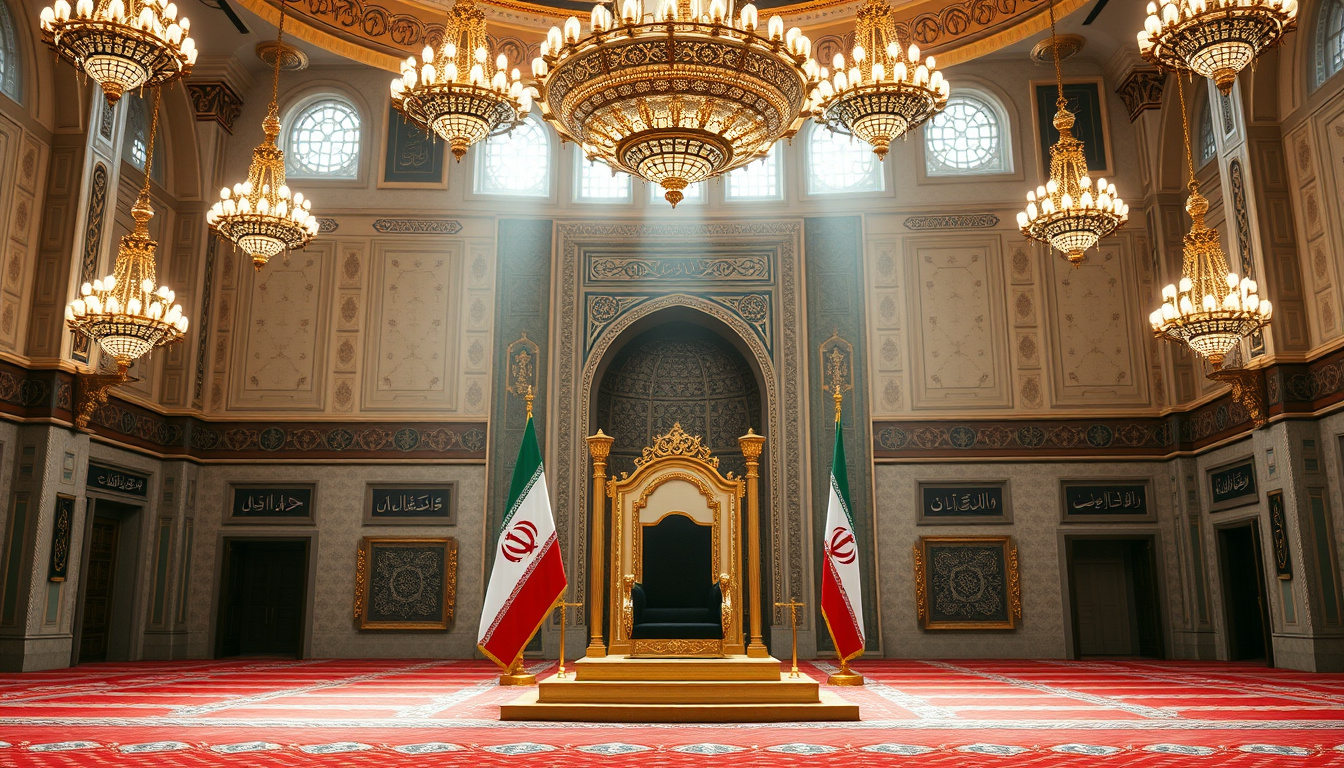
When a nation’s top leader is killed, the world watches to see who steps in — and this time, Iran’s answer reshaped its own history. In early March 2026, the Islamic Republic elevated Mojtaba Khamenei to Supreme Leader after his father’s death in a US-Israeli strike, marking the first dynastic succession since the 1979 revolution.
Current Supreme Leader: Mojtaba Khamenei ·
Assumed Office: March 8, 2026 ·
Number of Supreme Leaders since 1979: 3 ·
Previous Supreme Leader: Ali Khamenei (1989–2026)
Quick snapshot
- Mojtaba Khamenei became Supreme Leader on March 8, 2026 (Reuters)
- Ali Khamenei died on February 28, 2026 (Reuters)
- The Assembly of Experts has 88 members and elects the Leader (Xinhua English)
- Exact nationwide approval ratings for the new leader
- Long-term stability of the succession
- Public opinion across Iran due to lack of independent polling
- Whether the Assembly of Experts will exercise real oversight
- Reuters reported on March 4 that Mojtaba was the leading contender (Reuters)
- By March 10, Revolutionary Guards had forced through his selection (Reuters)
- Watch for Mojtaba’s first public statements
- Monitor how the Assembly of Experts and Guards balance power
- Track regional responses to the new leader
Here’s a quick reference of the current Supreme Leader’s details.
| Full Name | Mojtaba Khamenei |
| Born | 1969 (age 57) |
| Title | Supreme Leader of Iran |
| Assumed Office | March 8, 2026 |
| Predecessor | Ali Khamenei |
| Parent | Ali Khamenei (father) |
| Religion | Shia Islam |
Who is the main leader of Iran?
The Supreme Leader is the head of state and the highest authority in Iran’s political system. Unlike a president, who manages day-to-day government, the Supreme Leader holds final say over domestic policy, foreign relations, the armed forces, and war and peace decisions, according to Article 110 of Iran’s constitution (Rudaw (Middle East news outlet)).
- The Supreme Leader is commander-in-chief of the armed forces
- He appoints the head of the judiciary
- He controls state media and can veto election candidates
- He has final say in matters of state — Reuters (news agency) confirms this gives the position ultimate authority across the Islamic Republic (Reuters)
The role of Supreme Leader
The position wields extraordinary control. Under Article 110, the Supreme Leader sets the broad direction of the country’s domestic and foreign policy and commands the military (Rudaw). That means every major decision — from nuclear negotiations to regional military moves — passes through his office.
Current holder: Mojtaba Khamenei
Mojtaba Khamenei is a mid-ranking cleric with strong ties to Iran’s elite Revolutionary Guards, as Reuters reported. He assumed the role after his father’s death, stepping into a position that grants him control over all state affairs (Reuters).
Powers and responsibilities
- Absolute command over armed forces and security apparatus
- Power to appoint and dismiss key officials, including judiciary heads
- Authority over war and peace decisions
- Oversight of state media and broadcast policy
The implication: for anyone dealing with Iran, the Supreme Leader is the ultimate decision-maker — the president can propose, but the Leader disposes.
Does Iran have a new leader?
Yes. On March 8, 2026, Iran elevated Mojtaba Khamenei as successor to Ali Khamenei, according to Reuters. The succession followed his father’s death on February 28, 2026, during US-Israeli strikes.
The death of Ali Khamenei
Ali Khamenei led Iran from 1989 until his death in late February 2026. Reports indicate he was killed in US-Israeli strikes, an event that triggered the constitutional succession process (CNBC (business news outlet)).
Mojtaba Khamenei’s ascension
According to Reuters, Mojtaba had long been regarded as a leading contender. By March 10, reports confirmed that the Revolutionary Guards pushed through his selection (Reuters). This marks the first dynastic succession in Iran’s history — a shift from the revolutionary generation to a leader whose authority is tied to bloodline and military backing.
Reactions and implications
The transition happened fast, within eight days of the previous leader’s death. That speed signals institutional readiness — or, as some might argue, a pre-arranged outcome pushed by the Guards. For Iran’s neighbors and the international community, the new leader inherits a country in a volatile region with unresolved conflicts.
Mojtaba Khamenei inherits a legitimacy deficit: his elevation came through the Revolutionary Guards, not public will — in a country that banned hereditary rule.
Why this matters: the swift continuity means policy direction likely stays aligned with the old guard’s priorities, but the legitimacy question could grow louder if public dissent rises.
Who replaced Ayatollah Khomeini?
Ruhollah Khomeini, the architect of Iran’s Islamic Revolution, was the first Supreme Leader from 1979 until his death on June 3, 1989. Ali Khamenei succeeded him later that year.
Transition from Khomeini to Khamenei
Khomeini died after a decade of revolutionary rule. Ali Khamenei, who had served as president since 1981, was chosen as his successor (Britannica (encyclopedia)). He was elevated despite being a relatively low-ranking cleric at the time — a decision that shaped Iran’s leadership for nearly four decades.
How Khamenei rose to power
Ali Khamenei had been a loyal revolutionary figure, serving as president through the Iran-Iraq War era. His elevation to Supreme Leader came with constitutional backing from the Assembly of Experts, which has the power to elect and remove the Leader (Xinhua English).
Differences between the two leaders
- Khomeini was the revolutionary founder with mass popular legitimacy
- Khamenei was a political insider who consolidated power over decades
- Khomeini’s authority came from charisma and revolutionary credentials; Khamenei’s rested on institutional control
The pattern: each transition in Iran’s leadership has shifted power from revolutionary legitimacy to institutional machinery — and now to dynastic inheritance.
Is Ayatollah Khomeini still living?
No. Ruhollah Khomeini died on June 3, 1989, and is buried in a mausoleum south of Tehran.
When Khomeini died
His death marked the end of the revolutionary founding era. After his passing, the succession process was tested for the first time, and the Assembly of Experts selected Ali Khamenei.
His legacy
Khomeini led the Islamic Revolution in 1979 and established the Islamic Republic, shaping Iran’s political identity around clerical rule. His ideas — particularly the doctrine of velayat-e faqih (guardianship of the jurist) — continue to underpin Iran’s governance today.
Current relevance
Even 37 years after his death, Khomeini’s constitutional framework still governs how Iran selects its leaders. The same principles that elevated him and Khamenei were applied in the 2026 succession — though the outcome this time raised questions about dynastic succession that never applied in his era.
The trade-off: Iran’s leadership system was designed to prevent monarchy, yet 2026 produced the first inherited transfer of power — a direct contradiction of revolutionary ideals.
Do people in Iran like their leaders?
Public opinion across Iran is difficult to measure because independent polling is restricted. What’s known comes from protest movements, exile media, and occasional survey research.
Public opinion on Supreme Leaders
Support for Iran’s leadership tends to split along political lines. Conservatives and religious conservatives generally back the Supreme Leader’s authority, while reformists, youth, and urban populations have shown greater discontent. The 2022–2023 Mahsa Amini protests demonstrated significant public anger, particularly among younger generations, over the regime’s policies on personal freedoms.
Protests and dissent
Widespread protests in 2022 and 2023 challenged the government’s authority. The unrest was among the most serious domestic challenges in decades, reflecting deep-seated frustration with economic conditions and social restrictions. However, the state’s security apparatus, commanded by the Supreme Leader, remained largely intact.
Approval ratings (if available)
Reliable approval data is scarce. The government doesn’t publish independent polls, and international survey firms have limited access. What is clear: support is not monolithic, and the regime’s legitimacy is a live political question, especially after a dynastic succession that bypassed any meaningful public input.
Mojtaba Khamenei inherits a legitimacy deficit: his elevation came through the Revolutionary Guards, not public will — in a country that banned hereditary rule.
This legitimacy gap could define his early tenure.
Timeline: Key dates in Iran’s leadership
- 1979: Islamic Revolution; Ruhollah Khomeini becomes first Supreme Leader (Britannica)
- June 3, 1989: Khomeini dies; Ali Khamenei becomes second Supreme Leader (Britannica)
- 1989–2026: Ali Khamenei’s rule
- February 28, 2026: Ali Khamenei dies in US-Israeli strikes (Reuters)
- March 8, 2026: Mojtaba Khamenei chosen as new Supreme Leader (Reuters)
The entire succession took eight days. For comparison, the 1989 transition took about a month — this time, the Guards moved with speed and decisiveness.
Confirmed facts vs. what’s unclear
Here’s what’s established versus what remains uncertain about Iran’s leadership transition.
Confirmed facts
- Ali Khamenei died February 28, 2026 (Reuters)
- Mojtaba Khamenei became Supreme Leader in March 2026 (Reuters)
- Khomeini died June 3, 1989 (Britannica)
- First Supreme Leader was Khomeini (Britannica)
- Assembly of Experts has constitutional power to elect and remove the Leader (Xinhua English)
What’s unclear
- Exact approval rating of the current leader
- Long-term stability of the succession
- Nationwide public opinion due to lack of free polls
- Whether the Revolutionary Guards will remain the dominant power broker
- How the Assembly of Experts will exercise its oversight role
The 2026 transition wasn’t a clerical consensus — it was a military-backed succession. That’s a fundamental shift in how Iran’s leadership works.
Quotes and perspectives
“Mojtaba Khamenei, the son of Iran’s Ayatollah Ali Khamenei, who was killed in US-Israeli strikes, has been chosen as his successor.”
BBC report
“Ali Khamenei served as president of Iran from 1981 to 1989 and was the country’s leader, or rahbar, from 1989 to 2026.”
Britannica (encyclopedia)
What this means going forward
Iran’s leadership now rests with a man who owes his position to the Revolutionary Guards, not to revolutionary legitimacy. For the Iranian people, the next Supreme Leader’s first moves — on the economy, on social freedoms, on relations with the West — will determine whether this succession consolidates power or ignites new opposition. For the region, a Leader who survives by military backing may feel less constrained than his father, whose authority was rooted in decades of institutional control. For observers watching Iran, the question is no longer whether the system can survive, but whether it can govern without a broader public mandate.
en.wikipedia.org, iranwire.com, reuters.com, en.wikipedia.org, abcnews.com, aa.com.tr, reuters.com, usanalysis.org
Frequently asked questions
What is the Assembly of Experts?
The Assembly of Experts is an 88-member clerical body elected by the Iranian people every eight years. It has the constitutional power to elect and remove the Supreme Leader (Xinhua English).
Can the Supreme Leader be removed?
Under Article 111 of Iran’s constitution, the Assembly of Experts can dismiss the Supreme Leader if he is found incapable or unfit to perform his duties (Middle East Institute). In practice, this has never happened.
What is the difference between the Supreme Leader and the President?
The President manages the executive branch and day-to-day governance, while the Supreme Leader holds ultimate authority over the armed forces, judiciary, foreign policy, and matters of war and peace. The Leader can overrule the President.
Who was Ruhollah Khomeini?
Ruhollah Khomeini was the founder of the Islamic Republic of Iran and its first Supreme Leader from 1979 until his death in 1989. He led the Islamic Revolution that overthrew the monarchy.
What happened to Ali Khamenei in 2026?
Ali Khamenei died on February 28, 2026, during US-Israeli strikes. His son, Mojtaba Khamenei, was elevated as successor on March 8, 2026, according to Reuters (Reuters).
How long does the Supreme Leader serve?
The Supreme Leader serves for life unless the Assembly of Experts removes him for incapacity. There is no term limit or retirement age specified in the constitution.
Is Iran an Islamic republic?
Yes. Iran’s political system is an Islamic republic, where clerical authority is fused with elected institutions. The Supreme Leader, a Shia cleric, holds the highest state authority.
Related reading
- Ibrahim Traoré’s Popularity vs Reality: Security, Economy — a look at another leader balancing public support and governance realities
- Diane Abbott: From First Black Woman MP to Party Suspension — on institutional challenges in political careers

Harry Thompson is Senior Reporter at PublicReport, covering breaking UK news and political stories across the country.