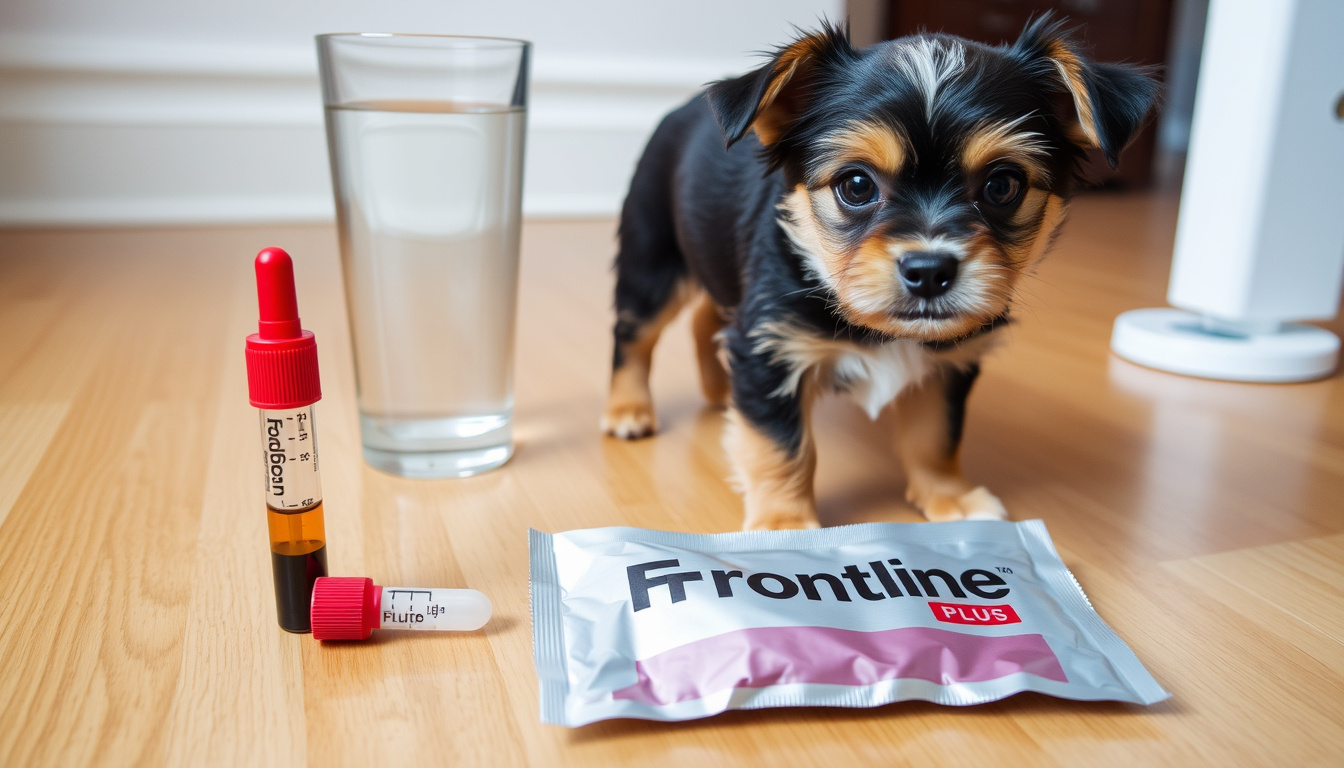
Every dog owner knows the sinking feeling of spotting a flea on their pet, but choosing between Frontline and Frontline Plus can be confusing. This guide walks through the key differences, safety data, and vet-backed recommendations so you can make the right call for your dog.
Active ingredients: Fipronil and (S)-methoprene ·
Kills fleas within: 24 hours ·
Kills ticks within: 48 hours ·
Duration of protection: Up to 2 months for dogs ·
Waterproof: Yes after drying ·
Minimum age for use: 8 weeks
Quick snapshot
- Kills fleas within 24 hours (PetCareRx article)
- Kills ticks within 48 hours (Allivet blog)
- Waterproof after 24 hours (CanadaVetCare blog)
- Contains insect growth regulator (Weldricks guide)
- Apply to skin between shoulder blades (Allivet blog)
- Monthly application required (Weldricks guide)
- Choose correct weight band (CanadaVetCare blog)
- Do not bathe 24 hours before or after (EntirelyPets article)
- For dogs 8 weeks and older (CanadaVetCare blog)
- Not for cats (use Frontline Plus for cats) (Allivet blog)
- Rare side effects: skin irritation, salivation (CanadaVetCare blog)
- Consult vet if pregnant or nursing (CanadaVetCare blog)
- Kills adult fleas and ticks (CanadaVetCare blog)
- Prevents flea eggs and larvae from developing (Weldricks guide)
- Works on existing infestations (Allivet blog)
- May require environmental treatment for severe cases (PetMD article)
Here are the key facts about Frontline Plus for dogs.
| Attribute | Value |
|---|---|
| Brand | Frontline (Boehringer Ingelheim) |
| Active Ingredients | Fipronil 9.8%, (S)-Methoprene 8.8% |
| Application | Topical spot-on |
| Frequency | Monthly |
| Weight Ranges | 5-22 lbs, 23-44 lbs, 45-88 lbs, 89-132 lbs |
| Age Minimum | 8 weeks |
| Waterproof | Yes after 24 hours |
What is the difference between Frontline Plus and Frontline?
Active ingredients comparison
The original Frontline contains only fipronil, a broad-spectrum insecticide that kills adult fleas and ticks. Frontline Plus adds (S)-methoprene, an insect growth regulator (IGR) that prevents flea eggs and larvae from developing into adults (Weldricks guide). This dual-action approach breaks the flea life cycle, making Frontline Plus more effective at controlling infestations.
Effectiveness against fleas and ticks
Both products kill adult fleas within 24 hours and ticks within 48 hours (PetCareRx article). The key difference: Frontline alone allows flea larvae to mature, re-infesting the dog weeks later. Frontline Plus stops that cycle dead (PetCareRx article).
Which is better for your pet?
Frontline Plus has effectively replaced the original Frontline on the market (PetCareRx article). For dogs in flea-dense environments or with existing infestations, the additional IGR is a clear advantage.
Original Frontline owners may be saving a few dollars but losing the ability to prevent an entire generation of fleas from hatching. The IGR in Frontline Plus makes it the more complete tool.
The implication: the IGR in Frontline Plus is what turns a stopgap into a long-term solution.
Do vets recommend Frontline Plus for dogs?
Why do some vets not recommend Frontline?
Many veterinarians recommend Frontline Plus because the added IGR delivers superior long-term control (EntirelyPets article). Plain Frontline (fipronil only) is less effective against serious flea infestations because it misses the egg and larval stages.
Safety concerns and side effects
Frontline Plus is generally safe for dogs 8 weeks and older. Possible side effects include mild skin irritation at the application site or temporary salivation if the dog licks the area (CanadaVetCare blog). Serious adverse events are rare.
Editor’s note: Some vets may suggest oral alternatives (like Bravecto or NexGard) for dogs with very heavy flea loads or for those who swim frequently. The choice depends on your dog’s lifestyle and your vet’s preference.
How often should I give my dog Frontline Plus?
What is the recommended dosage?
Apply one dose every 30 days, consistently, year-round (Weldricks guide). Dosage is based on your dog’s weight. Available weight bands: 5-22 lbs, 23-44 lbs, 45-88 lbs, and 89-132 lbs (CanadaVetCare blog).
Can I reapply after 2 weeks?
Reapplying earlier than 30 days is not recommended unless directly instructed by a veterinarian. Overdosing can increase the risk of side effects (Allivet blog). If you see fleas shortly after application, the issue is likely environmental reinfestation, not underdosing.
What this means: consistency is the key to breaking the flea life cycle.
Why does my dog still have fleas after using Frontline?
Why are fleas still alive?
Fleas already in your home or yard can jump back onto your dog after the topical treatment dries. Frontline Plus kills fleas that bite the dog, but it does not kill fleas in the environment (PetCareRx article).
Resistance and environmental factors
Resistance to fipronil is rare but possible (EntirelyPets article). More often, persistent fleas mean you need simultaneous environmental treatment — vacuuming, washing bedding, and using a home spray.
If you spot fleas three weeks after a correct application, the most likely culprit is the environment, not the product. Treating the home often solves what the topical alone cannot.
The pattern: environmental control completes the job that topical treatment starts.
What time of year is worst for dog fleas?
How to adjust treatment timing
Peak flea season runs from late summer to fall (August–October) in many regions (PetCareRx article). Warmer climates can see year-round flea pressure, so starting prevention early in spring is critical.
Prevention strategies year-round
Veterinarians recommend year-round monthly treatment everywhere, even in colder months when adult flea activity drops, because indoor heating creates a consistent environment for flea development (CanadaVetCare blog).
Stopping treatment in winter often leads to a spring outbreak when eggs that were dormant indoors hatch en masse.
Comparison: Frontline vs Frontline Plus
Three key differences separate these two products, each with a direct impact on how well they control fleas.
| Feature | Frontline (original) | Frontline Plus |
|---|---|---|
| Active ingredients | Fipronil only | Fipronil + (S)-methoprene |
| Kills adult fleas | Yes (within 24h) | Yes (within 24h) |
| Prevents eggs & larvae | No | Yes |
| Tick control | Yes (within 48h) | Yes (within 48h) |
| Waterproof | Yes (after 24h) | Yes (after 24h) |
| Duration per dose | 4 weeks | 4 weeks |
| Age minimum | 8 weeks | 8 weeks |
The catch: without the IGR, the original Frontline only addresses half the problem.
Specifications: Frontline Plus for dogs
Seven product specifications matter when choosing a flea and tick treatment — here is how Frontline Plus stacks up.
| Specification | Frontline Plus |
|---|---|
| Brand owner | Boehringer Ingelheim |
| Active ingredient 1 | Fipronil 9.8% |
| Active ingredient 2 | (S)-Methoprene 8.8% |
| Application type | Topical spot-on |
| Dosing frequency | Monthly |
| Weight ranges | 5-22, 23-44, 45-88, 89-132 lbs |
| Waterproof after | 24 hours |
| Prescription required | No (OTC) |
| Target parasites | Fleas, ticks, chewing lice, sarcoptic mange |
The pattern: the specs confirm Frontline Plus is a full-spectrum topical tool.
Upsides
- Kills fleas fast (within 24 hours)
- Prevents flea eggs from hatching
- Waterproof after 24 hours
- Safe for puppies 8 weeks and older
- Over-the-counter, no prescription
- Also treats sarcoptic mange
Downsides
- Fleas on dog may persist without environmental treatment
- Possible resistance in some flea populations
- Monthly application required — easy to miss
- Mild skin irritation in some dogs
- Not instant — takes hours to start killing
How to apply Frontline Plus to a dog
Correct application ensures the medicine reaches the skin and stays effective for a full month.
- Choose the correct weight-range product for your dog.
- Part the fur between the shoulder blades until you see the skin.
- Squeeze the entire contents of one pipette directly onto the skin.
- Avoid bathing or swimming for 24 hours before and after application.
- Do not touch the application site until it is dry (about 30 minutes).
- Repeat exactly every 30 days.
Timeline: Flea season and treatment schedule
- Spring (March–May)
- Flea eggs hatch; treatment season begins in many regions.
- Summer (June–August)
- High flea activity; monthly treatment critical.
- Fall (September–November)
- Peak flea season in many areas; continue treatment.
- Winter (December–February)
- Flea pressure drops in cold climates; year-round indoor risk persists.
The implication: timing treatment to the season matters, but indoor heating blurs the lines.
What’s confirmed and what’s unclear
Confirmed facts
- Frontline Plus kills adult fleas and ticks (PetCareRx article).
- Frontline Plus prevents flea eggs from hatching via (S)-methoprene (Weldricks guide).
- Monthly application is required for continuous protection (Allivet blog).
What’s unclear
- Whether flea resistance to fipronil is widespread.
- Effectiveness in all geographic regions without environmental management.
- Exact percentage of dogs that experience side effects.
What this means: the evidence is solid, but real-world outcomes depend on local conditions.
Expert perspectives
Frontline Plus kills fleas within 24 hours of application and ticks within 48 hours.
— Manufacturer claim (Frontline.com)
Year-round flea prevention is recommended even in cooler months when adult flea activity drops.
— Veterinary dermatology guidance (AVMA guidance)
Environmental treatment is often necessary alongside topical products to fully resolve a flea infestation.
— PetMD article on flea control (PetMD article)
For a dog owner in a flea-dense area, the implication is clear: Frontline Plus alone may not be enough if the home and yard are not treated. Combine monthly topical applications with thorough vacuuming and, if needed, a home flea spray.
For a broader look at other top-rated flea treatments, including oral and topical options, consult our vet-recommended guide.
Frequently asked questions
Can I use Frontline Plus on a pregnant or nursing dog?
According to CanadaVetCare, Frontline Plus is considered safe for breeding, pregnant, and lactating dogs, but you should still consult your veterinarian first.
Does Frontline Plus prevent heartworm?
No. Frontline Plus is only for external parasites (fleas, ticks, lice, sarcoptic mange). Heartworm prevention requires a separate oral or topical medication.
Is Frontline Plus safe for dogs with allergies?
Generally yes, but dogs with known skin allergies may experience mild irritation at the application site. Monitor your dog after the first dose.
How long after application can I bathe my dog?
Wait at least 24 hours after application before bathing or allowing your dog to swim. The product needs time to spread across the skin’s oil layer.
What if my dog eats Frontline Plus?
If your dog licks the application site, it may drool or foam at the mouth but this is usually temporary. If a whole pipette is ingested, contact your vet or poison control immediately.
Does Frontline Plus kill ticks immediately?
It kills ticks within 48 hours of application, but it does not repel them. Ticks must bite to die. If you live in a high-tick area, consider also using a tick preventative if needed.
Can I use Frontline Plus with other flea treatments?
Do not combine multiple topical flea treatments unless directed by a vet. Overlapping active ingredients can increase the risk of adverse reactions.
For the dog owner in the UK, the choice between Frontline and Frontline Plus is straightforward: the Plus version breaks the flea life cycle while the original does not. That means fewer fleas over time and a lower chance of your pet developing flea allergy dermatitis. Use it every month, treat the environment, and you’ll end the flea cycle for good.

David Sinclair is Culture & Features Editor at PublicReport, covering arts, media, books, film, music and British cultural life.