There is something about arriving at Machu Picchu that makes every other travel memory feel a little smaller — but the journey there has its own set of rules, and they are stricter than most first-time visitors expect. If you are planning a trip, the practical details — what you can bring, what you can wear, and which mistakes could turn you away at the gate — matter more than the ruins themselves.
The precise rules can feel scattered across a dozen websites, but this article pulls them together into one practical, fact-checked overview. You will get the essentials on packing, the unwritten footwear wisdom, and the code-of-conduct details that most guides only mention in passing, all anchored to the official sources that actually enforce them.
Visitors per day (2026 cap): ~5,600 (including partial circuits) · UNESCO designation: 1983 · Altitude: 2,430 m (7,970 ft) · Modern discovery: 1911 by Hiram Bingham
Key Facts at a Glance
- Entry is by timed ticket only — your slot is strictly enforced (official code of conduct).
- Passport is mandatory for all visitors (same document you booked with) (Andina report).
- You must enter with a certified guide (required for all routes since 2017, per sanctuary regulations).
- Allowed: small backpack (up to 40L), water (non-pressurized), snacks, sunscreen, insect repellent, personal meds, rain gear, and a camera (official policy).
- Not allowed: drones, alcohol, drugs, tripods (without a permit), large luggage, and disposable plastic items (2026 rules summary).
- Official rule: no costumes, banners, or clothing with advertising intent (code of conduct).
- Practical note: soft-soled shoes are expected; hard-soled shoes are a bad idea for the stairs (Peru Tourism guide).
- Rain gear and layers are essential — the site sits at 2,430m and weather changes fast (Machu Picchu Guided Tours).
- Entering with a drone: fine up to ~$235 USD and possible expulsion (sanctuary code).
- Using a walking stick without a rubber tip: you’ll be asked to remove it (official policy).
- Ignoring the “no photo” zones or touching structures: you can be escorted out (code of conduct).
What is not allowed in Machu Picchu?
Getting turned away at the gate is the nightmare scenario, and it happens more often than you’d think — not because people are reckless, but because the official list of prohibited items is long and a little unpredictable. The official Machupicchu.gob.pe Code of Conduct draws the line clearly: no drones, no walking sticks without a rubber tip (unless you are elderly or have a medical condition), no large bags over 40L, and no tripods or camera gear that requires a permit — the site has a specific official policy on professional photography equipment that demands prior authorization for anything beyond a standard handheld camera.
The more surprising entries? No alcohol, no drugs, no smoking, and no food that isn’t a sealed snack. The sanctuary’s code also explicitly bans making noise that disturbs other visitors (think loud music from speakers), climbing or touching any structure, and — crucially for anyone with a large backpack — there are no storage lockers inside, only at the entrance. One less-obvious gotcha: drones are completely banned inside the entire sanctuary, including the surrounding area, not just at the ruins. A 2026 rules summary from Machu Picchu World reinforces that this ban is strict and enforced, with a fine of up to $230 USD for a first offense.
Beyond the obvious, the rules target what security calls “souvenir agents” — items that look harmless but signal intent to break the sanctity of the site. The sanctuary code explicitly bans “banners, posters, and similar objects” — that includes flags with any political or commercial message, which surprises many visitors who wanted to get a “team photo” with a flag. The logic: the site is a UNESCO World Heritage monument, not a backdrop for personal branding.
“Visitors must not enter the National Sanctuary of Machu Picchu with clothing intended for advertising purposes, costumes, banners, posters, or similar items.”
Machupicchu.gob.pe Code of Conduct
So, what does that mean for your wardrobe? The rules become clearer when you see the enforcement in action. A Travel And Tour World 2026 guide notes that guides are required to keep their group to a maximum of 16 people and must accompany them through the entire route — which means the “staff” watching you are part of the system, not just security guards but also compliance enforcers. If you show up in a costume, you will likely be asked to change or leave, no exceptions. The official regulations even give them the power to remove you without a refund.
A 2026 tourism article from Travel And Tour World clarifies that the ban on “similar items” is interpreted broadly — that means no giant plush toys, no oversized flags, and no costume jewelry that could be seen as a prop. The real takeaway? If you wouldn’t wear it to a strict government office, don’t wear it here.
What is Machu Picchu and why is it famous?
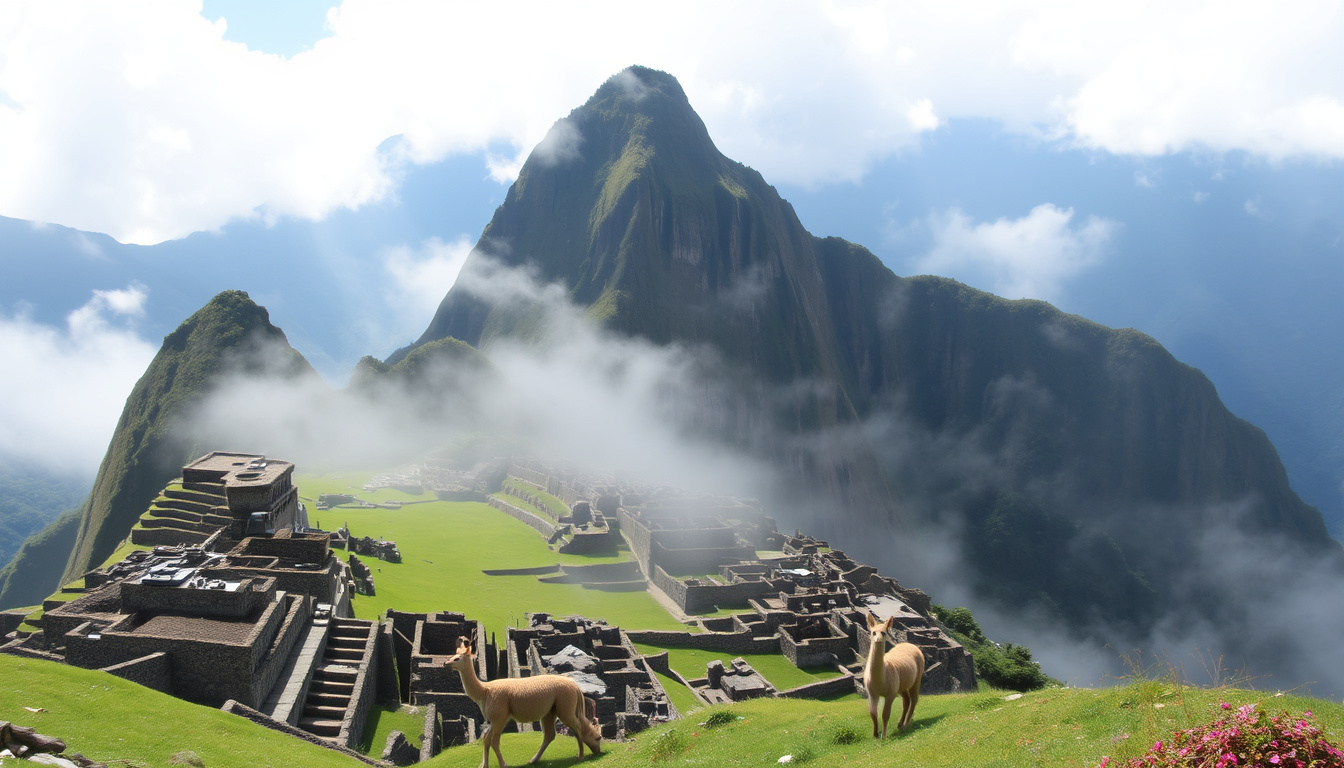
Built by the Inca Empire around 1450 and rediscovered in 1911 by Hiram Bingham, Machu Picchu sits at 2,430 m in Peru’s Eastern Cordillera. It earned UNESCO World Heritage status in 1983 and attracts roughly 5,000 visitors daily — a 15th-century citadel that remains one of the most significant archaeological sites on the planet.
What to Wear to Machu Picchu: The Official Rules and Practical Realities
Here is where most online advice diverges from the official text. The official code of conduct is silent on “hiking boots vs. sneakers” — it simply says you must wear “appropriate footwear” and that hard-soled shoes are not appropriate. But the Peru Tourism — What to Wear guide is blunt: the site manager’s own guidance says soft-soled shoes are required or expected at the gate, because the ancient granite stairs are slippery and can damage hard soles (and your ankles). In practice, you will see plenty of people in running shoes; what you will rarely see is someone in dress shoes or sandals making it past the first checkpoint without a word.
- Layers are non-negotiable: the site spans multiple microclimates; mornings are cold (~8°C/46°F) and afternoons can hit 24°C/75°F with intense sun (Peru Tourism guide).
- Rain gear is part of the dress code: ponchos are so much the norm that the official gift shop sells them — but you can get a decent one in Aguas Calientes for $3 (Machu Picchu Guided Tours).
- Neutral, modest colors are the sweet spot: the Machu Picchu Guided Tours — What to Wear guide recommends earth tones that blend with the ruins, not bright neon that screams “tourist” — though there’s no official rule against bright colors.
Can you wear jeans to Machu Picchu?
The Peru Tourism guide warns that denim holds moisture and becomes heavy in rain, increasing the risk of chafing and discomfort. Lightweight trekking pants or zip-offs are the local favourite. Jeans are not forbidden, but they are a bad idea — heavy when wet from rain or sweat, and slow to dry at high altitude.
“The site’s altitude and weather swings mean that what you wear is not just about comfort — it determines whether you enjoy the experience or endure it.”
Peru Tourism — What to Wear to Machu Picchu
But here’s the contradiction about the dress code that most visitors miss: the official rules say “no costumes,” yet many travelers arrive in traditional alpaca sweaters — which are technically not costumes but cultural apparel, and they’re fine. What gets you in trouble is a full Inca-king costume or a furry mascot suit. The line is between “clothing that respects the site” and “clothing that treats it like a theatrical set.”
Prohibited Items: The Surprising List That Actually Gets Enforced
Beyond the obvious (weapons, glass, alcohol), the most common ban that trips up travelers is the drone ban. If you fly a drone at Machu Picchu, you will be fined and potentially arrested — the sanctuary’s code and the 2026 rules summary agree on this point with zero ambiguity. The site’s management has to send rangers after drone operators, and the fines are steep: ~$235 USD for a first offense, and you will be escorted out of the sanctuary.
The second category that gets people is walking sticks. The official rule, straight from the code of conduct, is that walking sticks are only allowed if they have a rubber tip to protect the stone. That “rubber tip” provision is a strict requirement — if you’re over 60 or have a disability, you can bring a cane, but it has to have a plastic or rubber cap. In practice, the tip can be bought for $2 in Aguas Calientes, and visitors report that guards at the entrance will spot an uncovered metal tip from 10 meters away.
The third and most misunderstood: professional photography gear. It costs ~$150 extra per day to shoot with a tripod, and only with a permit from the Dirección Desconcentrada de Cultura. Without that permit, your tripod is a “professional item” and will be confiscated at the gate. Many travelers are surprised that a small handheld gimbal is also technically banned — they’re considered “stabilizing equipment.”
- Book your timed ticket — entry slots are strictly enforced and sell out weeks in advance.
- Bring your passport — the name must match the one on your booking.
- Arrive with a certified guide — required for all visitors since 2017.
- Pack light — backpacks over 40L must be stored at the entrance cloakroom.
- Wear soft-soled shoes — hard soles are not allowed on the ancient granite.
Special Routes and Restricted Areas: Where You Can and Can’t Go
Not all your time at Machu Picchu is on the main ruins. If you have tickets for Huayna Picchu or Huchuy Picchu (as most hikers do), there are additional rules that even the official code doesn’t fully spell out. For example, the Travel And Tour World 2026 guide notes that the “Stairs of Death” on Huayna Picchu refer to the steep sections where you’re climbing near-vertical stairs with safety cables on both sides — not a pre-worn tourist trail. It’s not a walk-up, and guides are required to keep you in groups of no more than 16 there too.
Can an 80 year old go to Machu Picchu?
Accessible options exist — the bus runs from Aguas Calientes to the entrance, and the lower circuit is wheelchair-accessible. The Inca Trail is physically demanding, but alternative routes and guided tours allow elderly visitors to experience the site with planning. Huayna Picchu is not recommended for those with mobility issues.
For the typical visitor, the restricted areas are marked with ropes, and the code of conduct is unambiguous: no entering areas that are marked “Do Not Enter” or “Restricted.” That includes the Temple of the Sun, the Intihuatana Stone enclosure, and the caretaker’s hut — unless you have a special permit. The site learned its lesson after years of erosion; the official announcement said the new traffic flow aims to reduce impact.
Where it gets tricky: the “Circle Circuit” and the “Upper Part” require separate tickets, and your guide has a specific route. If you’re on the classic 2-day itinerary, you’ll see the circuits split; don’t expect to overlap, because the staff at each checkpoint checks your ticket against the route you booked.
Potential Fines and Enforcement: What Happens If You Break the Rules
Enforcement is not theoretical — it’s a daily occurrence. The code of conduct specifies penalties, and the 2026 rules summary repeats them with a warning that they’re now being applied more strictly. Fines range from $45 USD for minor infractions (eg, eating a sandwich outside the designated rest area) to $235 USD and immediate removal for drones. But the real cost is your entrance fee — if you’re ejected, you don’t get a refund, and you’ll most likely have to buy a new ticket, which is significantly more expensive during peak season.
Confirmed Facts
- No clothing with advertising, costumes, banners, posters, or similar items (Machupicchu.gob.pe).
- Prohibits entering with items that damage the site, including hard-soled shoes (code of conduct).
- Requires respectful, modest clothing (the “reconsideration” clause).
- No professional photography equipment without a permit (including tripods, gimbals) (sanctuary code).
- No drones whatsoever — inside the sanctuary or the surrounding buffer zone (2026 rules).
- Personal cameras and phones are allowed; recording for commercial use is banned (official policy).
- All visitors must be accompanied by a certified guide (since 2017) (Travel and Tour World).
- Maximum group size: 16 people per guide (2026 guide).
- Guides are responsible for their group’s compliance with all rules.
- No bags larger than 40L (about 25L is a comfortable carry-on) — they aren’t allowed on the circuit (code of conduct).
- No food inside the sanctuary (sealed water bottles excepted) (official policy).
- No smoking, no loud music, no public displays of affection (enforced as a courtesy).
The enforcement is getting smarter too. The Travel And Tour World guide mentions that rangers now do spot checks and that the site is moving toward electronic ticketing that syncs with a “conduct record” — so repeat offenders could be flagged for future entry. It’s a small step toward protecting the monument but a big one for visitors who treat the rules as optional.
Safety and Emergencies: What the Guides Won’t Tell You
Is it safe to travel to Machu Picchu now?
Safety depends on political stability, weather, and health precautions. Occasional closures occur for maintenance or protests. Check official Peru tourism advisories before you go. The site itself is safe for visitors who follow the marked circuits and carry their own medication.
Should I bring toilet paper to Peru?
Public toilets are available at the Machu Picchu entrance but may lack paper. Bringing your own toilet paper is a common and practical tip. Facilities inside the site are limited, so prepare accordingly.
Beyond the code of conduct, the real hidden rules are about your safety. The site sits at 2,430m, and altitude sickness is the no. 1 medical issue for visitors — not accidents. The Peru Tourism guide notes that the route from Aguas Calientes involves a 1,000m elevation gain, and most people feel it even if they’ve acclimatized in Cusco (3,399m). If you’re one of the many who arrive with a headache, the official recommendation is not to sleep at altitude — take the bus up and down, and carry coca leaves (as instructed by your guide).
For the less dramatic emergencies, the site is oddly practical. There are no medical facilities inside, only at the entrance, and the Travel And Tour World article points out that the site’s emergency services consist of a small post with first aid and a helipad that’s rarely used. If you have a heart condition or a breathing issue, the climb is doable but you must carry your own medication — the site’s official code adds that you cannot bring in liquids beyond what you can drink in one breath, so no large water containers.
What the newspapers rarely report is the “unauthorized path” problem. There’s a notorious unofficial trail to the Sun Gate from the main ruins that’s now blocked with a monitor and a guard — you can see it but not walk it. The sanctuary management has been aggressive about this since a 2023 incident where a tourist got lost for 48 hours. The warning is thin: don’t leave the marked circuit. It’s not just about rules; it’s about not becoming a search-and-rescue statistic.
Related reading: Ivory Coast 2025 Travel Guide
yapaexplorers.com, cuscoperu.com, travelandtourworld.com, salkantaytrekking.com, peru-explorer.com, machupicchu.org, travelandtourworld.com
Frequently Asked Questions
Is there a strict no-return policy on my entrance ticket?
Officially, entrance tickets are non-refundable and non-transferable. However, the site offers a one-time rescheduling window (subject to availability) if you notify them at least 24 hours in advance, per Machupicchu.gob.pe. For third-party bookings, check your platform’s policy.
Are sneakers ok for Machu Picchu?
Yes, running shoes with soft soles are fine. The Peru Tourism guide notes that soft-soled shoes are expected at the gate. What you will not see is dress shoes or sandals passing the first checkpoint.
Am I allowed to sing or play music at Machu Picchu?
No. The code of conduct explicitly forbids noise that disturbs other visitors, and in practice, singing is treated as disruptive performance — even a modest one. Keep your earbuds in and your voice down.
What happens if it rains while I’m inside?
You’ll be asked to evacuate the higher circuits (Huayna Picchu, Huchuy Picchu) and head to the lower parts for shelter. The 2026 rules state that during lightning storms, the site is cleared for an hour — a precaution that isn’t widely known but is strictly enforced. No refunds are given for weather closures, though you can re-enter with a “good weather permit” if you have one.
Do I need a guide to enter if I have a ticket?
Yes — the official policy since 2017 requires all visitors to enter with a certified guide, and a ticket alone is not enough. Your guide has to be registered. The Travel And Tour World summary explains that gate staff check that your guide is on the day’s approved list.
Are there any restrictions for elderly visitors or those with mobility issues?
Elderly and visitors with disabilities can visit, but the site’s code stresses the need to plan routes carefully. The lower circuit is wheelchair-accessible, but Huayna Picchu is physically demanding and not recommended. Walking sticks are allowed if they have rubber tips — even for non-disabled guests.
What altitude sickness precautions should I take?
The Peru Tourism guide recommends acclimatizing in Cusco (3,399m) for at least a day before visiting, staying hydrated, and carrying coca leaves as instructed by your guide. Take the bus up and down rather than sleeping at altitude.

Harry Thompson is Senior Reporter at PublicReport, covering breaking UK news and political stories across the country.