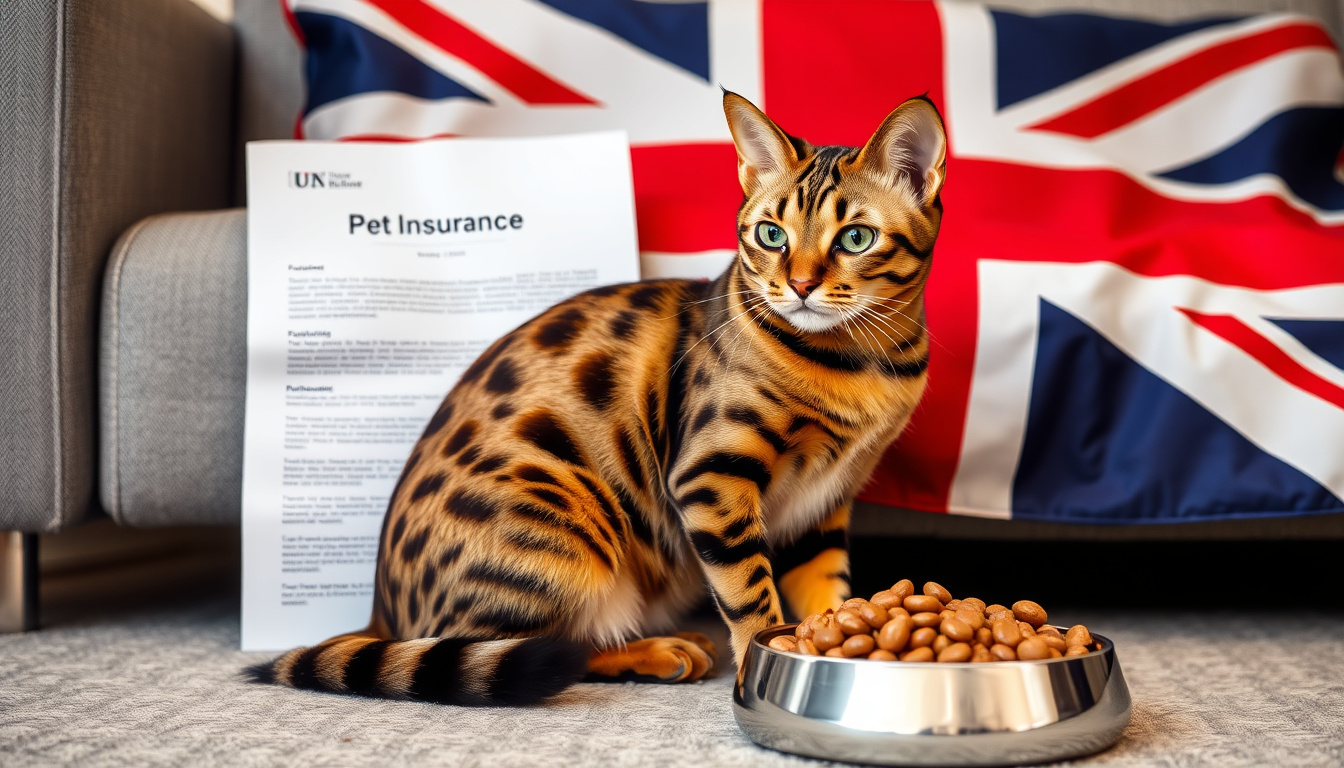
Anyone who’s met a Bengal already knows the pull: a domestic cat with a wild leopard look, a glittered coat, and more energy than a terrier. But that striking appearance comes with a serious commitment — one that carries a five-figure price tag and a daily demand for engagement.
Breed group: Hybrid (Asian Leopard Cat × domestic shorthair) ·
Height: 13–15 inches ·
Weight: 4.1–7.7 kg ·
Coat: Spotted, marbled, or rosetted ·
Lifespan: 12–16 years ·
Temperament: Active, intelligent, vocal
Quick snapshot
- Bengals are a hybrid breed — a cross between the Asian Leopard Cat and a domestic cat (Purina UK).
- They have three distinctive coat patterns: spotted, marbled, or rosetted (PDSA).
- The breed is described as highly intelligent, energetic, and requiring substantial mental and physical enrichment (Purina UK).
- Bengals have an average lifespan of 12 to 16 years (PDSA).
- Long-term health issues in the breed are still being studied but may include HCM (Hypertrophic Cardiomyopathy).
- Litters can produce unpredictable temperaments due to hybrid influences.
- Legal status varies significantly, even within the UK (Scotland vs. England).
- Bengals are a relatively recent breed, developed in the 1960s, so long-term health data is still emerging (Pets4Homes).
- Potential Bengal owners must plan for enrichment, training, and legal checks before committing.
The table below compresses the essential stats about the Bengal breed into a quick-reference format.
| Label | Value |
|---|---|
| Breed group | Hybrid (Asian Leopard Cat × domestic shorthair) |
| Height | 13–15 inches |
| Weight | 4.1–7.7 kg |
| Coat | Spotted, marbled, or rosetted |
| Coat pattern | Rarely two Bengals have the same pattern |
| Lifespan | 12–16 years (PDSA) |
| Temperament | Active, intelligent, vocal, confident |
| Suitable for | Experienced, active households |
Are Bengal house cats good pets?
Bengals are a spectrum, not a single note. For the right household, they’re a revelation; for the unprepared, they’re a challenge. Purina UK goes straight to the point: these are highly active and inquisitive cats that need extensive enrichment and simulated hunting games. PDSA echoes that, pointing out they’re highly intelligent, energetic, and require plenty of mental stimulation. This isn’t a lap cat that will happily snooze all day; it’s a creature that needs a job.
The key to a happy Bengal-human relationship is understanding the trade-off: you’re trading a low-maintenance pet for a highly engaged one. Animal Friends notes they are “extremely playful and intelligent” and can become mischievous if they do not get enough attention. “Mischievous” is a polite word for a bored Bengal that has learned to open cabinets, turn on taps, or redecorate your sofa. This is a breed for the owner who wants an active partner in crime, not an ornament.
The implication: for an active individual or family who can dedicate quality time to play and enrichment, the Bengal is a fantastic companion. For a busy professional who’s away from home for long hours, it’s a recipe for a stressed cat and a destroyed home.
Is it legal to own a Bengal cat in the UK?
The legal landscape for Bengal ownership in the UK is less about a single law and more about a postcode lottery. The core issue is the Bengal’s wild ancestry — the Asian Leopard Cat — which brings them under the Dangerous Wild Animals Act 1976 in some regions. While it’s generally legal to own a Bengal cat in England, the situation is different in Scotland, where the legislation is stricter.
Owners in England must ensure their Bengal is at least an F4 generation (four generations removed from the wild ancestor) to avoid needing a license, and the rules can differ significantly between England and Scotland.
The safest approach for any UK resident is to verify local regulations and confirm the filial generation of the kitten you’re buying. A reputable breeder should be transparent about this and have the paperwork to prove it. This isn’t just a bureaucratic detail; it’s a legal distinction that can affect whether you can own a Bengal at all.
Why it matters: the legality isn’t just about licensing. It impacts whether you can rehome the cat, whether your landlord can restrict ownership, and what your insurance covers. A Bengal purchased legally in England might not be legal to own across the border, so doing your homework upfront is a legal necessity, not just a practical one.
Can a Bengal cat be a house cat?
Yes, but with a caveat: it has to be an *interesting* house. A Bengal can absolutely live indoors, and in fact, the PDSA recommends they be kept indoors for their own safety to protect both the cat and local wildlife. But the term “house cat” usually conjures images of a docile creature on a windowsill. A Bengal does not fit that picture. They are athletic and need an environment that matches their physical and mental capabilities.
This means the onus is on the owner to “Bengal-proof” the home. This includes cat trees, climbing shelves, puzzle feeders, and interactive toys. Vet Price Comparison Site describes them as trainable to harness, clicker training, and even fetch, which shows they need both physical and intellectual outlets. The trade-off is clear: a Bengal is a house cat only if you’re willing to turn your house into a cat gym. If you’re not, both you and the cat will be miserable.
The pattern here is that the “house cat” label is misleadingly simple. There are two types of owners for this breed: those who create a stimulating environment and enjoy the interactive nature, and those who don’t and end up with a destructive, bored pet. The difference isn’t the cat; it’s the environment.
How much does a Bengal cat cost per month?
The price of a Bengal is the entry ticket to a lifelong investment that’s significantly higher than your average domestic shorthair. In the UK, the initial purchase price is a wide range. Pets4Homes notes Bengals are commonly advertised from roughly £400 to over £1,500. Whiskas UK puts the range between £500 and £2,000+. However, this isn’t the whole story. A guide from Vet Price Comparison Site suggests kittens from TICA-registered breeders typically cost £800 to £1,600. At the extreme end, Animal Friends notes Bengal prices can range from £300 to £5,000.
The price is highly dependent on the kitten’s generation, coat pattern, and breeder reputation, which explains the huge variation. But the purchase price is just the beginning. The PDSA estimates a lifetime cost of £13,600 to £18,000, a figure that includes food, vet bills, and insurance over the cat’s lifespan.
The real cost of Bengal ownership is spread over 12 to 16 years, not just the day you bring one home.
Ongoing monthly costs add up quickly. Waggel estimates monthly essentials for a healthy adult at food £30 to £120+, litter £10 to £25, and toys/replacements £5 to £25. Pets4Homes and Vet Price Comparison Site paint a similar expensive picture. Scratch & Patch estimates first-year costs can reach about £1,000. This isn’t a surprise, but it’s a figure that separates the committed from the curious.
The trade-off: you’re not just paying for a cat; you’re paying for the breed’s rarity and the lifestyle it demands. The question isn’t “can you afford a Bengal?” but “can you afford to provide for one properly for 15 years?”
What are the downsides of Bengal cats?
Let’s not sugar-coat it: the Bengal is not the cat for everyone. Their high energy and intelligence can be a double-edged sword. PDSA warns they require a “calm environment” and are not a “lap cat.” That’s a stark warning from a leading vet charity.
This behaviour isn’t just an occasional quirk; it’s a core part of their nature. zooplus UK describes the breed as “confident, dominant, and at times slightly aggressive” especially around other territorial cats. Similarly, Animal Friends warns they may be aggressive toward other cats unless socialised from a young age. This is a crucial point for multi-pet households; it’s not a guarantee of aggression, but a strong probability if their needs aren’t met.
The “downside” is fundamentally about a mismatch of expectations. If you expect a cat to be an independent, low-touch pet, a Bengal will be a daily challenge. If you expect a dog-like, interactive companion who’s always “on”, a Bengal is perfect. The pattern is clear: the same traits that make them captivating also make them demanding. The catchall takeaway is that the biggest downside isn’t the cat, it’s the failure to grasp this until it’s too late.
gumtree.com, animalfriends.co.uk, zooplus.co.uk, bengalheritagecats.co.uk, comparebyreview.com
Frequently asked questions
Are Bengal cats good with children and other pets?
Generally, yes, especially if raised together. However, due to their dominant nature, they’re better suited to families with older children who understand how to respect a cat’s boundaries. With other pets, they can be territorial and may see smaller animals as prey, so careful introductions are key (zooplus UK).
What is the average price of a Bengal kitten?
In the UK, you can expect to pay anywhere from £400 to over £1,500 for a Bengal kitten, with TICA-registered breeders often charging £800 to £1,600. Show-quality or rare-coloured kittens cost more.
Do Bengal cats have a lot of health problems?
Like all purebreds, they have a predisposition to certain conditions. The most concerning is Hypertrophic Cardiomyopathy (HCM). However, it’s important to note that long-term health issues are still being studied, so choosing a breeder who tests for these conditions is crucial.
Do Bengal cats require a special diet?
Not necessarily special, but they do require a high-quality, protein-rich diet. Because of their high energy levels, they burn more calories than a typical house cat. The food budget can be significant, with Waggel estimating a cost of £30 to £120+ per month. Some owners opt for raw diets, but this should be done under veterinary guidance.
Are Bengal cats still considered wild cats?
They are a domestic breed, but they carry genes from the Asian Leopard Cat. This means they are a hybrid breed. As a result, they retain some wild instincts, which influences their high energy and intelligence. This is why it’s essential to know the filial generation (F-number) of your cat, especially for legal reasons.
How long do Bengal cats live?
With good care, a Bengal can live a long life. PDSA states they live, on average, 12 to 16 years.

Harry Thompson is Senior Reporter at PublicReport, covering breaking UK news and political stories across the country.