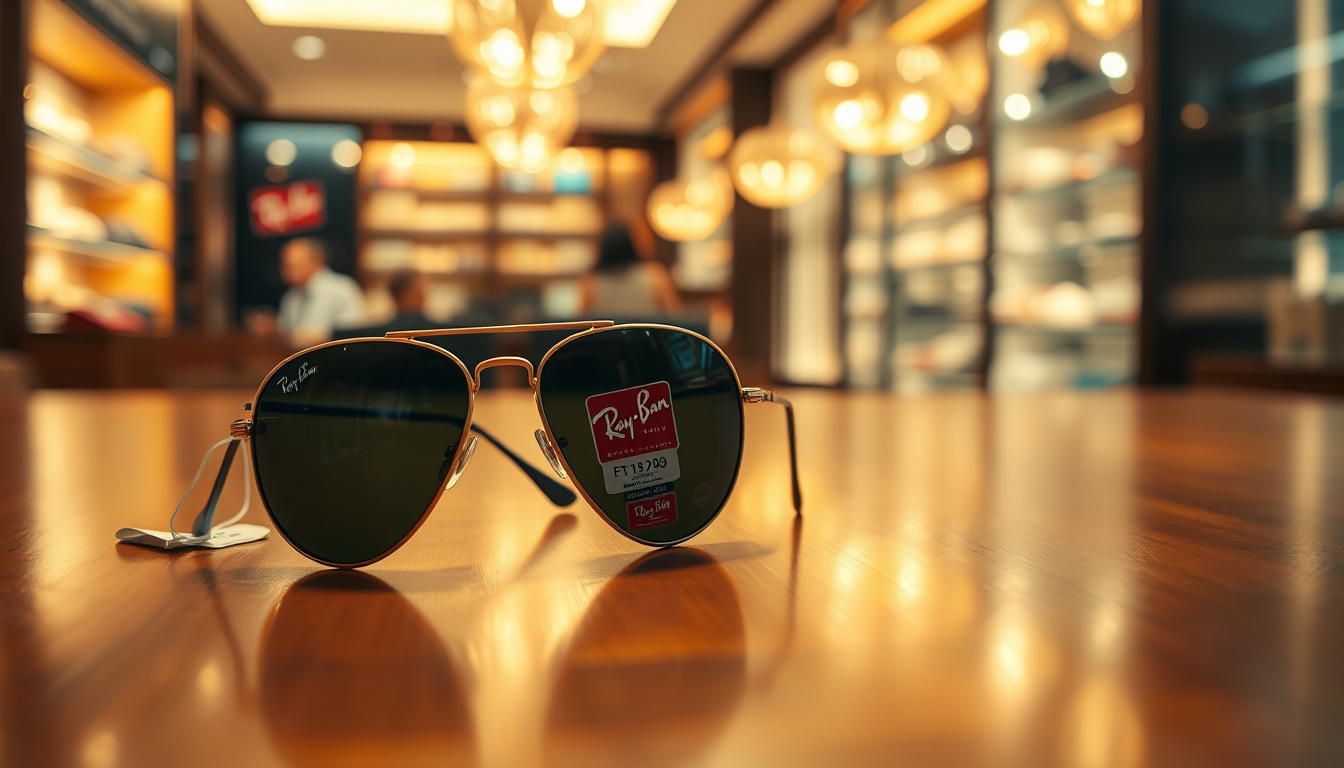
Holding two premium frames with nearly identical price tags, you start to wonder where the money actually goes. This article strips back the marketing to compare Ray-Ban and Oakley in 2025, focusing on what you’re paying for, which brand suits which use case, and where the value really lives.
Snapshot: The key facts
- Ray-Ban: Founded 1937, owned by EssilorLuxottica.
- Oakley: Founded 1975, owned by EssilorLuxottica since 2007.
- Both are part of the EssilorLuxottica group, the largest eyewear conglomerate globally.
- Ray-Ban revenue estimated around $2.5 billion annually; Oakley’s business generates roughly $3 billion across all product lines.
- Ray-Ban: Fashion-forward, iconic lifestyle designs.
- Oakley: Sport-performance, optical innovation, active lifestyle.
- Ray-Ban: $150–$400 typically.
- Oakley: $100–$300; with custom and sport-specific models reaching $400+.
Key figures: Founded 1937 · Owned by EssilorLuxottica · Market share ~15% of premium sunglasses · Price range $150–$400 · Most popular model: Wayfarer · Warranty: 2 years.
| Feature | Ray-Ban | Oakley |
|---|---|---|
| Founded | 1937 | 1975 |
| Parent company | EssilorLuxottica | EssilorLuxottica |
| Warranty period | 2 years | 2 years |
| Lens technology | G-15, Polarized, Chromance | Prizm, Prizm Polarized |
| Iconic models | Wayfarer, Aviator, Clubmaster | Holbrook, Frogskins, Jawbreaker |
| Target use case | Fashion, lifestyle | Sport, performance |
While the two share a parent giant, their engineering paths could not be more different.
Brand Heritage and Positioning
Ray-Ban: The timeless icon
- Founded in 1937 by Bausch & Lomb.
- Introduced the Aviator in 1937 for U.S. Army aviators.
- Wayfarer launched in 1952, becoming a pop-culture staple.
- Rebranded as a Luxottica brand in 1999.
Ray-Ban’s strength is its cultural anchor. These are the glasses you see in films, on musicians, and across generations — a deliberate design language that rarely changes. It is a fashion-first proposition.
Oakley: Engineered for performance
- Founded in 1975 by James Jannard, originally selling motocross grips.
- Developed the first mass-produced sport sunglasses with interchangeable lenses.
- Owned by EssilorLuxottica since 2007.
- Known for Prizm lens technology, enhancing color and contrast.
Oakley has always been a technology-first brand, born from athletic frustration and engineered to solve real vision problems during activity. Their products claim a deeper optical purpose.
Design and Lens Technology
Lens comparison: Prizm vs Chromance vs G-15
- Oakley Prizm: Enhances color separation and contrast for specific environments (road, field, snow).
- Ray-Ban Chromance: A newer contrast-boosting lens, but with less specialized tuning than Oakley.
- Ray-Ban G-15: A classic green lens cutting glare and providing neutral color.
- Both offer polarized options with similar levels of glare reduction.
In practical terms, if you are a golfer, biker, or runner, Oakley’s Prizm line is engineered for your sport. Ray-Ban’s lens tech is good but broadly tuned. For a fashion frame to daily wear, both work well, but Oakley leads the technical race.
Ray-Ban aims for universal style; Oakley aims for task-specific performance. Choose by activity, not logo.
A Closer Look at Models and Value
Wayfarer: the classic
- Introduced 1952, the enduring fashion symbol.
- Typically costs between $150–$250.
- Fits any face shape; made from lightweight nylon.
Aviator: enduring appeal
- Born for the military, style icon since.
- Usually $150–$300 depending on lens and frame materials.
Clubmaster and other iconics
- Combines retro and modern design.
- Often available with polarized lenses as an option.
Oakley for sports
- Holbrook: Classic design, great for all-day wear, approximates a Ray-Ban look but with better grip.
- Frogskins: Casual, lightweight, with Prizm lens options.
- Jawbreaker/Speedjacket: For cycling and running; vented, lightweight, with no frame top.
Both lines have models under $200, but Oakley’s high-end sport models reach $250+ where you are getting true Prizm tech.
Durability and Warranty
| Brand | Warranty | Durability notes |
|---|---|---|
| Ray-Ban | 2-year limited | Good with normal use; hinges may loosen, but frame and lenses resist typical wear. |
| Oakley | 2-year limited | Designed for abuse; impact-resistant lenses and O-Matter frames are built for activity. |
Under warranty, both companies fix manufacturer defects. However, Oakley’s reputation for impact resistance is a health and safety choice for athletes. Ray-Ban warranty claims often revolve around hinge issues, while Oakley claims are more rarely needed.
There is no official statement that one brand is “more durable” — both have adequate build quality, but the context of use differs.
Marketing and Pricing: Understanding the Markup
- Vertical integration: EssilorLuxottica owns retail chains (LensCrafters, Sunglass Hut) and brands, keeping margins in-house.
- Brand investment: Ray-Ban and Oakley spend heavily on sponsorships, athletes, and music culture.
- Price floor: The $100–$300 range represents a premium over non-branded glasses but also covers massive ad spend and distribution.
- Duty-free advantage: Often 10–20% lower at airports, making the premium less painful.
When you buy a $250 pair of aviators, roughly $75–$100 covers design, marketing, and brand margin. The added cost for Ray-Ban over a generic frame is not in the lens; it is in the brand story.
Popularity and Social Proof
- Ray-Ban: Instantly recognizable; a fashion staple across decades.
- Oakley: The go-to for athletes; adopted by active lifestyle communities.
- Search trends: Ray-Ban consistently outpaces in brand searches, while Oakley leads in “sport” plus “sunglasses.”
This reflects the answer to the common query, “Is Ray-Ban or Oakley more popular?” — celebrity vs sport.
Which One Should You Buy? A Practical Guide
| Use Case | Winner | Why |
|---|---|---|
| Daily fashion | Ray-Ban | Classic style that never changes. |
| Running/Cycling | Oakley | Prizm lens, lightweight, secure grip. |
| Golf | Oakley | Contrast enhancement for green reading. |
| Beach/Boating | Tie | Both have polarized options. |
| Budget-conscious | Oakley | Entry models start lower, even with Prizm. |
Even within EssilorLuxottica, the two brands have slightly different philosophies: Ray-Ban message is “You look good”; Oakley’s is “You perform better”.
my.oakley.com, thenoublejournal.com, brandxr.io, worlddutyfree.com, oakleysi.com, oakleysi.com, jfk.dutyfreeamericas.com, yankodesign.com, electronics.alibaba.com, jfk.dutyfreeamericas.com, london-heathrow.worlddutyfree.com
Frequently Asked Questions
When should you not wear polarised sunglasses?
Polarized lenses can interfere with reading LCD screens (e.g., car dashboards, ATMs, phone displays), making them harder to see. They can also cause visual discomfort for some people when moving their head side-to-side, and are not ideal for seeing ice patches on roads.
Are Ray-Ban and Oakley owned by the same company?
Yes, both are part of the EssilorLuxottica group, which also owns LensCrafters and Sunglass Hut.
Which brand offers better value for sporty activities?
Oakley, thanks to Prizm lens technology and sport-specific frame designs that offer better grip and impact resistance.
Do Ray-Ban or Oakley sunglasses have a warranty?
Both offer a 2-year warranty covering manufacturer defects, but not accidental damage.
Why are Ray-Ban sunglasses so expensive?
The price reflects the brand name, design heritage, optical quality, and the cost of marketing and distribution within the EssilorLuxottica network.
Which is better for a child’s first pair of sunglasses?
For durability, Oakley’s O-Matter frames and impact-resistant lenses are a more practical choice. For style preference, Ray-Ban’s smaller sizes and classic looks also exist.
Choosing between Ray-Ban and Oakley ultimately boils down to your lifestyle. If you care about cultural statement and everyday style, Ray-Ban is the classic. If you value technical eyewear that enhances performance, Oakley is your partner. Both carry great quality, and the decision is more about which part of your personality you want to project — a sense of timeless fashion or an active, dynamic edge.
Related Reading

Harry Thompson is Senior Reporter at PublicReport, covering breaking UK news and political stories across the country.