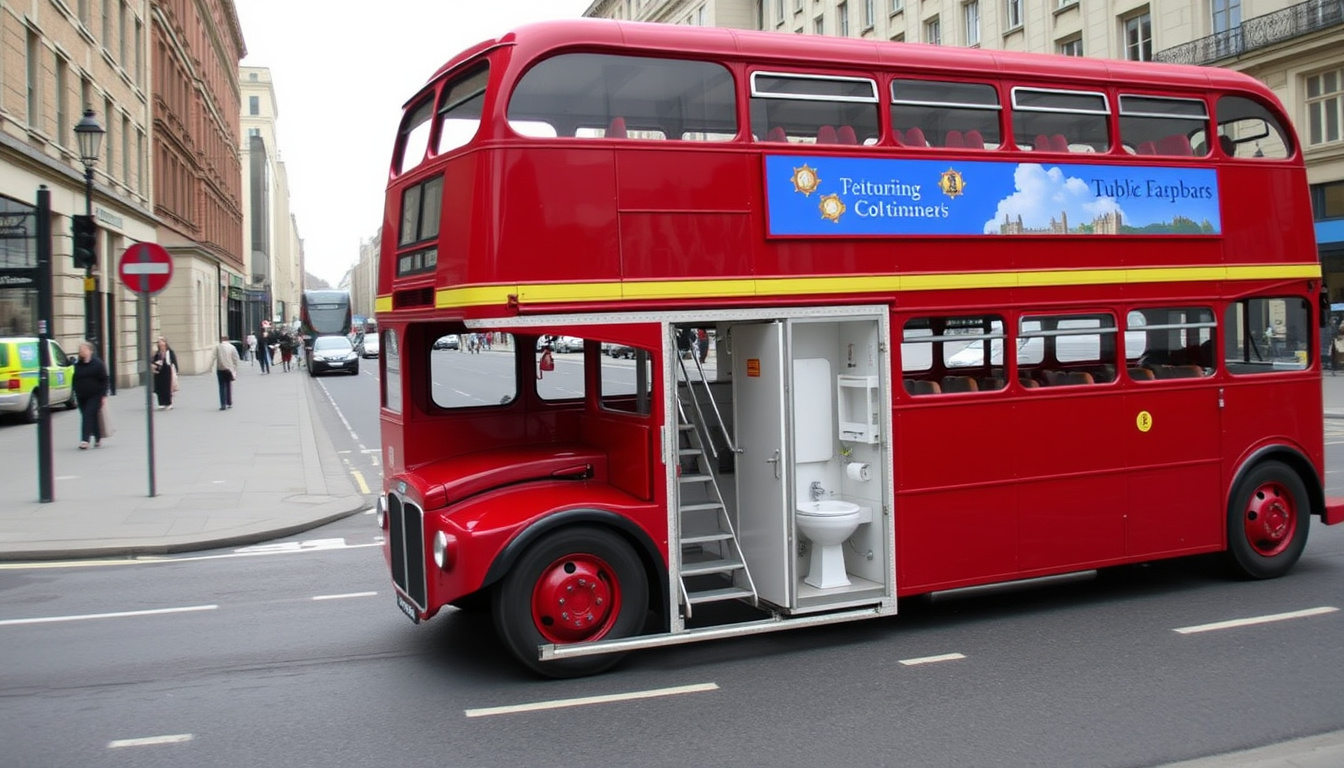
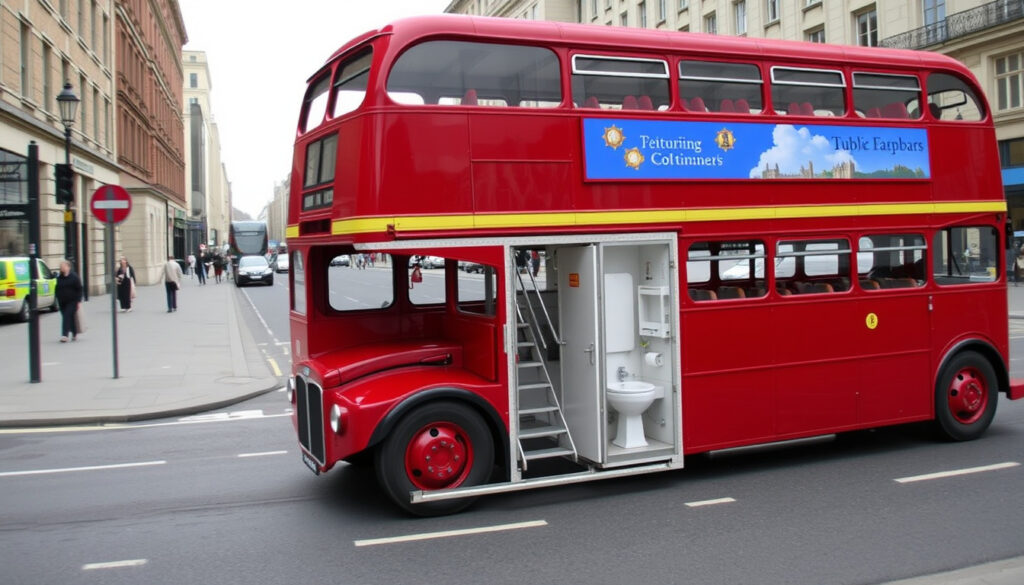
Few sights are as unmistakable as a double-decker bus rumbling down a city street. Whether you’re a tourist snapping a photo of a Routemaster in London or a commuter in Dublin climbing aboard the airport express, the two-deck design solves a simple problem: move more people without taking up more road space. This guide breaks down what it costs, how many seats it has, whether you’ll find a toilet on board, and what it’s actually like to drive one for a living.
Decks: 2 ·
Typical height: 4.0–4.4 m ·
Typical length: 9.5–12 m ·
Typical seating: 70–90 seats ·
Common uses: Transit, touring, and coach service
Quick snapshot
- Double-decker buses have two passenger decks (Wikipedia (encyclopaedic source)).
- The Routemaster is an iconic British double-decker bus (Wikipedia (Routemaster article)).
- Most city double-deckers do not have bathrooms; some coaches do (Volvo Buses (manufacturer specifications)).
- Modern double-deckers are required to be wheelchair accessible in the UK and Ireland (Wikipedia (accessibility requirements)).
- Exact new and used double-decker bus prices should be sourced from current official or dealer data. (Busly (European rental platform))
- Exact seating capacity depends on operator specification and should cite manufacturer data. (Busly (European rental platform))
- Facility policies for bus drivers vary by company; official employer guidance is needed. (Busly (European rental platform))
- Dublin double-decker operations on airport routes require confirmation from official transport authority sources (Busly (European rental platform) provides current operator references).
- UK bus driver salary data varies by source and should be verified with official ONS figures (SalaryTax (UK salary data aggregator) provides regional breakdowns).
- 1954: Routemaster production begins (Wikipedia).
- 1960s: Open-top double-deckers become a touring staple (industry historical record). (Wikipedia)
- 2005: Last original Routemaster regular-service route in London is withdrawn (Wikipedia (Routemaster history)).
- 2012: New Routemaster enters service in London. (Wikipedia)
- Electric double-deckers are being rolled out in London and other cities.
- Driver welfare policies, including toilet access, may see regulatory updates.
- Used double-decker markets in Ireland and the UK continue to grow.
The key facts table below captures the essential specifications at a glance.
| Definition | A bus with two passenger decks, one above the other |
| British icon | The Routemaster is the best-known double-decker model |
| Dublin service | Yes — double-deckers run on airport–city centre routes |
| Seating | Roughly 70–90 passengers, depending on specification |
| Toilets | Usually not on city buses; coach double-deckers may have them |
| Driver salary | Varies by region; London guides are published separately |
What is a British double-decker bus called?
What is a Routemaster?
The Routemaster is the most famous British double-decker, built by AEC and used in London from the 1950s until regular service ended in 2005 (Wikipedia (Routemaster history)). It was designed for crew operation (a driver and a conductor) and became a symbol of the city. Modern double-deckers still run in London, but the classic Routemaster survives mostly on heritage routes.
Where did the Routemaster run?
Routemasters originally operated on dozens of London bus routes, especially central ones like the 9, 15, and 73. After 2005, only two heritage routes (9 and 15) continued with Routemasters, and they eventually transitioned to modified “New Routemasters” from 2012 onward (Wikipedia (New Routemaster)).
What does ‘double-decker’ mean?
A double-decker bus is simply a bus with two separate passenger decks, one above the other. The design increases passenger capacity without requiring a longer vehicle, making it ideal for dense urban routes (Wikipedia (double-decker bus definition)).
The Routemaster is not just a bus; it’s a cultural landmark. But the working double-decker of today is a different machine—more efficient, often wheelchair-accessible, and built for driver-only operation.
How much does one double-decker bus cost?
What affects the price of a double-decker bus?
A new double-decker bus can cost several hundred thousand pounds. The final price depends on length, engine type, seating layout, and accessibility fittings. For example, the Volvo 9700 Double Decker (manufacturer specs) is a coach-style model with up to 97 seats and a built-in toilet—features that push the price higher than a standard transit double-decker.
Are used double-decker buses cheaper?
Used double-decker buses are sold through specialist dealers and auctions. Prices vary widely with age, condition, and mileage. Daily rental rates for double-deckers start at around €1,000 to €1,800 depending on the model and route, according to the same European rental platform.
Where are double-decker buses listed for sale?
Specialist commercial vehicle websites, operator sales, and auctions list double-deckers. Irish operators regularly advertise 76-seater accessible coaches for sale and hire.
New bus prices are rarely published online. For a firm quote, you must contact manufacturers directly. The used market offers more transparency, with auction results visible on dealer sites.
Are there double-decker buses in Dublin?
Do Dublin airport buses use double-deckers?
Yes, double-decker buses have been introduced on Dublin airport–city centre routes. Reports from local forums and operator listings confirm their use.
Can you hire a double-decker bus in Dublin?
Several Dublin operators offer double-decker bus hire, including 76-seater accessible coaches. These are popular for group tours, weddings, and events.
Looking for other activities in the city? The cost and booking details for Pottery Cafe Dublin: Prices, Menu & Where to Paint may help plan a group outing.
Are Dublin double-deckers open-top?
Vintage and open-top double-deckers operate in Dublin for tours and events. They are a common sight on the city’s hop-on-hop-off sightseeing routes.
Do double-decker buses have bathrooms?
Do city buses have toilets?
Most everyday city double-decker buses do not carry bathrooms. The design prioritises standing room and quick boarding. You won’t find a toilet on a standard London bus (Volvo Buses (coach amenities contrast)).
Do coach double-deckers have bathrooms?
Yes, double-decker coaches built for long-distance travel often include a toilet. The Volvo 9700 Double Decker (manufacturer specifications), for example, lists a water toilet with a 100-litre water tank as standard equipment.
How are coach amenities different?
Coach double-deckers are designed for comfort over distance. They typically include air conditioning, a galley, Wi-Fi, and a toilet. Transit double-deckers omit these to maximise capacity and reduce weight.
If you’re buying a double-decker for a tour operation, a toilet is a must. For a city route, it’s dead weight. The specification determines the amenity, not the name.
How many seats are on a normal double-decker bus?
What affects seating capacity?
A normal double-decker bus seats roughly 70–90 passengers. Exact capacity depends on operator choices: number of doors, wheelchair bays, and seat pitch. The Volvo 9700 Double Decker (manufacturer data) lists up to 97 seats in a high-density layout.
How many passengers can stand as well as sit?
Besides seating, double-deckers have standing capacity that increases total passenger load. A standard city double-decker can carry 120–150 passengers total when factoring in standing room.
Does bus length change the seat count?
Yes. Buses between 9.5 m and 12 m length have different capacities. Longer buses allow more rows on the lower deck, but the upper deck is constrained by rear overhang and wheel arches.
One spec table, one pattern: capacity varies by inches.
| Parameter | Typical value | Source |
|---|---|---|
| Length | 9.5–12 m | Wikipedia |
| Width | 2.5–2.55 m | Wikipedia |
| Height | 4.0–4.4 m | Wikipedia |
| Seating capacity | 70–90 (up to 97 on coaches) | Volvo Buses |
| Standing capacity | 30–60 (varies by operator) | Operator specifications |
| Total passenger load | 120–150 | Industry estimates |
| Toilet (coach models) | Yes, 100 L water tank | Volvo Buses |
| Toilet (city models) | No | Common practice |
| Typical engine | Diesel, hybrid, or electric | Manufacturer options |
| Wheelchair accessible | Yes (modern models) | Wikipedia |
The implication: seating and standing capacity depend more on operator configuration than on the vehicle class itself.
How do bus drivers go to the toilet in the UK?
What should a bus driver do if they need to urinate?
UK bus drivers do not usually have a toilet on the vehicle. They use facilities at bus stations, depots, or other scheduled stopping points. Drivers plan restroom use around route layovers and official breaks (SalaryTax (UK bus driver context)).
Where can a bus driver stop for a break?
Bus drivers can stop at designated layover points, but these are not always near a toilet. Company policy governs emergency stops. The HSE (UK workplace regulator) requires employers to provide suitable toilet facilities during shifts, but the reality on the road is patchy.
What does UK workplace law require for toilet access?
UK workplace welfare regulations require employers to provide access to suitable toilet facilities during shifts. However, for mobile workers like bus drivers, the employer must make reasonable arrangements, such as scheduling rest stops near facilities. This is a frequent topic of union negotiation.
Drivers in London and other cities have reported that insufficient break time makes it hard to use even the facilities that exist. The issue is as much about scheduling as about infrastructure.
What is the salary of a UK bus driver?
How much do London bus drivers earn?
London TfL-contracted bus drivers typically earn about £36,000 to £41,000 starting pay, rising to £41,000 to £46,000 for experienced drivers, according to SalaryTax (UK salary data aggregator).
Do bus drivers get paid more for overtime?
Yes. Pay can increase with overtime, unsocial hours, and route complexity. The San Francisco Department of Public Works (US wage schedule) shows specific hourly rates for double-decker bus service work, including base rates of $36.22 and $37.40 per hour—a reminder that tour bus drivers in major cities can earn a premium.
Are bus driver salaries the same across the UK?
No. Regional operators typically pay starting drivers about £28,000 to £33,000, with experienced pay around £33,000 to £40,000. Independent and rural operators pay less, around £25,000 to £30,000 starting, according to the same salary data aggregator. The UK median full-time gross pay for bus and coach drivers is around £32,000 (2024 ASHE release).
If you are managing your finances as a bus driver, the guide on Registering Self Assessment: UK & Ireland Guide 2025-2026 covers tax return requirements.
The salary gap between London and the rest of the UK is about 30%. For a driver considering a move, the higher London pay comes with a higher cost of living—and often more intense traffic and passenger loads.
Timeline
- 1954 – Routemaster production begins (Wikipedia).
- 1960s – Open-top double-deckers become a touring staple (industry historical record).
- 2005 – Last original Routemaster regular-service route in London is withdrawn (Wikipedia (Routemaster history)).
- 2012 – New Routemaster enters service in London (Wikipedia).
Clarity
Confirmed facts
- Double-decker buses have two passenger decks (Wikipedia (encyclopaedic source)).
- The Routemaster is an iconic British double-decker bus (Wikipedia (Routemaster article)).
- Most city double-deckers do not have bathrooms; some coaches do (Volvo Buses (manufacturer specifications)).
- Modern double-deckers are required to be wheelchair accessible in the UK and Ireland (Wikipedia (accessibility requirements)).
What’s unclear
- Exact new and used double-decker bus prices should be sourced from current official or dealer data.
- Exact seating capacity depends on operator specification and should cite manufacturer data.
- Facility policies for bus drivers vary by company; official employer guidance is needed.
- Dublin double-decker operations on airport routes require confirmation from official transport authority sources (Busly (European rental platform) provides current operator references).
- UK bus driver salary data varies by source and should be verified with official ONS figures (SalaryTax (UK salary data aggregator) provides regional breakdowns).
Quotes
“The Volvo 9700 Double Decker can carry up to 97 passengers and includes a water toilet with a 100-litre water tank.”
— Volvo Buses (manufacturer specifications)
“London TfL-contracted bus drivers typically earn about £36,000 to £41,000 starting pay, rising to £41,000 to £46,000 for experienced drivers.”
— SalaryTax (UK salary data aggregator)
“Double-decker buses offer more seating capacity without increasing vehicle length.”
— Busly (European rental platform)
“The Routemaster is the most famous British double-decker, used in London from the 1950s until regular service ended in 2005.”
— Wikipedia (encyclopaedic source)
For a bus operator in Dublin or London, the choice of double-decker comes down to route type and budget. Transit operators will prioritise capacity and low cost per seat, while tour operators need onboard amenities like toilets and Wi-Fi. For drivers, the salary gap between London and the regions is a real factor in job decisions. The implication is clear: before buying or hiring, define your use case, and before applying, check the local pay scale.
indeed.com, freejobalert.com, indeed.com, indeed.com, uk.indeed.com, salary.com, indeed.com, definitejobs.co.uk
Frequently asked questions
How tall is a double-decker bus?
Typically 4.0 to 4.4 metres tall, depending on the model and roof design (Wikipedia).
Are double-decker buses wheelchair accessible?
Yes, modern double-deckers are required to be wheelchair accessible in the UK and Ireland, with a ramp and designated wheelchair space on the lower deck (Wikipedia).
Can a double-decker bus tip over?
Double-deckers are designed with a low centre of gravity and are tested for stability. They are less likely to tip than single-deckers because of their weight distribution, but sharp turns at speed can still be risky.
Are double-decker buses still used in London?
Yes. The New Routemaster and other modern double-deckers operate on many London routes, especially on busy corridors where high capacity is needed (Wikipedia).
Why do some double-deckers have open tops?
Open-top double-deckers are used for sightseeing tours. The open upper deck gives passengers unobstructed views of landmarks. They are usually converted from standard buses.
Do you need a special licence to drive a double-decker bus?
In the UK, you need a Category D licence (bus) and a Driver Certificate of Professional Competence (CPC). No additional endorsement is required for double-deckers, but you must pass a practical test on a vehicle of similar size.
What is the difference between a double-decker bus and a coach?
A double-decker bus is built for short urban trips with standing room and frequent stops. A coach is built for long-distance travel with reclining seats, luggage storage, and often a toilet. Double-decker coaches combine both designs.

Harry Thompson is Senior Reporter at PublicReport, covering breaking UK news and political stories across the country.