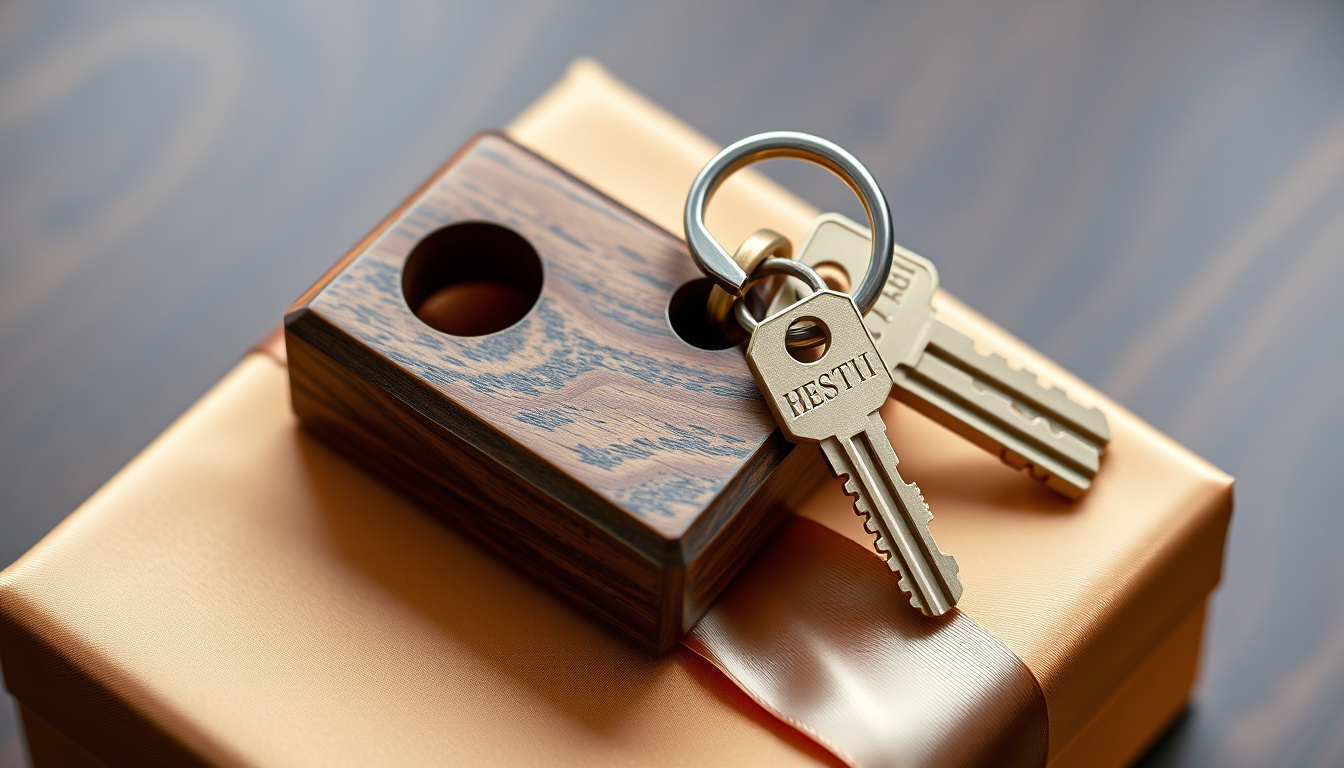
Few everyday items carry as much subtle meaning as a small loop of metal holding your keys. Whether you call it a key ring or a keychain, this humble accessory often says more about you than you might expect.
Primary use: Holding and organizing keys together ·
Most common occasion for giving as gift: Birthdays and Christmas ·
Typical price range: $5 to $50 for basic to designer keyrings
Quick snapshot
- Key rings have been used since the late 1800s (Biddy Murphy – Irish key ring retailer)
- American English prefers “keychain”; British English uses both (IrishShop – Irish gift guide)
- Personalised photo keyrings are popular in Ireland (Celtic Knot – Irish gift giving guide)
- Exact symbolic origins of keychain gift superstitions are debated (Finders Keepers – traditional good luck gifts)
- Whether giving a keychain is universally considered bad luck is culturally dependent (Giftypedia – Irish gift customs)
- Earliest known key ring designs appear around the late 19th century (Gift Fable – Irish gift categories)
- Claddagh key rings have been marketed since the 20th century (Biddy Murphy – Irish key ring retailer)
- Photo keyrings continue to be a go-to personalised gift in Ireland (AmorKado – Irish gifting traditions)
- Demand for designer key rings from brands like Tiffany & Co. is rising (Liz Christy – Irish handcrafted gifts)
A quick overview of key ring facts and figures provides a baseline for understanding their role as both tools and tokens.
| Label | Value |
|---|---|
| Origin | Earliest key ring designs trace to late 19th century. |
| Common materials | Metal, leather, plastic, wood, resin. |
| Primary function | Keep multiple keys organized and attached to a person. |
| Gift popularity | One of the most affordable small accessories, frequently given for birthdays and holidays. |
What does a key ring mean?
Literal definition and purpose
- A key ring is a simple device—usually a metal ring or chain—that holds multiple keys together, making them easier to carry and harder to lose (Biddy Murphy – Irish key ring retailer).
- The term “key ring” emphasises the circular shape, while “keychain” refers to the attached chain or decorative tag. In Irish retail contexts, both terms are used interchangeably (IrishShop – Irish gift guide).
- Historically, key rings evolved from simple wire loops; by the late 1800s, they had become a standard household item (Gift Fable – Irish gift categories).
Symbolic and cultural meanings
- Beyond utility, a key ring can symbolise responsibility, access, or trust. Giving one as a gift often implies “you have the key to my life” or “I trust you with my space” (IrishShop – Irish gift guide).
- In Irish contexts, the Claddagh key ring is marketed as carrying the same love, loyalty, and friendship symbolism as the Claddagh ring itself (Biddy Murphy – see above).
- However, a plain key ring does not have a fixed Irish symbolic meaning, unlike the Claddagh, which communicates relationship status through hand and heart orientation (IrishShop – see above).
A key ring can be a personal emblem of identity or a simple utilitarian object—its meaning depends entirely on the giver’s intention and the receiver’s cultural lens.
The implication: the key ring’s meaning is made, not inherited. It gains weight from the relationship it is given within.
What is the key ring called?
Synonyms and regional variations (American vs British English)
- In American English, the common term is “keychain” (sometimes spelled key chain). In British English, both “key ring” and “key chain” are used, with “key ring” slightly more traditional (IrishShop – see above).
- Other synonyms include “key fob” (often for a decorative attachment) and “key holder”. A “key fob” may also refer to an electronic device, but in gift contexts it is a small decorative tag (Biddy Murphy – see above).
- “Key tag” is used for promotional giveaways, while “key holder” describes a wall-mounted organiser (Gift Fable – see above).
Fancy or formal terms for key rings
- A designer key ring may be marketed as a “key fob” or “key pendant”. Brands like Tiffany & Co. often call them “key rings” in a luxury context (Liz Christy – Irish handcrafted gifts).
- In Ireland, Tipperary Crystal sells “crystal key rings” as keepsakes, while Biddy Murphy and other souvenir retailers offer Claddagh-themed “Irish key rings” (Biddy Murphy – see above).
If you are buying for a British or Irish recipient, “key ring” is safer; for an American, “keychain” avoids confusion. The wrong term can make a gift feel slightly off, but never offensive.
The pattern: terminology follows geography, not logic. The object is the same; the name shifts with the speaker’s accent and retail culture.
Where can I buy a nice keyring?
Online stores and retailers in Ireland and the UK
- Boots Photo offers personalised photo keyrings with same-day pickup in many Irish stores (Boots Photo Ireland – photo keyrings).
- YourSurprise (based in the Netherlands) ships custom text and photo keyrings to Ireland with engraving options (YourSurprise Ireland – personalised keyrings).
- Tipperary Crystal sells engraved crystal and pewter key rings made in Ireland (Tipperary Crystal – Irish key rings).
Custom and personalized options
- Many photo services (Boots Photo, Snapfish, Photobox) offer custom photo keyrings with multiple images, typically between €8 and €15 (Boots Photo – see above).
- For engraved metal key rings, YourSurprise and Etsy sellers provide name, date, or short message engraving (YourSurprise – see above).
- In Ireland, some local craft shops and markets offer hand-stamped metal key rings; check Etsy’s Irish sellers for unique designs (Gift Fable – see above).
Designer and luxury key rings
- Tiffany & Co. offers sterling silver and gold key rings priced from £100, while Flannels stocks designer key rings from Gucci, Prada, and other luxury brands (Liz Christy – see above).
- Irish designer jewellery brands such as Chupi and Solvar produce Claddagh key rings in precious metals, blending symbolism with fashion (Biddy Murphy – see above).
What this means: the Irish market for key rings spans a practical photo memento at one end and a designer status piece at the other. The buyer’s intention determines where the gift lands on that spectrum.
What does it mean if someone gives you a keychain?
Common interpretations of a keychain as a gift
- Giving a keychain can symbolise trust, responsibility, or a key to a relationship—often seen as a romantic gesture (IrishShop – see above).
- In Irish gift-giving culture, a key ring is a low-risk practical gift that does not carry the same fixed romantic status as a Claddagh ring (Celtic Knot – see above).
- It is a practical and thoughtful item—showing the giver pays attention to the recipient’s daily needs (AmorKado – Irish gifting traditions).
Cultural and romantic symbolism
- Some see a keychain as representing “you hold the key to my heart,” making it a popular Valentine’s Day gift (IrishShop – see above).
- In Ireland, a Claddagh key ring adds explicit layers of love, loyalty, and friendship, though wearing it does not signal relationship status as the ring does (Biddy Murphy – see above).
- For new homeowners, a key ring with a housewarming theme (e.g., a horseshoe or shamrock) can welcome them to their new space (Finders Keepers – traditional good luck gifts).
The meaning you attach to a keychain gift depends heavily on context—romantic partners, friends, and colleagues will read it differently. Always consider your relationship before handing one over.
The catch: the keychain is a blank canvas. The giver’s intent and the receiver’s culture paint the picture. A Claddagh key ring speaks louder in an Irish context than a plain metal loop.
Why shouldn’t we give keychain as a gift?
Superstitions and negative connotations
- Some believe giving a keychain is bad luck because it symbolises tying someone down or limiting their freedom. This superstition is especially mentioned in American folklore (Giftypedia – Irish gift customs).
- In certain traditions, gifting a keychain is considered unlucky as it “locks” the relationship or friendship, implying the recipient cannot leave (Celtic Knot – see above).
- This belief is not universal; many Irish gift guides make no mention of it, focusing instead on positive symbolism (IrishShop – see above).
Practical reasons and gift alternatives
- From a practical standpoint, a cheap, mass-produced keychain may feel impersonal. Opting for a personalised or custom design adds thoughtfulness (Gift Fable – see above).
- If you are concerned about superstition, consider pairing the keychain with another gift (e.g., a bottle of wine) to soften any perceived negative meaning (AmorKado – see above).
- For housewarmings, traditional good luck gifts like a horseshoe, bread and salt, or a St. Brigid’s Cross are better alternatives in Irish culture (Finders Keepers – see above).
A keychain is a thoughtful but not deeply symbolic gift. If you want to communicate a strong romantic or cultural message in Ireland, a Claddagh ring or a piece of handcrafted jewellery carries far more weight.
The pattern: the superstition against keychains is a fringe belief, not a mainstream Irish taboo. Pairing it with a more traditional gift neutralizes any unintended message.
Upsides and downsides
Upsides
- Key rings have been used since the late 1800s. (Biddy Murphy – see above)
- American English prefers “keychain”; British English uses both. (IrishShop – see above)
- Online retailers in Ireland: Boots Photo, YourSurprise, Tipperary Crystal. (Boots Photo – see above)
Downsides
- Exact symbolic origins of keychain gift superstitions are debated. Some sources claim negative connotations while others ignore them (Giftypedia – see above).
- Whether giving a keychain is universally considered bad luck is culturally dependent. The belief appears strongest in American folklore and weaker in Irish etiquette guides (Celtic Knot – see above).
- No definitive history exists on when key rings first became common gifts. The practice likely grew alongside mass manufacturing in the early 20th century (Gift Fable – see above).
- Common synonyms such as key fob, key tag, and key holder are not universally understood. Their use varies between gift contexts and technical descriptions (Biddy Murphy – see above).
- Claddagh key rings are marketed with love/loyalty/friendship symbolism, but this is a commercial extension of the ring’s meaning, not a standalone tradition. (Biddy Murphy – see above)
A Claddagh ring is often presented as a meaningful Irish gift, especially within romantic or heritage contexts. The Claddagh motif features hands, a heart, and a crown, representing friendship, love, and loyalty.
IrishShop – Irish gift guide
Some gift-etiquette guides claim that Irish gifts are not usually handed over casually and are often accompanied by a personal gesture or words. A key ring can be treated as a low-risk practical gift in Irish contexts because it does not carry the same fixed romantic status signaling associated with a Claddagh ring.
Celtic Knot – Irish gift giving guide & Biddy Murphy – see above
So for Irish gift-givers, the key ring remains a versatile choice: a photo keyring for personal sentiment, or a Claddagh design for deeper Celtic tradition.
irishcultureandtraditions.net, wordartprints.com, irishshop.com, celtic-knot.com
Frequently asked questions
What is the difference between a key ring and a keychain?
Technically, a key ring is the circular metal loop that holds keys; a keychain is the chain or tag attached to that ring. In everyday speech they are used interchangeably, with “keychain” more common in American English and “key ring” more traditional in British English (IrishShop – see above).
Can I engrave a key ring?
Yes. Many online retailers like YourSurprise and Boots Photo offer engraving or photo printing. Metal key rings can be laser engraved with names, dates, or short messages (YourSurprise – see above).
What are the most popular key ring designs for women?
Popular designs include photo keyrings, Claddagh motifs, crystal embellishments, and initials. Brands like Tiffany & Co. and Chupi offer sterling silver options (Biddy Murphy – see above).
Are photo keyrings still in fashion?
Yes. Photo keyrings remain popular as a sentimental and inexpensive gift. Services like Boots Photo and Photobox keep the category alive with easy online ordering (Boots Photo – see above).
How do I clean a metal key ring?
For stainless steel or silver key rings, use a soft cloth and mild soap; dry thoroughly. For brass or pewter (common in Irish Claddagh designs), use a metal polish designed for the specific material to avoid tarnish (Gift Fable – see above).
What does a key fob have that a key ring does not?
A key fob typically includes a decorative or electronic component, such as a branded tag or a remote control. A key ring is simply the metal loop. In gift contexts, “key fob” often describes a decorative attachment that dangles from a key ring (Biddy Murphy – see above).
Is it appropriate to give a key ring as a wedding favor?
Key rings can work as wedding favors if they are personalised (e.g., with the couple’s names and date) and match the wedding theme. However, some guests may view them as less memorable than edible favors. They are a low-risk option that many couples choose (AmorKado – see above).

Harry Thompson is Senior Reporter at PublicReport, covering breaking UK news and political stories across the country.