Few figures from the fourth century still spark conversations across religions the way Saint George does. You might know him as England’s patron saint, but his story stretches from a Roman soldier’s execution to a dragon-slaying legend and even a place in Islamic tradition.
Feast day: 23 April · Patron of: England, Catalonia, scouting, soldiers · Death: c. 303 AD, Lydda, Roman Empire · Venerated by: Catholic Church, Eastern Orthodox, Oriental Orthodox, Anglicanism, Islam · Known for: Dragon legend, martyrdom, military sainthood
Quick snapshot
- George was a Christian martyr executed around 303 AD (English Heritage)
- His feast day is 23 April (BBC History)
- He is venerated in Catholic, Orthodox, Anglican, Oriental Orthodox, and Islamic traditions (Wikipedia)
- Exact birthplace (Cappadocia or Lydda)
- Age at death (estimated between 22 and 28)
- Whether he married or had children
- Historical basis of the dragon story
- c. 275 AD — traditional birth in Cappadocia (St George’s Church)
- c. 303 AD — martyrdom under Diocletian (English Heritage) (St George’s Church)
- 1348 — becomes patron saint of England under Edward III (St George’s Church)
- Growing interfaith recognition, especially between Christians and Muslims who share veneration of George / Al-Khidr
- Continued scholarly debate on the dragon legend’s origins
Five key facts about Saint George, drawn from historical records and official church sources, reveal a figure far more complex than a single flag or dragon icon.
| Label | Value |
|---|---|
| Name | Saint George (Georgios) |
| Death | c. 303 AD, Lydda |
| Venerated in | Catholic, Orthodox, Anglican, Oriental Orthodox, Islam |
| Major shrine | Church of Saint George, Lod, Israel |
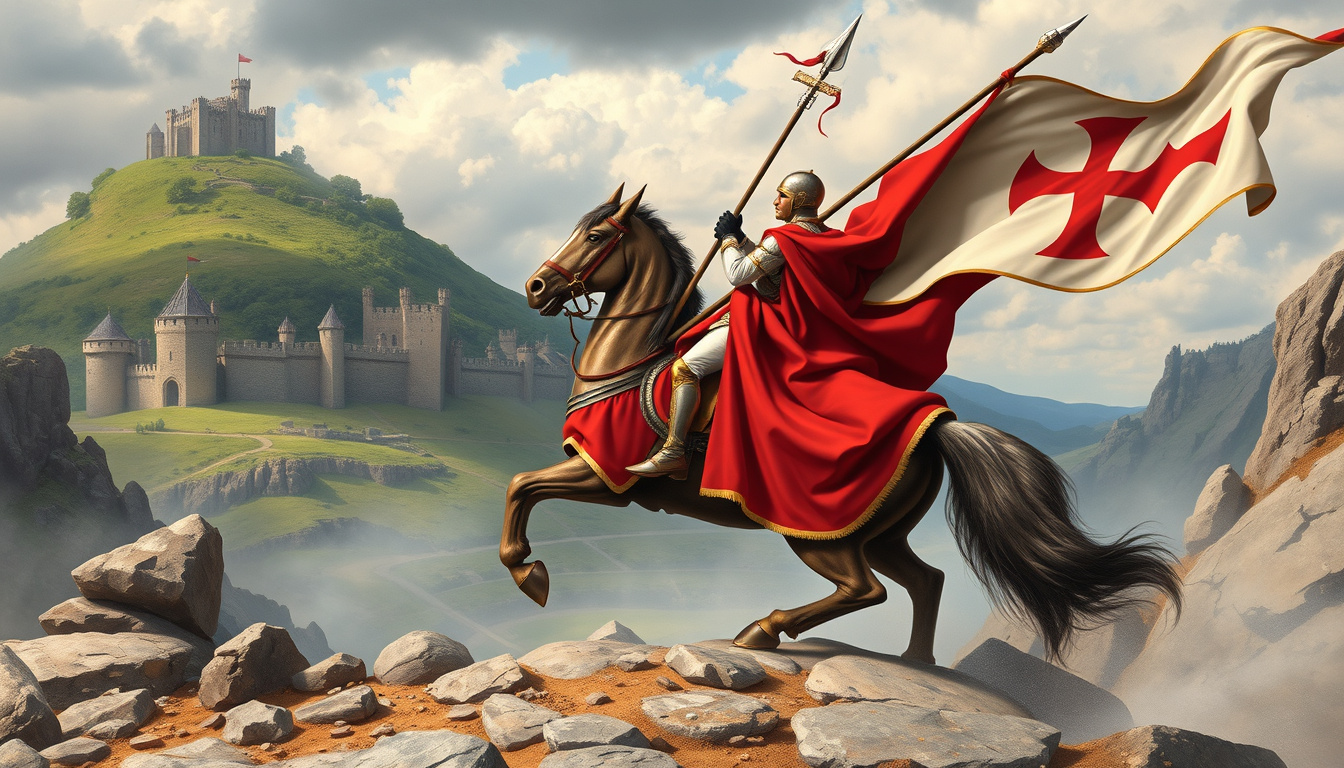
| Attributes | Dragon, spear, white horse, red cross |
What is Saint George famous for?
Saint George is best known for two things: his martyrdom as a Roman soldier who refused to renounce Christianity, and the dramatic dragon-slaying story that turned him into a folk hero across Europe.
The dragon legend and its symbolic meaning
- The dragon story first appeared in Western Europe through The Golden Legend by Jacobus de Voragine in the 12th century (Wikipedia).
- In the tale, George rescues a princess, tames the dragon, and leads a town to mass baptism (University of Pittsburgh folktexts archive).
- Scholars view the dragon as a symbol of evil conquered by faith, not a historical event.
Why Saint George is considered a military saint
- He is one of the most venerated saints in Christianity and is also honored in Islam (BBC Religion).
- Christian tradition holds that he was a soldier in the Roman army who died for his faith during the persecution of Diocletian (English Heritage).
- Vatican News describes him as patron of knights, soldiers, scouts, fencers, and archers (Vatican News).
Was Saint George Irish?
No, he was a Roman soldier from Cappadocia (modern-day Turkey) or Lydda (Palestine).
Do Catholics recognize St George?
Yes, the Catholic Church venerates Saint George as a martyr and lists him in the Roman Martyrology.
The dragon legend didn’t just make George a household name — it gave medieval Europe a visual shorthand for faith triumphing over evil, a symbol that still flies on flags and banners today.
The implication: his fame rests on a dual foundation of historical martyrdom and legendary symbolism, each reinforcing the other across cultures.
What does Saint George protect you from?
Saint George is invoked as a protector against a wide range of dangers, from plague and skin diseases to snakes and the perils of battle. His patronage spans entire nations and specific professions.
Patron saint of soldiers, farmers, and many other groups
- He is the patron saint of England, Georgia, Portugal, and several other regions (Encyclopaedia Britannica).
- According to Catholic.org, his feast day is 23 April and he is also patron of Catalonia (Catholic.org).
- English Heritage notes that he is invoked against plague, leprosy, and venomous snakes (English Heritage).
- BBC Religion adds that he is popularly linked with English ideals of honour, bravery, and gallantry (BBC Religion).
A Roman soldier from Cappadocia now protects England, Georgia, Catalonia, and Portugal — a spread that shows how one saint’s reputation can be adopted by very different cultures.
The implication: Saint George’s protection is less about geography and more about shared values of courage and faith, which explains why so many groups claim him.
The pattern: his protective role expands as each culture reinterprets his courage through its own needs.
What do Muslims call St George?
In Islamic tradition, Saint George is often identified with the revered prophet Al-Khidr, a figure associated with wisdom and eternal life. This connection makes George a rare bridge between Christian and Muslim veneration.
Saint George in Islamic tradition
- Muslims traditionally regard Saint George as a martyr and connect him with dying in a state of Islam (KhutbahBank).
- Some hadith mention George, and he is a revered figure in Palestinian Christian and Muslim contexts.
- St George is also venerated among the Druze community (Wikipedia).
Shared traditions between Christianity and Islam
- Muslims respect Saint George for his steadfast faith and as a martyr.
- Some traditions link him to Al-Khidr, a figure similar to Elijah in character.
Why do Muslims like St George?
Muslims respect Saint George for his steadfast faith and as a martyr. Some traditions link him to Al-Khidr, a figure similar to Elijah in character.
As interfaith dialogue grows, Saint George’s dual identity as a Christian martyr and an Islamic figure could become a powerful symbol of shared heritage, especially in the Middle East.
The catch: his dual identity remains underused in formal interfaith settings, despite its potential for dialogue.
Timeline
- c. 275 AD — Traditional birth of George in Cappadocia
- c. 303 AD — Martyrdom under Emperor Diocletian (English Heritage)
- 4th century — Cult of Saint George spreads across the Eastern Empire
- 12th century — Dragon legend popularized by the Golden Legend (Wikipedia)
- 1348 — Saint George becomes patron saint of England under Edward III (St George’s Church)
The timeline shows how a local martyr from Lydda grew into a global icon, with each era adding a new layer to his story.
Clarity section
Confirmed facts
- George was a Christian martyr executed around 303 AD.
- He is venerated as a saint in multiple denominations and in Islam.
- His feast day is 23 April.
What’s unclear
- Exact birthplace (Cappadocia or Lydda).
- Age at death (estimated between 22 and 28).
- Whether he married or had children.
- Details of the dragon story as historical fact.
The pattern: the known facts are few but solid, while the uncertainties leave room for both legend and faith to operate.
Quotes
“The dragon is the symbol of the devil, which Saint George overcomes by the power of faith.”
— Donald Attwater, hagiographer
“Saint George was a martyr dying for his Christian faith in the early fourth century.”
— English Heritage
The contrast: one quote interprets the dragon symbolically, the other anchors George in historical fact — both are needed to understand the full figure.
Summary
Saint George is far more than a dragon-slaying knight on a flag. He is a historical martyr whose story has been reshaped by centuries of legend, politics, and devotion. For Christians, he is a model of faith under persecution; for Muslims, a figure of righteous steadfastness. For England, he is a symbol of national identity. The takeaway: understanding Saint George means accepting that his truth lies somewhere between the historical record and the stories we tell about him. For anyone exploring the roots of English culture or interfaith connections, the saint from Lydda offers a surprisingly rich and relevant guide.
Frequently asked questions
What does the St George flag look like?
The flag of St George is a red cross on a white background, also known as the St George’s Cross.
Why is St George’s Day celebrated on 23 April?
23 April is traditionally observed as the date of his martyrdom in 303 AD.
Does Saint George appear in the Quran?
Saint George is not mentioned by name in the Quran, but he is referenced in Islamic hadith traditions and often identified with the prophet Al-Khidr.
Is Saint George a patron saint of scouting?
Yes, he is the patron saint of scouts, along with being patron of soldiers and knights.
What miracles are attributed to Saint George?
The most famous miracle is the dragon legend, but he is also credited with protecting from plague, venomous snakes, and battle wounds.
How did Saint George become patron of England?
Edward III adopted him as England’s patron saint in the 14th century, around the founding of the Order of the Garter in 1348.
The answers above address the most common questions about his symbols, feast day, and patronage.

Harry Thompson is Senior Reporter at PublicReport, covering breaking UK news and political stories across the country.