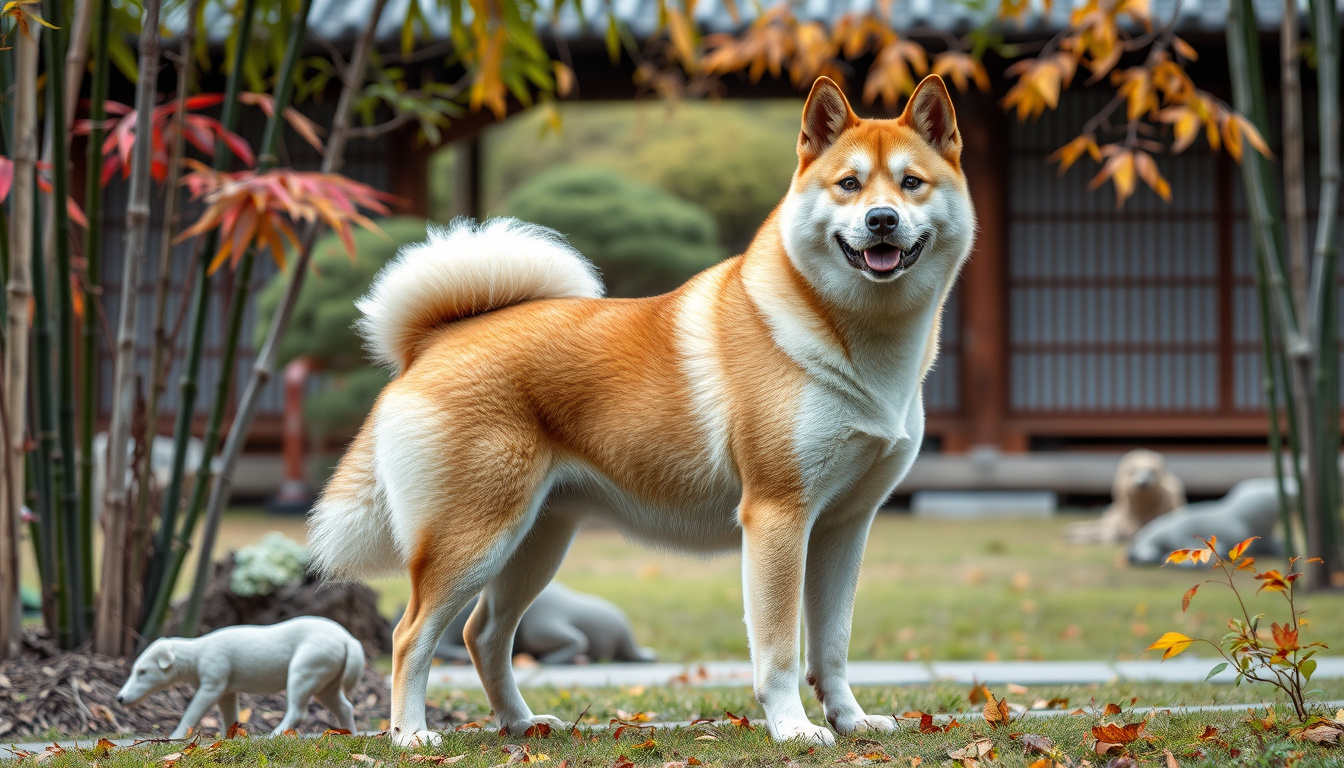
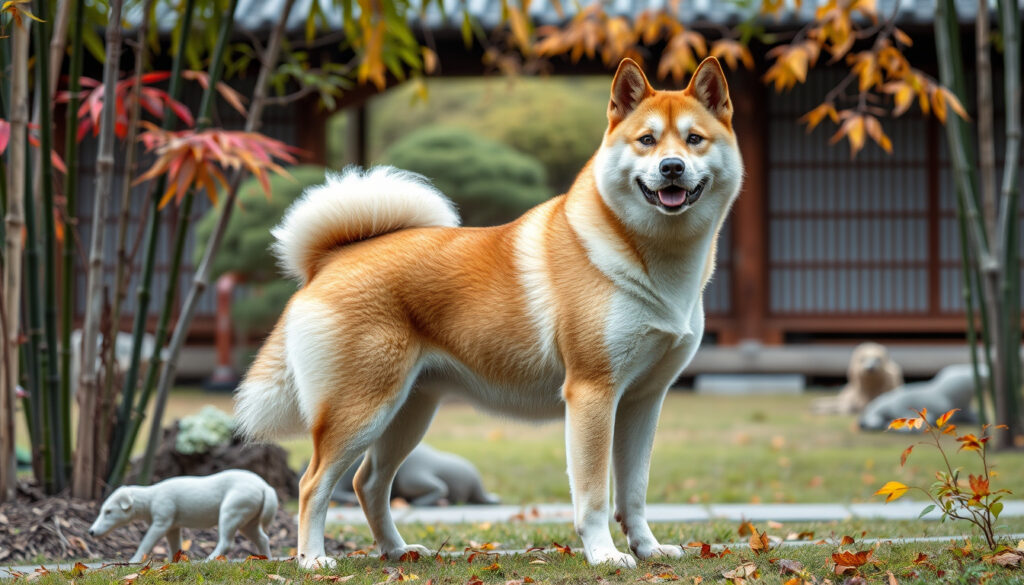
Few dog breeds spark as much debate as the Akita. Known for their fierce loyalty and imposing presence, these Japanese dogs carry a reputation for aggression that makes many families hesitate. This guide looks at the breed’s temperament, the data behind its restricted status, and what it really takes to live with one.
Weight (Male): 100–130 lbs ·
Weight (Female): 70–100 lbs ·
Height: 26–28 inches ·
Life Expectancy: 10–13 years ·
Origin: Japan ·
Coat: Double coat
Quick snapshot
- Akitas originated in mountainous northern Japan for hunting large game (Akita Club of America)
- They have a double coat that sheds heavily twice a year (The Spruce Pets)
- AKC breed standard describes them as dignified and courageous (American Kennel Club)
- Exact share of aggressive incidents caused by Akitas relative to breed population
- Whether Akitas are genetically closer to wolves than other domestic breeds
- Effectiveness of specific training protocols to prevent owner-directed aggression
- No major timeline events documented in current research
- Growing scrutiny of breed-specific legislation in the UK and parts of the US
- More DNA studies comparing Akita lineage to ancient wolf populations
Ten key facts about the Akita, one pattern: the breed’s size and temperament place it at the high end of the care-and-responsibility scale.
| Label | Value |
|---|---|
| Breed group | Non-Sporting (AKC) / Spitz (FCI) |
| Size | Large |
| Weight (Male) | 100–130 lbs |
| Weight (Female) | 70–100 lbs |
| Height | 26–28 inches |
| Coat type | Double coat |
| Colors | Red, fawn, brindle, white, sesame, black |
| Origin | Japan |
| Life expectancy | 10–13 years |
| Temperament | Loyal, Dignified, Courageous |
How aggressive is an Akita?
Temperament and instinctual drives
- The Akita Club of America (breed club) states that Akitas are “very intelligent and extremely loyal” but can exhibit aggressive tendencies, almost exclusively toward other dogs of the same sex.
- They have a well-developed guarding and protective instinct (Akita Club of America).
- The Spruce Pets (pet care resource) notes that Akitas were bred as hunters and even fighting dogs, which underpins their strong prey drive.
Statistics on aggression incidents
- Several studies rank Akitas among breeds with higher aggression toward other dogs, though exact population-level data is limited (Wikipedia (breed encyclopedia)).
- The Akita Club of America emphasizes that “typically not aggressive toward people” — but that applies only when the dog is properly socialized and handled.
Comparison with other breeds
- Compared to retrievers or herding dogs, Akitas score higher on dog-directed aggression in temperament tests (The Spruce Pets).
- They are not suitable for homes with other dogs of the same sex, according to both the breed club and pet care experts.
The pattern: Akita aggression is real but largely predictable — it targets other animals, not humans, and is manageable with the right handler.
Is an Akita a good family dog?
Behavior with children
- The Spruce Pets advises that Akitas are not suitable for families with small children. The Akita Life (owner resource) echoes this, stating they are “generally not recommended for people with small children.”
- Hepper (pet advice site) says they can be good family dogs but can be problematic with young children.
Interactions with other household pets
- The Akita Club of America advises against keeping an Akita if it will not live with the family inside both home and yard.
- They are best in one-pet households, as The Akita Life notes: “typically not good with other dogs.”
Training and socialization needs
- The Spruce Pets says Akitas are challenging to train and not ideal for first-time owners.
- The Akita Club of America insists that a person responsible for an Akita “must be able to take control of the dog at an early age.”
Loyalty to the family comes at a price: the Akita’s protective nature can make it aloof with strangers and reactive to other animals, especially in homes with unpredictable children.
The catch: an Akita can be a wonderful family dog — but only if the family is experienced, child-free or has older children, and has no other pets.
Why are Akitas a restricted breed?
Historical context of attacks
- Akitas have been involved in high-profile incidents in the UK and US, leading to their inclusion on restricted breed lists (Dogs Trust Ireland (animal welfare charity)).
- Their history as fighting dogs in Japan contributes to the perception of danger (The Spruce Pets).
Common legal restrictions worldwide
- In the UK, the Japanese Akita is listed under the Dangerous Dogs Act, requiring muzzling in public, on-leash rules, and sometimes special insurance (Dogs Trust Ireland).
- Parts of the US, such as certain counties in Colorado and Ohio, also impose breed-specific bans or restrictions on Akitas (Wikipedia).
Arguments for and against breed bans
- Proponents of bans point to the breed’s potential for severe bites due to its size and jaw strength (The Akita Life).
- Opponents argue that irresponsible ownership, not the breed, is the root cause — a view supported by the Akita Club of America, which emphasizes that aggression is manageable with proper training.
Breed-specific legislation treats the Akita as inherently dangerous, yet the breed club’s data shows that human-directed aggression is rare when the dog is raised by a responsible owner.
Why this matters: the legal status often forces owners to choose between compliance and relocation, and it shapes public perception more than actual statistics do.
Will an Akita turn on its owner?
Instances and causes of owner aggression
- Akita owners report high loyalty, but cases of aggression when boundaries are not respected are documented (Akita Club of America).
- Hepper notes that “Akitas are prone to aggression if not trained properly from a young age.”
Breed loyalty vs. unpredictability
- The breed’s independent nature can be mistaken for unpredictability, but the Akita Club of America describes them as “extremely loyal” and family-oriented.
- According to The Spruce Pets, Akitas tend to be aloof with strangers, which can escalate if the owner fails to establish leadership.
Preventive measures and owner responsibility
- The Akita Club of America advises that early control and consistent rules are essential.
- The Spruce Pets recommends experienced owners who can handle a stubborn, strong, protective dog.
The implication: owner-directed aggression is not a common trait in Akitas, but it can occur when the dog perceives a lack of leadership or when its boundaries are violated.
Is an Akita close to a wolf?
Genetic studies and lineage
- Akitas are an ancient breed, with DNA analysis placing them in the same clade as wolves, but they are not uniquely close — other primitive breeds share similar ancestry (Wikipedia).
- Research published in Nature shows that while Akitas have a genetic link to wolves, the divergence is comparable to other spitz breeds (Wikipedia (breed genetics)).
Behavioral traits shared with wolves
- Akitas exhibit pack mentality, aloofness with strangers, and a strong prey drive — behaviors that mirror wolf social structure (Akita Club of America).
- However, these traits are also common in other spitz breeds like the Shiba Inu and Siberian Husky.
Comparison to other spitz breeds
- Compared to the Shiba Inu, the Akita is much larger (100–130 lbs vs 17–23 lbs) and has a more pronounced guarding instinct (The Spruce Pets).
- Both breeds share a primitive lineage, but the Akita’s size and power make its wolf-like traits more consequential.
The catch: the Akita is not a wolf hybrid, and its genetic distance from wolves is comparable to that of many other breeds. The real similarity is behavioral, not biological.
Can an Akita be left alone?
Independence vs. attachment
- Akitas are independent and can handle short periods alone if properly exercised (The Spruce Pets).
- The Akita Club of America notes they are family-oriented and not happy when kept apart from the family.
Ideal alone time duration
- Most experts recommend no more than 4–6 hours of alone time for an adult Akita, and less for puppies (The Spruce Pets).
- Longer absences may lead to separation anxiety, which can manifest as destructive behavior or excessive barking.
Enrichment strategies to prevent destructive behavior
- Mental stimulation — puzzle toys, frozen kongs, and training sessions — helps mitigate boredom (Akita Club of America).
- A secure, comfortable space (crate or room) reduces anxiety when the owner is away.
What this means: an Akita can be left alone for a normal workday, but only if the owner provides exercise and enrichment before leaving and returns within a reasonable window.
Six key specs, one pattern: the Akita demands experience and commitment across every dimension of care.
| Specification | Details |
|---|---|
| Coat type | Double coat, sheds heavily twice a year |
| Color varieties | Red, fawn, brindle, white, sesame, black |
| Life expectancy | 10–13 years |
| Temperament | Loyal, Dignified, Courageous, Aloof with strangers |
| Exercise needs | Moderate – 30–60 minutes daily |
| Grooming | Brush 2–3 times/week, daily during shedding season |
| Trainability | Challenging – strong-willed, needs experienced handler |
| Good with children | With older children only; not recommended for homes with toddlers |
| Good with other dogs | Poor – same-sex aggression common |
| Shedding level | High – profuse seasonal blowouts |
The Akita vs Shiba Inu comparison shows how much size and temperament change within the same spitz family.
| Feature | Akita | Shiba Inu |
|---|---|---|
| Weight | 70–130 lbs | 17–23 lbs |
| Height | 26–28 inches | 13.5–16.5 inches |
| Typical temperament | Assertive, protective, aloof | Alert, spirited, independent |
| Aggression toward dogs | High (same-sex) | Moderate (can be same-sex) |
| Good with children | Older children only | Better with older children |
| Trainability | Challenging | Moderately challenging |
| Exercise needs | Moderate | Moderate |
| Life expectancy | 10–13 years | 12–16 years |
Upsides
- Extremely loyal and protective of family
- Dignified and calm in the home
- Low barking tendency (quiet breed)
- Moderate exercise needs for a large dog
- Strong bond with experienced owners
Downsides
- High aggression toward other dogs, especially same sex
- Not suitable for homes with small children
- Challenging to train – not for first-time owners
- Restricted in many countries and regions
- Heavy shedding requires constant grooming
- Can develop separation anxiety if left alone too long
Clarity check: what we know and what we don’t
Confirmed facts
- Akitas originated in the mountainous regions of northern Japan (Akita Club of America)
- They were used for hunting large game such as boar and bear (The Spruce Pets)
- They have a double coat that sheds heavily twice a year (The Spruce Pets)
- AKC breed standard recognizes Akitas as dignified and courageous (American Kennel Club)
- Akitas are listed as a restricted breed in several countries, including the UK (Dogs Trust Ireland)
What’s unclear
- Exact percentage of aggressive incidents caused by Akitas relative to breed population
- Whether Akitas are genetically closer to wolves than other domestic breeds
- Effectiveness of specific training methods to prevent owner-directed aggression
- Long-term impact of breed-specific legislation on Akita welfare
“Akitas are very intelligent and extremely loyal, but can exhibit aggressive tendencies — almost exclusively toward other dogs of the same sex.”
— Akita Club of America (breed authority)
“Akitas are not suitable for families with small children and may show aggressive tendencies toward other dogs and small animals.”
— The Spruce Pets (pet care resource)
“In the UK, the Japanese Akita is listed under the Dangerous Dogs Act, requiring muzzling in public and on-leash rules.”
— Dogs Trust Ireland (animal welfare charity)
For potential owners in the UK, where Japanese Akitas face restrictions under the Dangerous Dogs Act, the decision is clear: either commit to an experienced handler’s environment with strict socialization and legal compliance, or choose a breed with lower risk. The Akita is not a dog for everyone — but for those who match its needs, it remains one of the most loyal companions in the canine world.
facebook.com, culturejunction.net, youtube.com, apexxakitas.com, reddit.com, peteducate.com, wellnesscoachingforlife.com, sacharchiv.de
Frequently asked questions
Are Akitas good with cats?
Generally not. Due to their strong prey drive, Akitas may chase or harm cats, especially if they are not raised with them from puppyhood. Most experts recommend a one-pet household.
Do Akitas bark a lot?
No. Akitas are known for being a quiet breed. They bark only when necessary, such as to alert their owner of a stranger or unusual activity, which makes them good watchdogs.
Are Akitas easy to train?
No. Akitas are independent and strong-willed, making them challenging to train. They require an experienced handler who uses consistent, positive reinforcement methods. First-time owners often struggle.
What is the difference between American and Japanese Akitas?
The American Akita is generally larger and heavier, with a broader head and a more bear-like appearance. The Japanese Akita (Akita Inu) is lighter, more fox-like, and comes in fewer colors. The two are considered separate breeds by some kennel clubs.
Do Akitas need a lot of exercise?
Moderate exercise — about 30 to 60 minutes of daily activity — is sufficient. They enjoy walks, hikes, and play sessions, but they are not hyperactive dogs that require hours of running.
Are Akitas hypoallergenic?
No. Akitas have a double coat that sheds heavily, especially during seasonal blowouts. They are not suitable for allergy sufferers who need a low-shedding breed.
Related reading: Shaggy Scooby-Doo: Character Guide, Catchphrases, and Facts · My Hero Academia

Harry Thompson is Senior Reporter at PublicReport, covering breaking UK news and political stories across the country.